
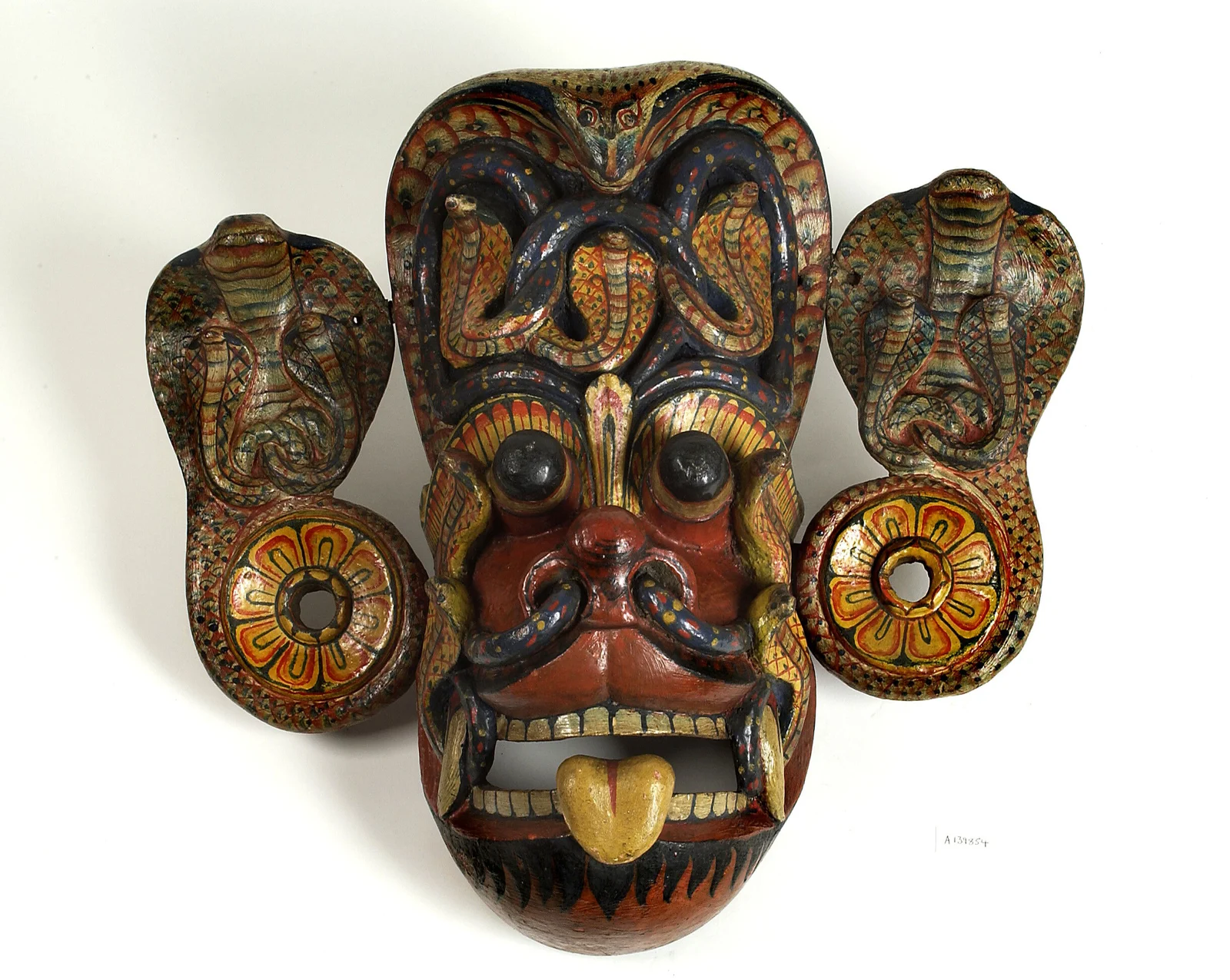
Worn painted wooden mask with a red face, bulging black eyes, exposed teeth and fangs, yellow protruding tongue, cobra canopy, serpents at the nostrils and separate cobra-and-lotus ear panels.
Wellcome identifies this polychrome wooden mask as nagarassa associated with Kolam performance and dates it 1771–1920. This is a separate collection witness, not a photograph of either accession already cited in the profile. The cobra canopy and lotus ear panels belong to this particular mask; no equation with every nāga tradition is implied.
Overview
Science Museum Group identifies its wooden mask as Naga Rassa from a Kolam play. The face is red, hooded cobras form the headdress and emerge from the nostrils, and lotus-disc ear pieces are surmounted by more cobras. Its catalogue date is a broad 1771–1910 range.
Casa Ásia’s separate early nineteenth-century Naga Raksha mask is described through protection and transformation. That museum stresses that a demonic appearance need not imply malevolence. The performed mask character is kept distinct from treating every South Asian nāga as this cobra-crowned demon.
Origins & earliest records
Sri Lankan performed beings
Records & interpretation
Identified custodial object record and attributed interpretation read.
Selected bibliography
Documented works and useful reading. This is not a list of every appearance.
- 01
Demon mask from Kolam play
A657016; object or collection date kept distinct from tradition origin.
- 02
Naga Raksha mask, CA-CFC.853
Specific contextual comparison; no inferred first attestation.
Family & connections
A source-supported family tree or inspiration record has not yet been compiled for this profile. Related reading below indicates a connection in subject matter, not a proven lineage or creative influence.
Primary records and illustrations
Demon mask from Kolam play
Identified museum collection. A657016
Identified custodial record read; image bytes have not been independently inspected for this row.
References
Sources supporting this profile. Linked pages have their own scope and editorial standards.
- Museum or custodial collection recordDemon mask from Kolam play — custodial recordResearch access: 2026-10-05
- Museum interpretive accountNaga Raksha mask, CA-CFC.853Research access: 2026-10-05
Image credits
Sri Lankan Nāga Raksha performance mask, catalogued as nagarassaWorn painted wooden mask with a red face, bulging black eyes, exposed teeth and fangs, yellow protruding tongue, cobra canopy, serpents at the nostrils and separate cobra-and-lotus ear panels.
Wellcome identifies this polychrome wooden mask as nagarassa associated with Kolam performance and dates it 1771–1920. This is a separate collection witness, not a photograph of either accession already cited in the profile. The cobra canopy and lotus ear panels belong to this particular mask; no equation with every nāga tradition is implied.