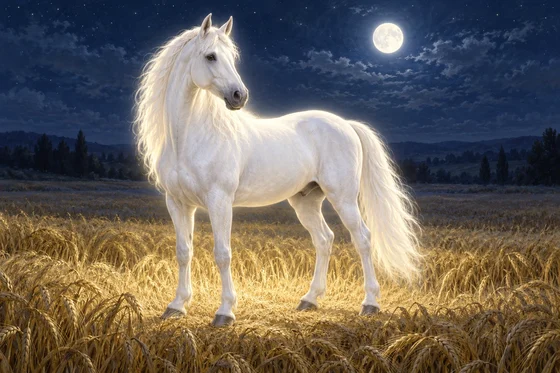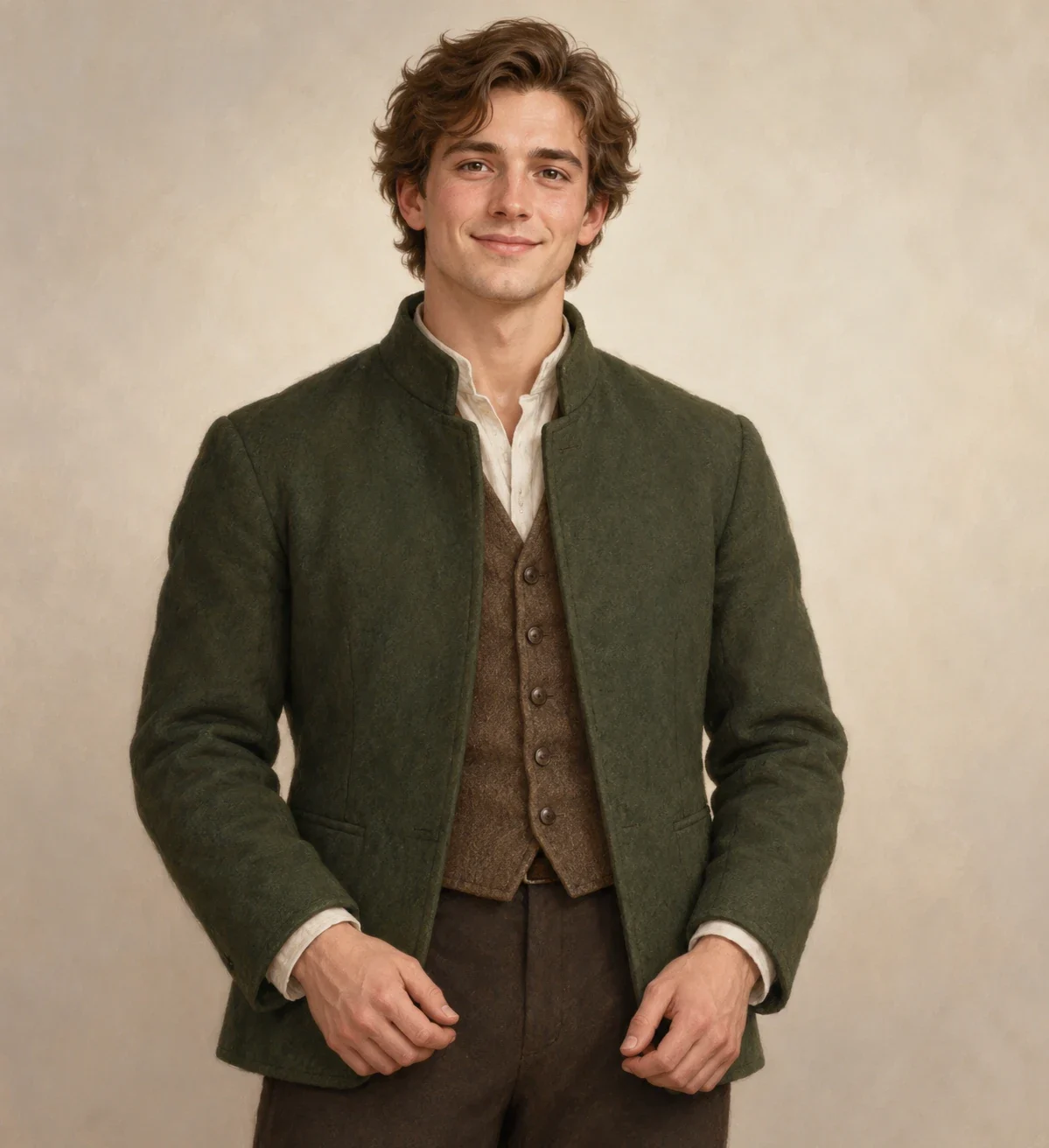
AI-generated interpretation of Brugman’s historical telling; individual appearance and staging imagined.
Overview
Nachschrapselchen is the last-born of twelve egg-hatched brothers in Brugman’s Godlewa tale V. His mother hatches eleven boys after four months; the twelfth emerges only after another four. A footnote gives his Lithuanian name as Pagramdūkas, related to scraps scraped from a vessel. The narrative nevertheless gives him an egg birth, not a body made from dough. Once the brothers have grown, a rooster and cat help him catch the white horse stealing their oats. In exchange for release, the horse gives summoning hairs and promises to stop.
Travelling with his brothers, he learns from the horse that an innkeeper plans to kill them. He changes the sleepers’ positions, causing the witch to kill her own daughters instead. The brothers escape, and he is appointed their officer. Jealous of his advancement, they arrange for the king to demand the witch’s self-playing lute, dancing kittens and boot. Following the horse’s advice, he distracts her with a request for eggs and takes the musical ensemble. She pursues him to a lake and bursts while attempting to drink it dry.
The king rewards him with money and a senatorship. He then undertakes to bring back the king’s daughter, returns with her and receives marriage and half the kingdom. This last adventure is abruptly shortened: Brugman flags missing connections and an ambiguous rolling action involving barrels, rider or horse. Wollner proposes a reconstruction from comparative tales; it is not adopted here as a completed episode.
Origins & earliest records
A. Leskien and K. Brugman, Litauische Volkslieder und Märchen; Part III German translations by Karl Brugman, notes by Wilhelm Wollner
Records & interpretation
Complete selected German tale and attached footnotes, full relevant comparative notes, title/preface and Godlewa collection/translation framing read. Original tale headers and native ambiguity pages inspected.
Selected bibliography
Documented works and useful reading. This is not a list of every appearance.
- 01
Litauische Volkslieder und Märchen aus dem preussischen und dem russischen Litauen
Strassburg: Karl J. Trübner, 1882; Part III, pp. 359–363. The 1881 preface date is not the publication year.
Family & connections
A source-supported family tree or inspiration record has not yet been compiled for this profile. Related reading below indicates a connection in subject matter, not a proven lineage or creative influence.
References
Sources supporting this profile. Linked pages have their own scope and editorial standards.
- Digitized original bilingual historical edition; German translation readLeskien and Brugman, 1882 — complete German tale, relevant notes and collection framingResearch access: 2026-10-21
Image credits
AI-generated illustrationAI-generated interpretation of Brugman’s historical telling; individual appearance and staging imagined.