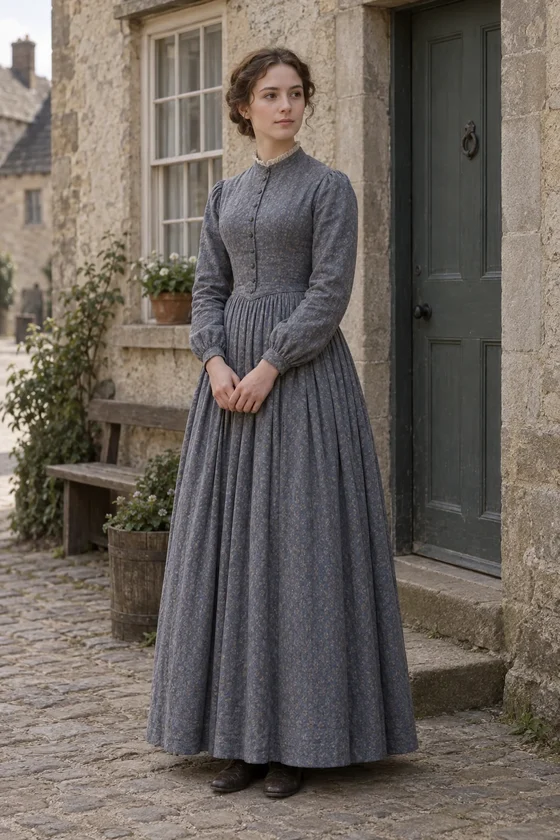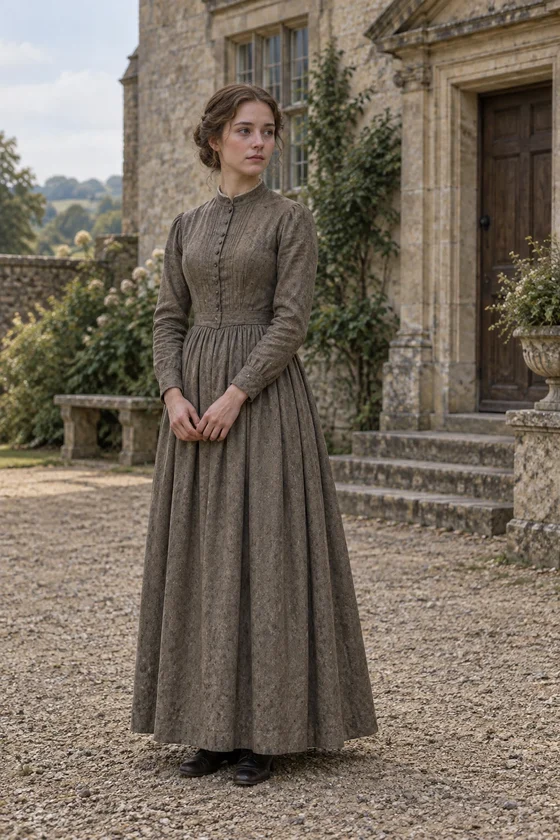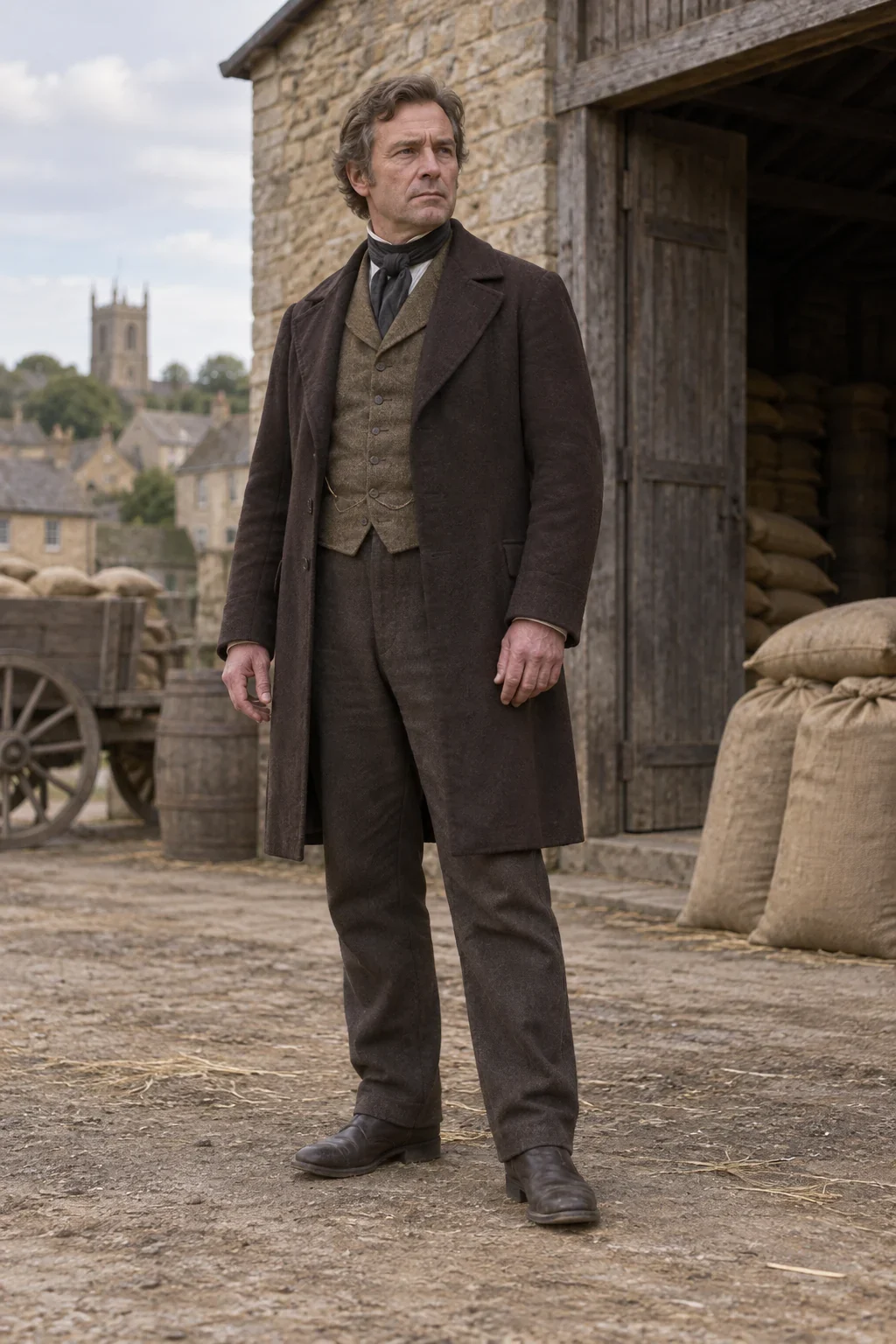
Imagined Michael Henchard in a quiet original-novel portrait.
Unofficial AI interpretation. Henchard pauses during his prosperous merchant and mayoral period. Selected object or posture follows the original novel; exact portrait, unmentioned clothing and scene arrangement are imagined, without an adaptation likeness claim. Full-frame display derivative; no upscaling.
Overview
Michael Henchard is the central figure of Thomas Hardy’s The Mayor of Casterbridge. The opening finds him as an itinerant hay-trusser travelling with his wife Susan and their infant daughter. Drinking at a fair leads him to sell the woman and child to the sailor Richard Newson. Susan treats the transaction with a seriousness Henchard does not anticipate, and they leave with the purchaser. On becoming sober he attempts to find them, then swears to abstain from strong drink for twenty-one years. The later prosperity of his life begins after this rupture, while the memory of the act remains capable of destroying the respectability he subsequently acquires.
When Susan returns to Casterbridge with the grown Elizabeth-Jane, Henchard has become a successful corn merchant and mayor. He remarries Susan through an arrangement that conceals their earlier marriage from the young woman. He also takes Donald Farfrae into his business after recognizing the Scot’s practical knowledge. Admiration and need initially support the partnership, but Farfrae’s competence and popularity awaken jealousy. Henchard dismisses him and then faces him as a commercial rival. The competition brings differences in method and temperament into view: Farfrae’s measured judgment contrasts with decisions through which Henchard’s pride and urgency can turn opportunity into loss. Personal grievance increasingly enters business choices.
Susan’s death and her letter disclose that the Elizabeth-Jane now living with him is Newson’s daughter; Henchard’s own infant daughter died years before. His reaction changes the household and wounds the young woman who has not caused the deception. Lucetta’s arrival raises another unresolved obligation from his past. He had formed a relationship with her in Jersey while believing Susan gone, and Lucetta expects that a marriage can now repair her compromised position. Instead she falls in love with Farfrae. Henchard’s attempts to enforce promises and preserve authority contribute to conflict, while the public revelation of the old wife-sale undermines his status in the town.
As business and reputation fail, Henchard becomes more dependent on Elizabeth-Jane’s kindness. Newson’s return threatens that remaining attachment, and Henchard lies about her survival to prevent the father from reclaiming contact. The truth eventually separates him from her, and he leaves Casterbridge. His last attempt to return during her wedding does not produce the reconciliation he seeks. He dies away from the household, leaving a testament that asks for obscurity. These relationships reveal different forms of responsibility that Henchard repeatedly struggles to meet.
First appearances & development
Thomas Hardy establishes this character through the corn trade, family histories and social relationships of Casterbridge in The Mayor of Casterbridge. This profile follows the retained original narrative.
Canon & continuity
Original narrative.
Selected bibliography
Documented works and useful reading. This is not a list of every appearance.
- 01
The Mayor of Casterbridge
Original.
Family & connections
A source-supported family tree or inspiration record has not yet been compiled for this profile. Related reading below indicates a connection in subject matter, not a proven lineage or creative influence.
References
Sources supporting this profile. Linked pages have their own scope and editorial standards.
- PrimaryThe Mayor of CasterbridgeResearch access: 2026-10-12
Image credits
Unofficial modern AI interpretationImagined Michael Henchard in a quiet original-novel portrait.
Unofficial AI interpretation. Henchard pauses during his prosperous merchant and mayoral period. Selected object or posture follows the original novel; exact portrait, unmentioned clothing and scene arrangement are imagined, without an adaptation likeness claim. Full-frame display derivative; no upscaling.