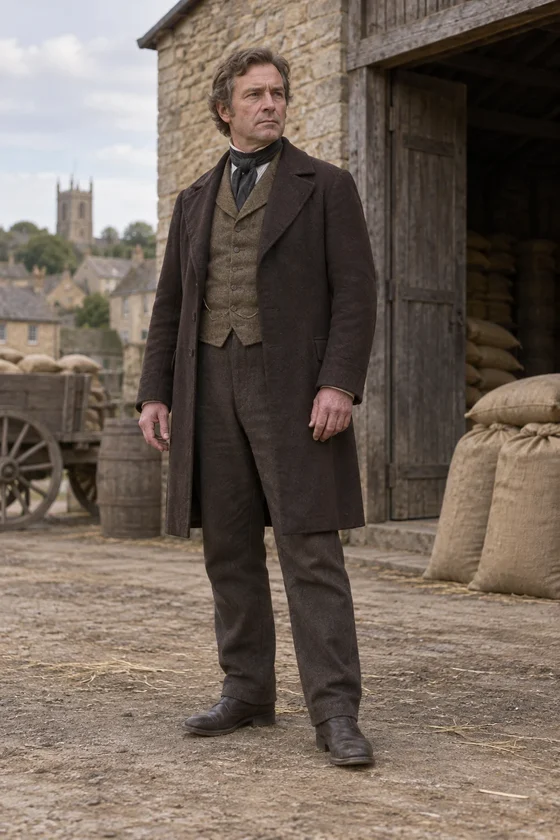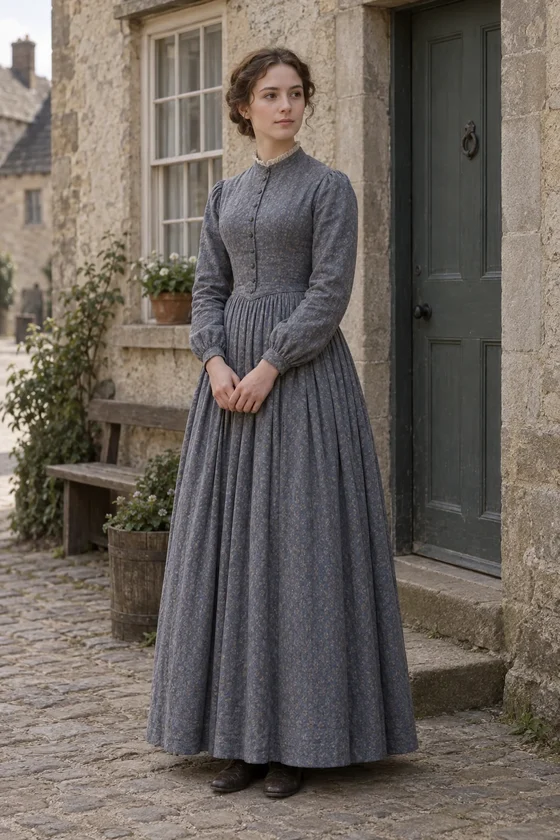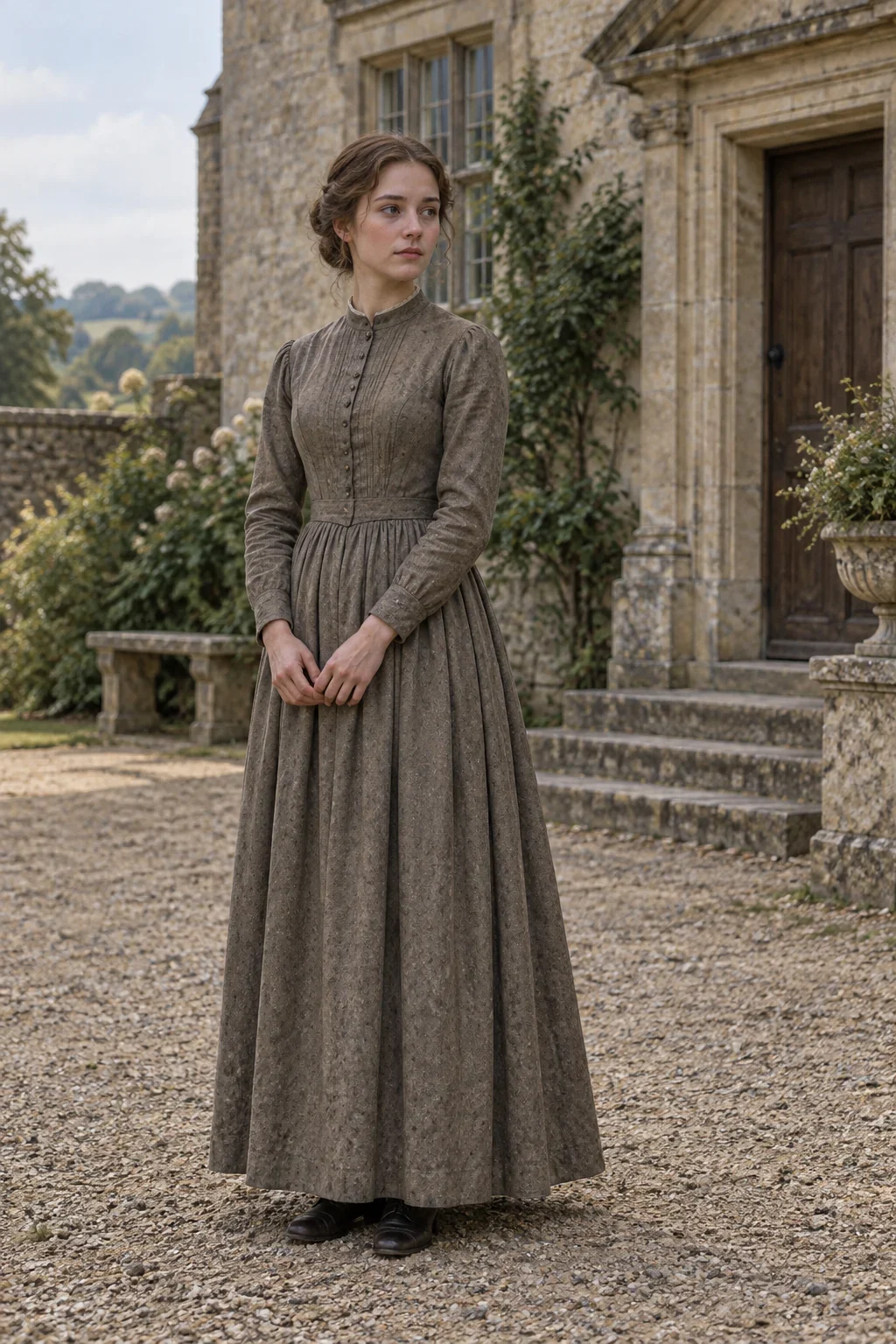
Imagined Lucetta Templeman in a quiet original-novel portrait.
Unofficial AI interpretation. Lucetta pauses outside High-Place Hall during her early Casterbridge period. Selected object or posture follows the original novel; exact portrait, unmentioned clothing and scene arrangement are imagined, without an adaptation likeness claim. Full-frame display derivative; no upscaling.
Overview
Lucetta Templeman is the woman whose arrival at High-Place Hall brings Henchard’s earlier intimate history into The Mayor of Casterbridge. Formerly known as Lucetta Le Sueur, she had known him in Jersey during a period when his first marriage appeared to belong to the past. Their relationship left her reputation vulnerable and produced an expectation that he would marry her. Susan’s return interrupted that expectation. After Susan’s death, Lucetta comes to Casterbridge with inherited means and a changed public position, hoping to resolve the obligation through marriage. Her material independence gives her choices, but it does not remove the consequences of the information Henchard possesses.
Lucetta draws Elizabeth-Jane into her household, creating companionship while also obtaining a connection with Henchard’s domestic life. Elizabeth-Jane does not initially understand all the purposes or history behind the arrangement. Lucetta’s meeting with Farfrae changes the future she has imagined. She falls in love with him and no longer wishes to complete the marriage expected by Henchard. This change exposes competing claims about promise and choice: Henchard insists on the earlier commitment, while Lucetta’s present attachment leads elsewhere. The narrative presents the pressure through conversations and concealments, showing how dependence on another person’s silence can persist even after wealth and a new name seem to offer a fresh beginning.
Lucetta secretly marries Farfrae, postponing full disclosure of the history that makes Henchard’s demands threatening. The letters she once sent to Henchard become a continuing danger. Their circulation and reading bring private material into the town’s public entertainment, culminating in a humiliating procession that represents her connection with the former mayor. The spectacle is not a neutral statement of biography: it turns knowledge into punishment performed by a crowd. Lucetta’s experience of the display contributes to a severe crisis during her pregnancy and to her death. Farfrae is absent during part of the sequence, so the secrecy has prevented a straightforward opportunity for him to understand and protect the situation before the disaster develops.
Lucetta’s death changes Farfrae’s household and the future of Elizabeth-Jane, but her importance is not exhausted by the marriages that follow. Her earlier care and attachment, attempt at social recovery, changed desire and fear of exposure give the plot a particular account of what a past relationship can continue to demand.
First appearances & development
Thomas Hardy establishes this character through the corn trade, family histories and social relationships of Casterbridge in The Mayor of Casterbridge. This profile follows the retained original narrative.
Canon & continuity
Original narrative.
Selected bibliography
Documented works and useful reading. This is not a list of every appearance.
- 01
The Mayor of Casterbridge
Original.
Family & connections
A source-supported family tree or inspiration record has not yet been compiled for this profile. Related reading below indicates a connection in subject matter, not a proven lineage or creative influence.
References
Sources supporting this profile. Linked pages have their own scope and editorial standards.
- PrimaryThe Mayor of CasterbridgeResearch access: 2026-10-12
Image credits
Unofficial modern AI interpretationImagined Lucetta Templeman in a quiet original-novel portrait.
Unofficial AI interpretation. Lucetta pauses outside High-Place Hall during her early Casterbridge period. Selected object or posture follows the original novel; exact portrait, unmentioned clothing and scene arrangement are imagined, without an adaptation likeness claim. Full-frame display derivative; no upscaling.