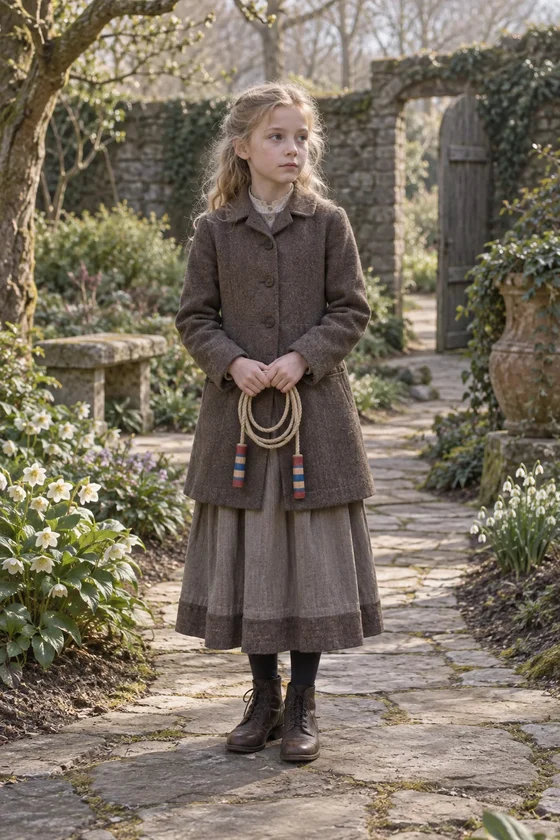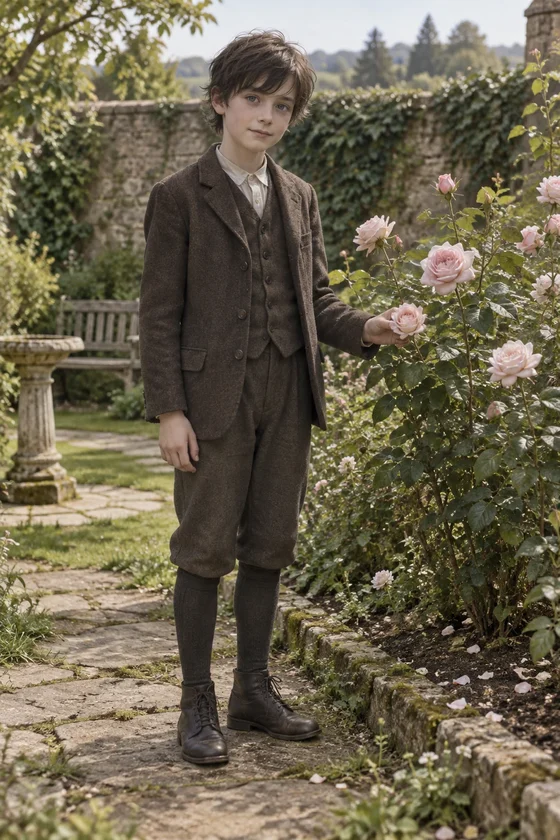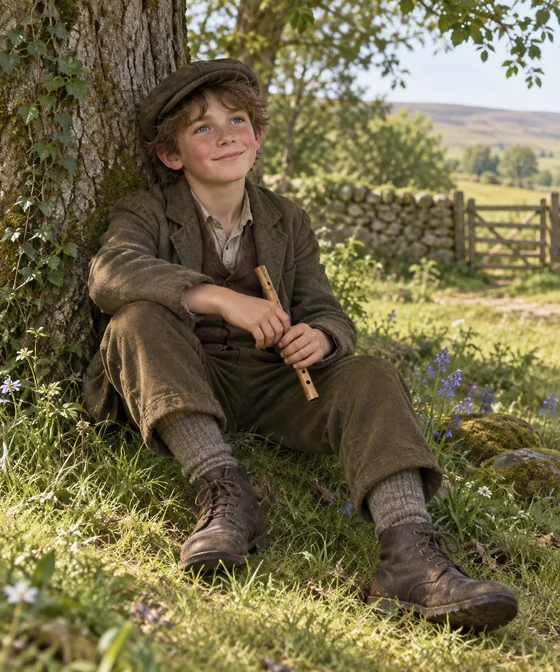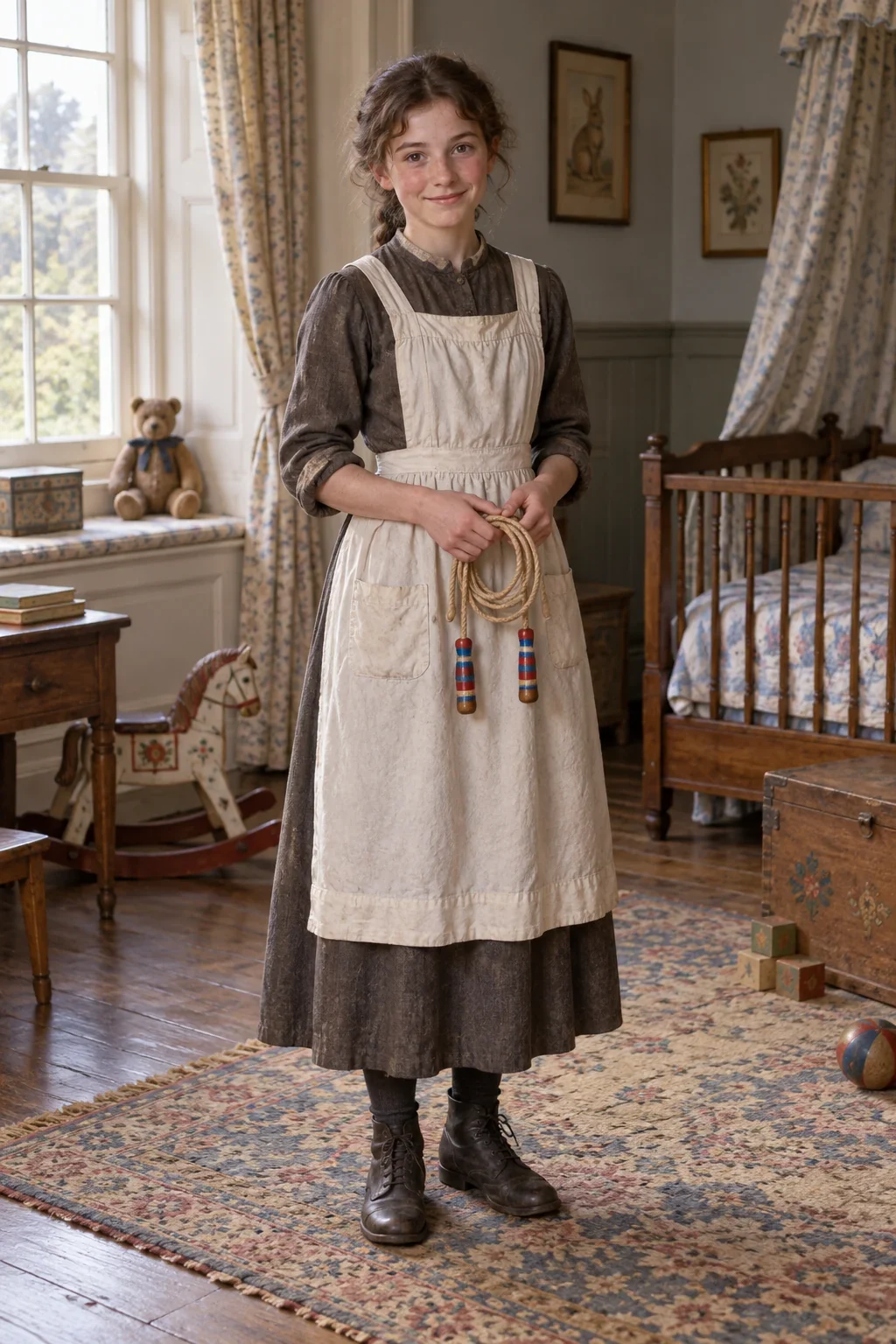
Imagined Martha Sowerby in a quiet original-novel portrait.
Unofficial AI interpretation. Martha holds Susan’s skipping-rope gift in the nursery. Selected object or posture follows the original novel; exact portrait, unmentioned clothing and scene arrangement are imagined, without an adaptation likeness claim. Full-frame display derivative; no upscaling.
Overview
Martha Sowerby is the Yorkshire housemaid whose direct conversation helps Mary Lennox begin a different life at Misselthwaite Manor. She belongs to a large family living in a small cottage near the moor, and her wages matter to its household. When she first attends Mary, she does not imitate the unquestioning service the child expects from her upbringing in India. She is surprised that Mary cannot dress herself and encourages her to attempt ordinary tasks. Their early exchange includes ignorance and hurtful assumptions about India, which the profile treats as characters’ prejudices rather than adopting them as reliable judgments about another population.
Martha’s warmth survives Mary’s anger. When the child breaks down in loneliness, she offers comfort and continues talking about her brothers, sisters and mother. Her account of Dickon’s outdoor life gives Mary something to anticipate, while advice about the moor encourages movement beyond the bedroom. The contrast between hunger in the cottage and plentiful food at the manor is explicit in her conversation. Martha is therefore more than a cheerful source of rustic colour: she brings practical knowledge and a family perspective into a household whose wealth has not prevented isolation.
Susan Sowerby buys a skipping-rope for Mary with a small portion of the wages Martha has brought home. Martha delivers it, shows how skipping works and passes on her mother’s belief that outdoor exercise will strengthen the child. Its striped red and blue handles and Mary’s awkward first attempts are directly described. The gift connects the manor girl with a family that has little money but still notices her needs. Martha also helps arrange the purchase of gardening supplies through Dickon. These contributions support Mary’s discovery and work without making Martha the original finder of the garden key or hidden door.
Her place in Colin’s household duties is more anxious. She sometimes attends him when the nurse goes away and knows that information about him is restricted. Mary’s discovery frightens her because Mrs. Medlock might blame her and dismiss her. Colin’s insistence that Mary be allowed to visit provides protection, but the scene still shows how the child’s power affects a dependent worker. Martha’s affection and conversation do not free her from service obligations or the importance of keeping her wages. Throughout the original novel she serves as a link between the manor and Susan’s family, helping make friendship and practical care possible. This account distinguishes her own actions from Dickon’s garden work and Susan’s later interventions, preserving the household roles instead of merging the three Sowerbys into one generic helper.
First appearances & development
Frances Hodgson Burnett’s The Secret Garden establishes this character through the children’s discovery, care and household relationships. This profile follows the selected original narrative and does not combine adaptation continuity with it.
Canon & continuity
Original narrative.
Selected bibliography
Documented works and useful reading. This is not a list of every appearance.
- 01
The Secret Garden
Original.
Family & connections
A source-supported family tree or inspiration record has not yet been compiled for this profile. Related reading below indicates a connection in subject matter, not a proven lineage or creative influence.
References
Sources supporting this profile. Linked pages have their own scope and editorial standards.
- PrimaryThe Secret GardenResearch access: 2026-10-12
Image credits
Unofficial modern AI interpretationImagined Martha Sowerby in a quiet original-novel portrait.
Unofficial AI interpretation. Martha holds Susan’s skipping-rope gift in the nursery. Selected object or posture follows the original novel; exact portrait, unmentioned clothing and scene arrangement are imagined, without an adaptation likeness claim. Full-frame display derivative; no upscaling.