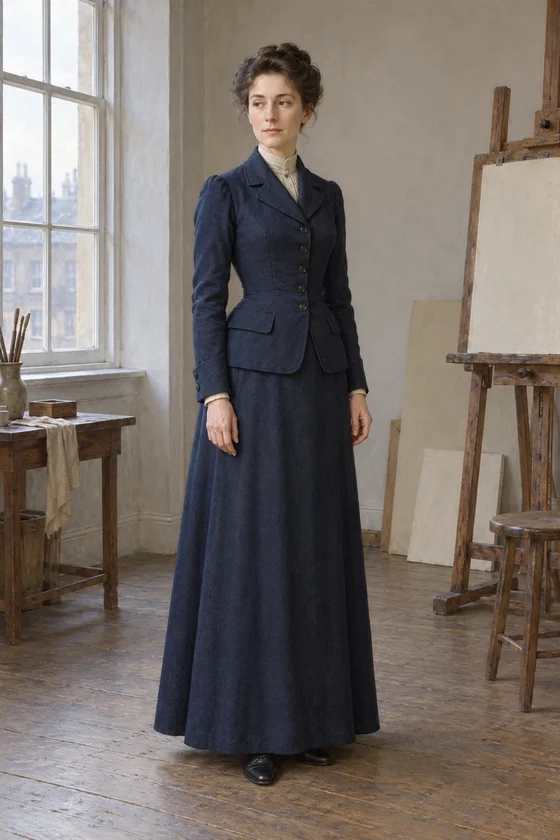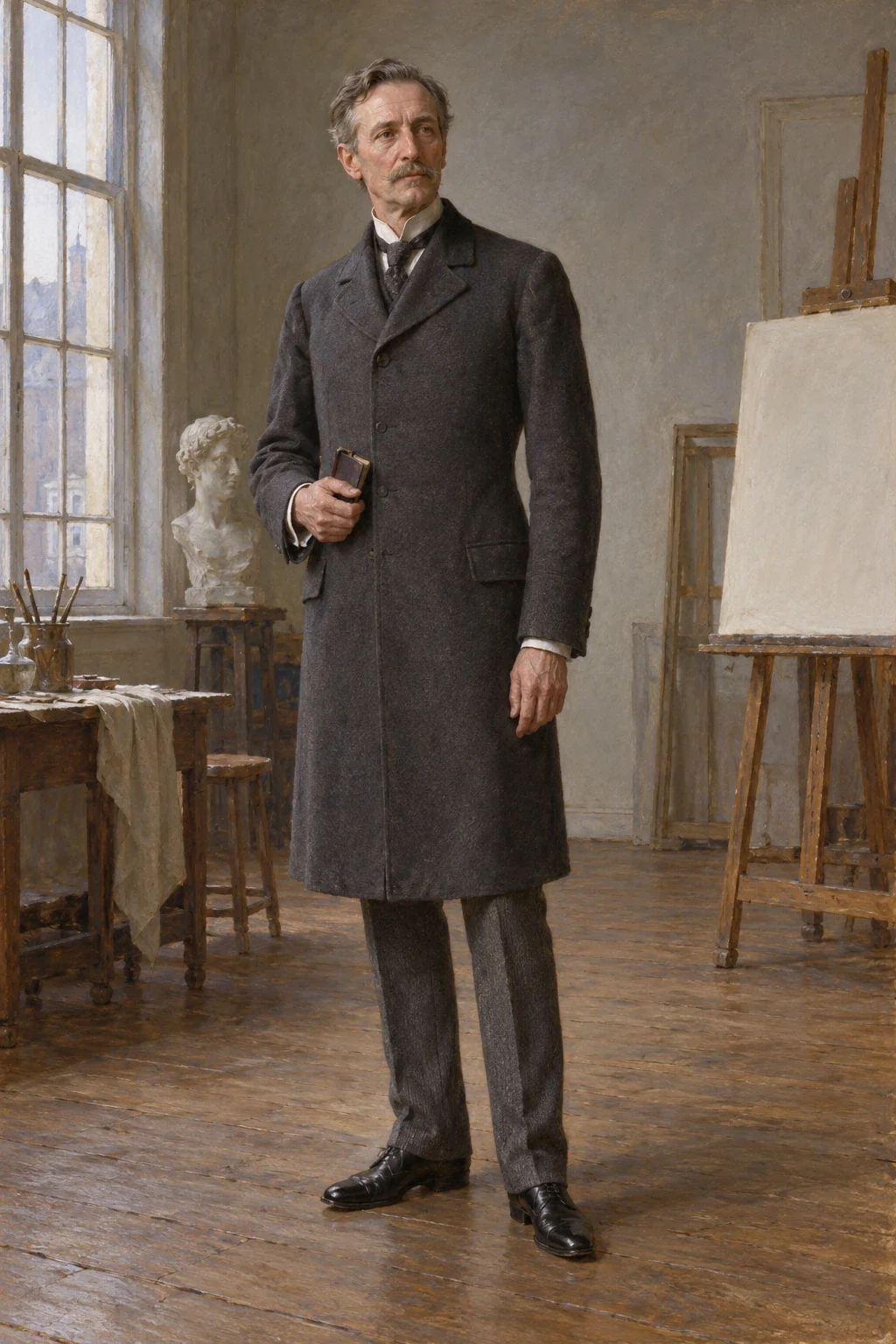
Original AI literary interpretation.
Overview
Major Monarch arrives with his wife at the studio of an unnamed illustrator, bearing an introduction from the landscape painter Claude Rivet. The artist initially mistakes the distinguished pair for clients seeking portraits. They actually need paid work as models: the Major has left the army, their money is gone and their remaining means are very small. He is fifty, six feet two, exceptionally upright, with a slightly grizzled mustache and a well-fitting dark-gray walking coat. He believes that their ability to embody an actual gentleman and lady should make them valuable for fashionable fiction. His account of failed job applications reveals real desperation beneath that polished appearance.
The Major stays with his wife during her sittings, usually waiting quietly, and the narrator comes to see their close marriage as their chief comfort. His practical conversation, willingness to attend to the stove and wish to please coexist with an inability to transform himself into different fictional people. In the illustrator's drawings he repeatedly becomes an oversized type. The narrator finds more flexibility in Miss Churm and the Italian newcomer Oronte, whose ordinary social positions do not prevent convincing performances. These comparisons belong to an artist preoccupied with his career, and his assumptions about class and nationality should not be mistaken for neutral facts about the couple's worth.
As commissions become endangered, the Major is displaced by Oronte even for the image of an English gentleman. The artist's angry refusal wounds him, but he returns with his wife. Together they prepare tea, and later clean the artist's crockery and cutlery, offering service instead of modelling rather than surrendering their search for work. The narrator briefly accepts this arrangement, then gives them money to leave and never sees them again. He obtains the remaining illustration commissions. His friend Hawley's claim that the Monarchs permanently damaged his art is reported at the end, not independently proved; the narrator accepts the possible cost for the memory of them.
First appearances & development
Individual in Henry James’s authored English tale The Real Thing, told retrospectively by an unnamed illustrator with professional ambitions and class assumptions of his own.
Canon & continuity
Complete four-section tale: 135 numbered units, including four section labels. Retained title, author, Macmillan imprint, 1893 date, 1892 copyright, author’s note and complete contents read. No whole-collection or native physical-copy claim.
Selected bibliography
Documented works and useful reading. This is not a list of every appearance.
- 01
The Real Thing and Other Tales - The Real Thing
Year is the retained Macmillan collection title; retained copyright says 1892. No first-appearance or independently verified physical-copy claim.
Family & connections
A source-supported family tree or inspiration record has not yet been compiled for this profile. Related reading below indicates a connection in subject matter, not a proven lineage or creative influence.
References
Sources supporting this profile. Linked pages have their own scope and editorial standards.
- Primary authored first-person literary narrativeThe Real Thing - complete original English tale and retained collection framingResearch access: 2026-10-21
Image credits
AI-generated illustrationOriginal AI literary interpretation.