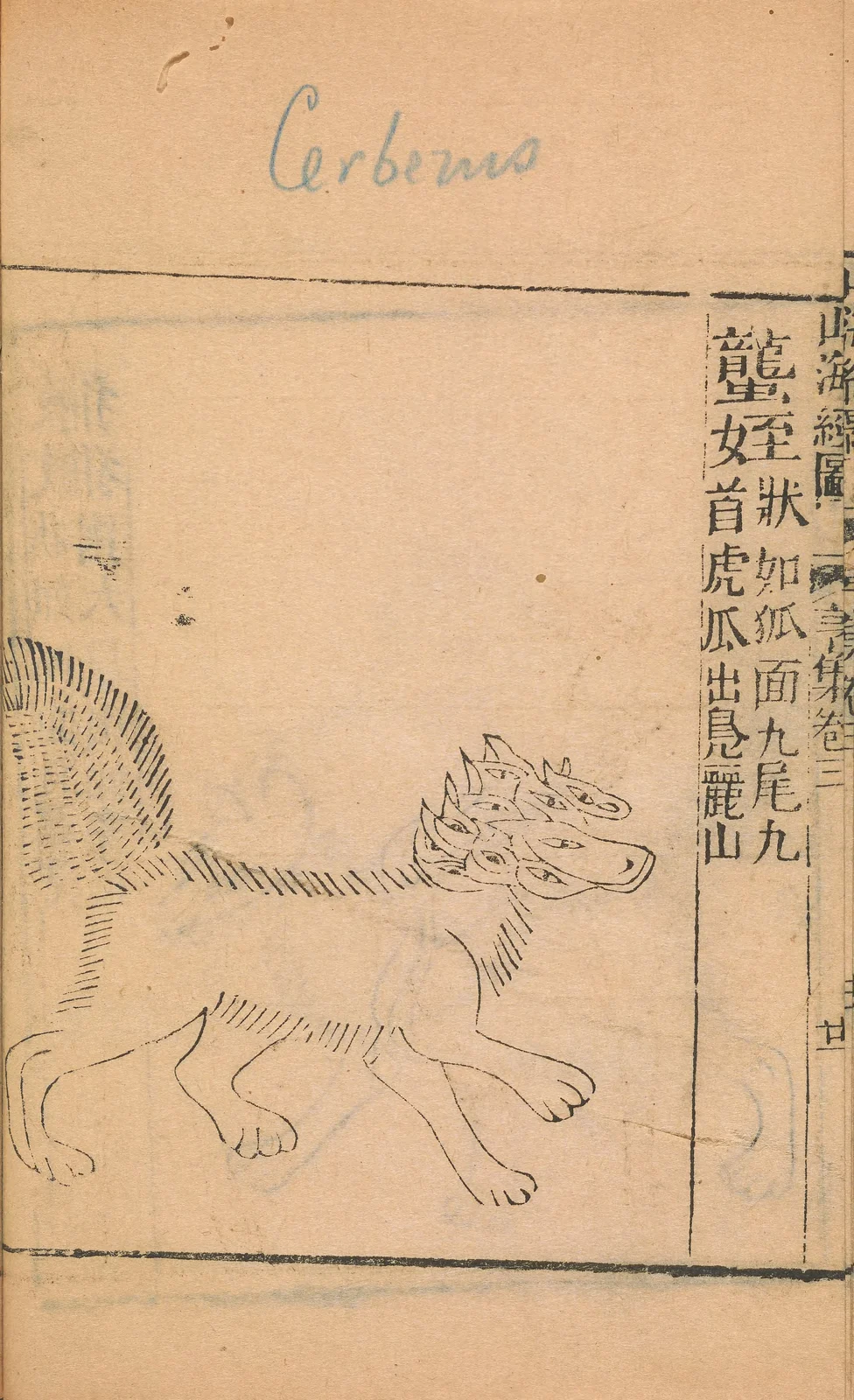
Longzhi, named1667 historical plate
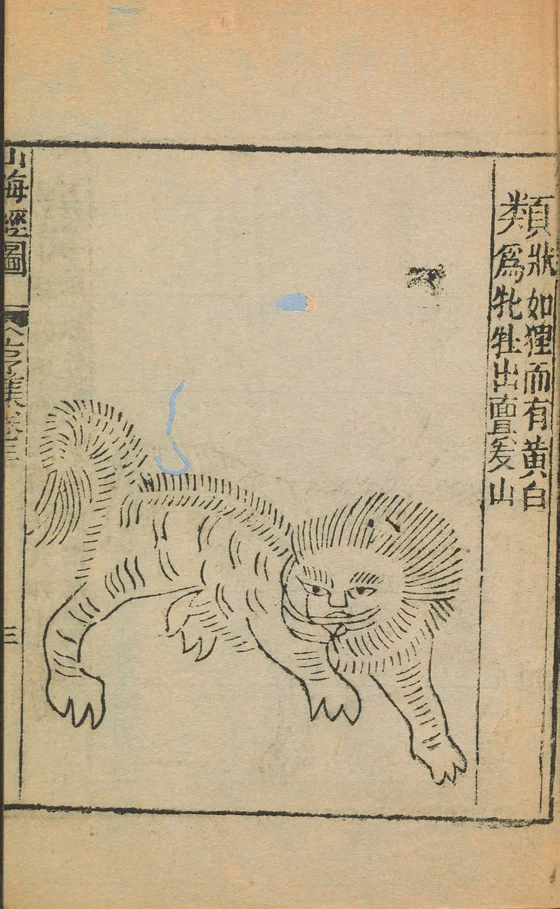
Actual 1000-pixel page directly inspected and printed caption compared with the received text. The printed caption specifies a fox with nine tails, nine heads and tiger claws from Mount Fuli. The picture visibly combines a fan of heads with the fox body; not all stated tails are individually separable. The later blue pencil annotation Cerberus is not the printed Chinese identification. Smithsonian catalog dates the physical edition 1667 and classifies it public domain.
Overview
Longzhi is the fox-shaped human-eater of Mount Fuli in the Shanhaijing’s second eastern itinerary. It has nine tails, nine heads, and tiger claws. Its voice resembles a baby’s cry. The number of heads is as important as the tails: a single-headed nine-tailed fox cannot automatically stand in for this particular monster.
The passage explicitly states human predation but does not describe the baby-like voice as a deliberate lure. Nor does it connect Longzhi with a court woman or a human disguise. Those differences help separate it from Tamamo-no-mae and other named fox-transformers. The mountain inventory supplies mineral resources rather than a narrated hunt. Matching an illustrated witness requires the printed name and the multiple heads or their caption, not only a general fox association.
Origins & earliest records
China; Shanhaijing Eastern Mountains
Records & interpretation
Specific named primary-text transcription directly read; historical plate not assigned yet.
Selected bibliography
Documented works and useful reading. This is not a list of every appearance.
- 01
Shanhaijing, Eastern Mountains
Second eastern itinerary; Mount Fuli
Family & connections
A source-supported family tree or inspiration record has not yet been compiled for this profile. Related reading below indicates a connection in subject matter, not a proven lineage or creative influence.
Primary records and illustrations
Shan hai jing: er shi san juan (Smithsonian digitized edition)
Physical volume 2; illustration sequence. IIIF canvas index 45 (zero based), labelled 蠪姪; no printed page number asserted
Actual 1000-pixel page directly inspected and printed caption compared with the received text. The printed caption specifies a fox with nine tails, nine heads and tiger claws from Mount Fuli. The picture visibly combines a fan of heads with the fox body; not all stated tails are individually separable. The later blue pencil annotation Cerberus is not the printed Chinese identification. Smithsonian catalog dates the physical edition 1667 and classifies it public domain.
References
Sources supporting this profile. Linked pages have their own scope and editorial standards.
- Primary text transcriptionShanhaijing Eastern Mountains received primary textResearch access: 2026-10-05
Image credits
Historical illustrationLongzhi, named1667 historical plate
Actual 1000-pixel page directly inspected and printed caption compared with the received text. The printed caption specifies a fox with nine tails, nine heads and tiger claws from Mount Fuli. The picture visibly combines a fan of heads with the fox body; not all stated tails are individually separable. The later blue pencil annotation Cerberus is not the printed Chinese identification. Smithsonian catalog dates the physical edition 1667 and classifies it public domain.