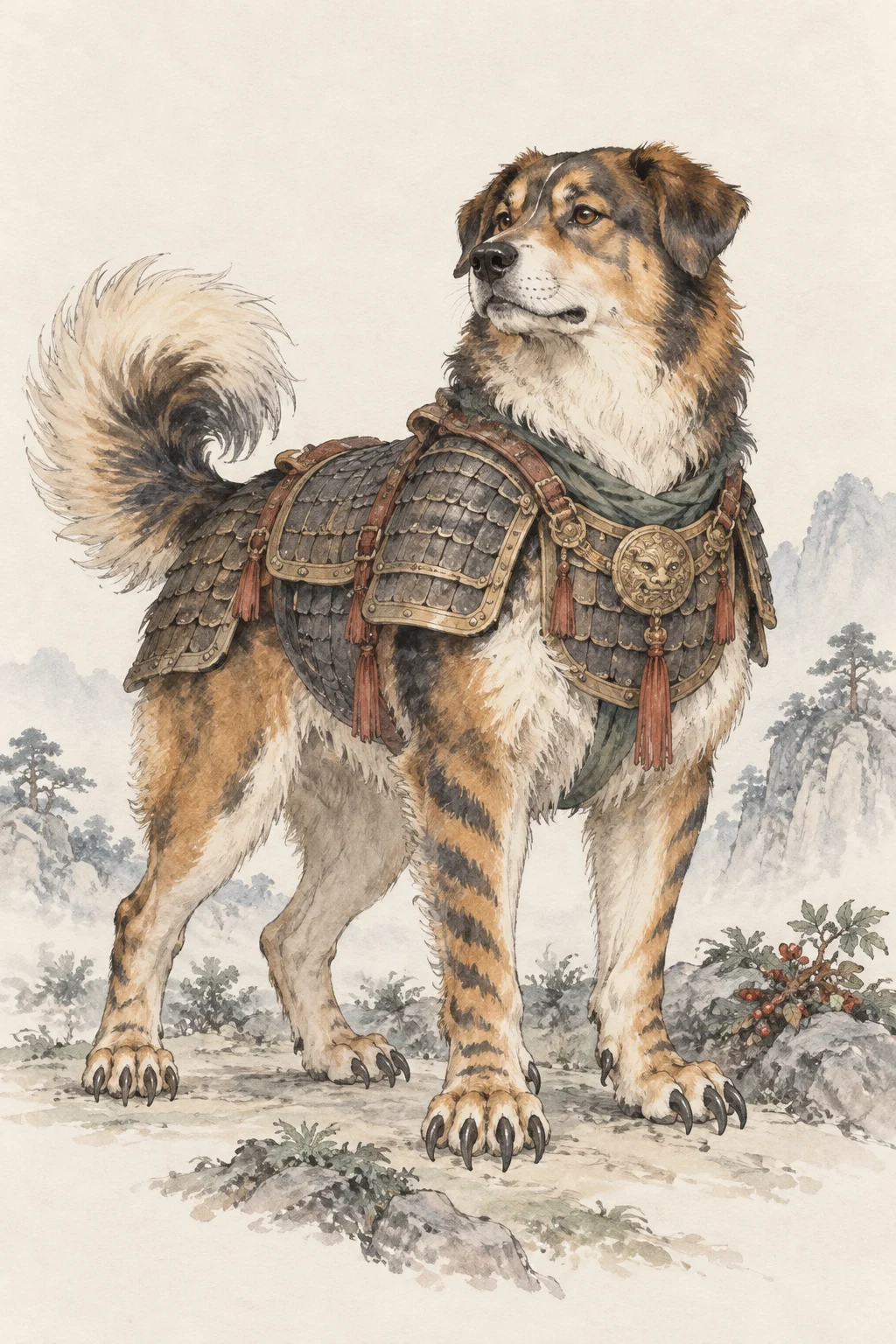
Lin of Mount Yiju — original modern interpretation.
AI-generated; incidental pose, colors and setting are imagined. Not historical artwork or ethnographic evidence.
Overview
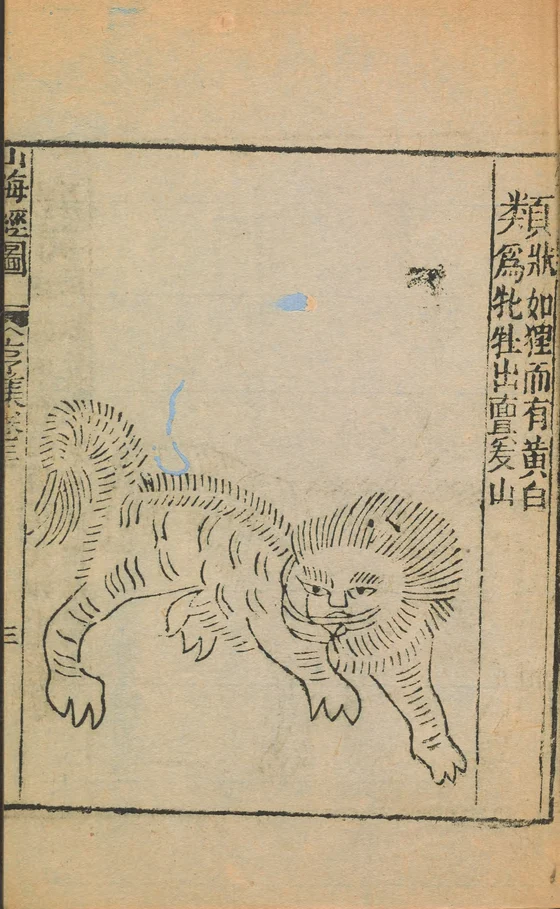
Lin inhabits Mount Yiju in the Shanhaijing. It resembles a dog but has tiger claws and armor. The text describes it as agile or lively and attributes a bodily benefit to eating it.
The mountain has named trees and vegetation. The armor and tiger claws give the doglike body its particular hybrid character; its written name獜 distinguishes it from the yellow piglike Wenlin.
Origins & earliest records
China; Shanhaijing Central Mountains
Records & interpretation
Specific named received-primary passage directly read; historical illustration matching remains separate.
3D model
An original procedural model made for the Mythscribe World Builder. It is an interpretation based on this entry, not a historical source or a depiction from the records cited here.
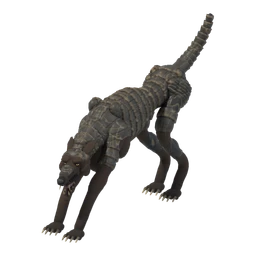
Procedural folklore creature kit · 24,928 triangles · 2 MB
Opens mythscribe.cloud in a new tab. Sign-in is required.
Selected bibliography
Documented works and useful reading. This is not a list of every appearance.
- 01
Shanhaijing, Central Mountains
Eleventh central itinerary; Mount Yiju
Family & connections
A source-supported family tree or inspiration record has not yet been compiled for this profile. Related reading below indicates a connection in subject matter, not a proven lineage or creative influence.
Primary records and illustrations
Shanhaijing
Central Mountains. Eleventh central itinerary; Mount Yiju
Specific named received text directly read: 獜. Historical image not yet assigned.
References
Sources supporting this profile. Linked pages have their own scope and editorial standards.
- Primary text transcriptionShanhaijing Central Mountains received primary textResearch access: 2026-10-05
Image credits
Original modern interpretation of the cited accountLin of Mount Yiju — original modern interpretation.
AI-generated; incidental pose, colors and setting are imagined. Not historical artwork or ethnographic evidence.