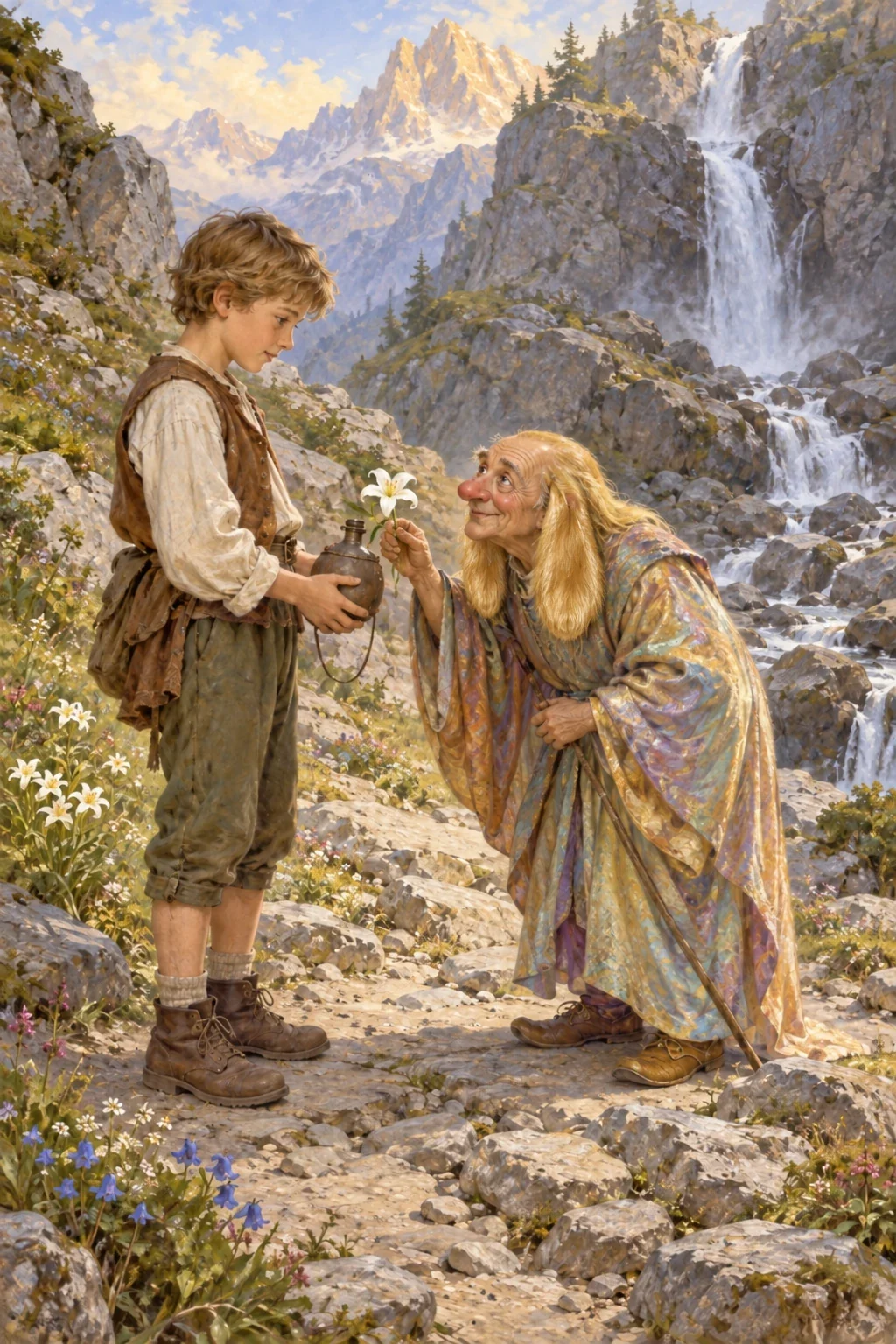
Modern AI interpretation of the river king giving lily dew to Gluck.
Faces, robe design and terrain are imagined; golden ears, red nose and lily-dew encounter follow the authored tale. Full-frame derivative; no upscaling.
Overview
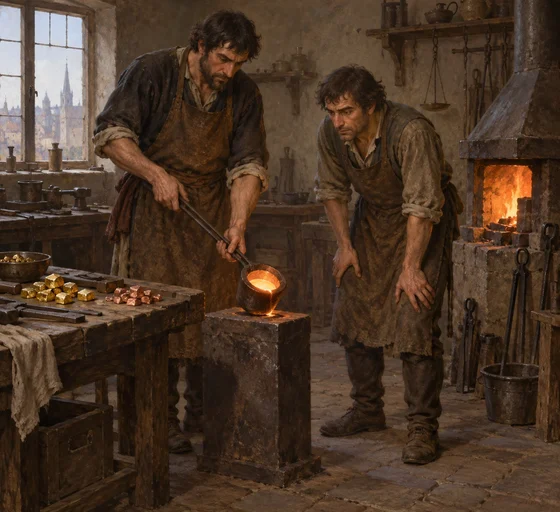
The King of the Golden River is the supernatural monarch encountered by Gluck in John Ruskin's authored fairy tale. The river takes its name from a waterfall that catches the evening sun after the surrounding landscape is dark, appearing golden without being a torrent of metal. The tale prepares Gluck's encounter through a treasured drinking mug with a fierce little face, red-gold nose and watching eyes. When his brothers melt the mug, a voice speaks from the crucible and the face appears beneath its smooth surface. These are literary transformations, not a description of a mineral specimen or an independently attested river deity.
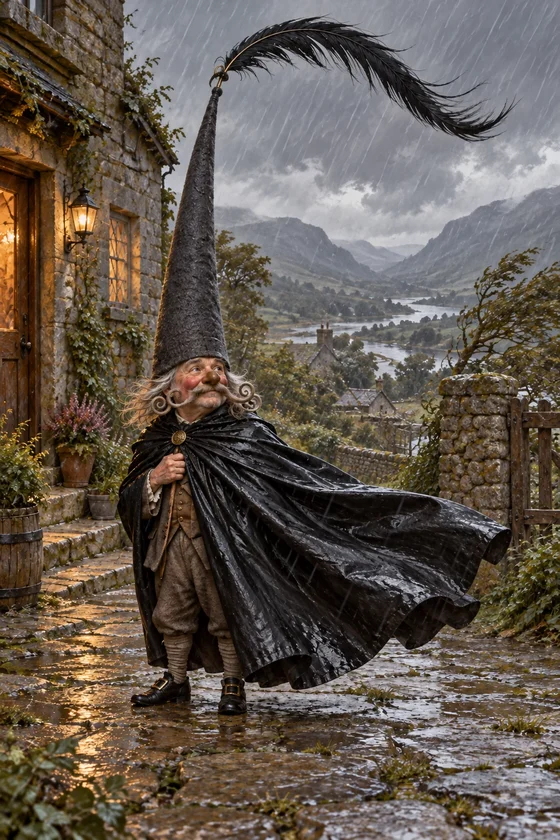
The King's decisive appearance follows Gluck's mountain journey. Despite his own thirst and desire to reach the promised wealth, the boy shares water with an exhausted old man and a child. He then empties the remaining drops into the mouth of a dying dog. The animal rises, loses its tail and changes into the familiar monarch, with long silky golden ears, a red nose and twinkling eyes. The narrative calls the King a dwarf. His exact bodily proportions and any additional costume details beyond the later coloured robe remain matters for a modern illustrator to interpret.
Gluck learns that Hans and Schwartz have become black stones. The King attributes their fate to pouring unholy water into his stream, prompting the boy to object that their water came from a church font. The monarch explains that water refused to the weary and dying remains unholy despite a blessing, whereas mercy can make even apparently defiled water holy. The explanation supplies the tale's moral distinction between a ritual's outward authority and the giver's conduct. It should not be presented as a description of an actual church's doctrine or a general belief of people living in Styria.
The King plucks a lily and shakes three drops of dew from its leaves into Gluck's flask, directing him to the river and then down into Treasure Valley. His robe dissolves into a prismatic mist and he evaporates. Gluck pours the dew into the stream, but no literal flood of gold appears. Instead, water reaches the ruined valley and restores its plants and fertility. The promised wealth becomes a productive home whose owner welcomes the poor. The King therefore governs a test of generosity and renewal; his intervention differs from Southwest Wind's earlier punishment of the inhospitable household.
First appearances & development
John Ruskin's authored fairy tale supplies these characters; its transformations are literary events rather than independently documented regional traditions.
Canon & continuity
Primary narrative passages support the selected character claims.
Selected bibliography
Documented works and useful reading. This is not a list of every appearance.
- 01
The King of the Golden River
Retained original text.
Family & connections
A source-supported family tree or inspiration record has not yet been compiled for this profile. Related reading below indicates a connection in subject matter, not a proven lineage or creative influence.
References
Sources supporting this profile. Linked pages have their own scope and editorial standards.
- PrimaryThe King of the Golden River narrativeResearch access: 2026-10-11
- CustodialProject Gutenberg ebook701 custody and rightsResearch access: 2026-10-11
Image credits
Modern imaginative literary illustrationModern AI interpretation of the river king giving lily dew to Gluck.
Faces, robe design and terrain are imagined; golden ears, red nose and lily-dew encounter follow the authored tale. Full-frame derivative; no upscaling.