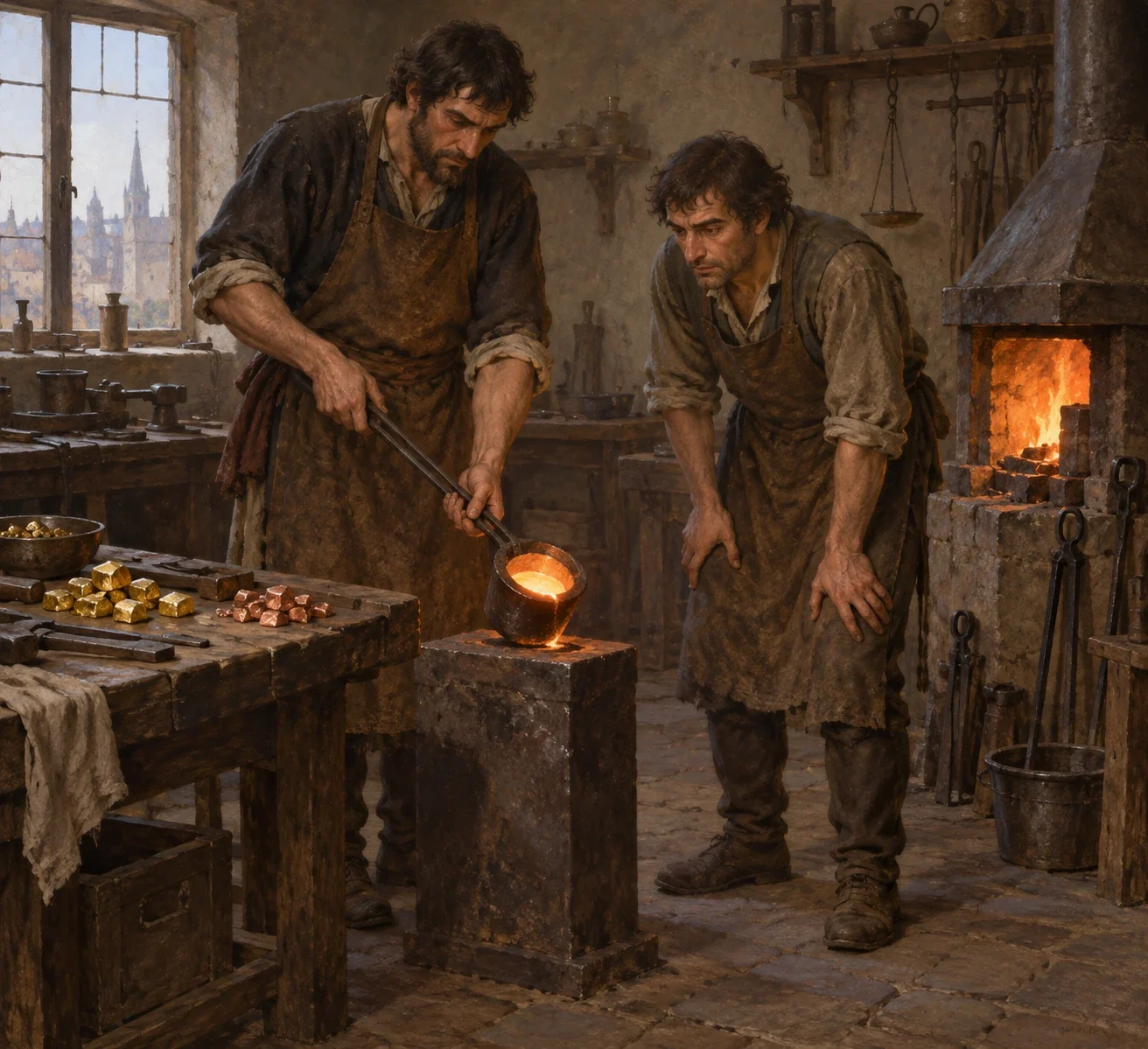
Modern AI interpretation of Hans and Schwartz in their goldsmith workshop.
Faces, garments and workshop arrangement are imagined; two brothers, heavy brows and the adulterated-gold trade follow the authored tale. Full-frame derivative; no upscaling.
Overview
Hans and Schwartz are the elder brothers of Gluck in John Ruskin's The King of the Golden River. Together the three inherit the exceptionally fertile Treasure Valley, but the older pair control its farming and mistreat the youngest. They are described with heavy overhanging eyebrows and small, half-closed eyes. Their nickname, the Black Brothers, refers to their cruel dealings rather than establishing an ethnicity or a supernatural species. The narrative contrasts their successful cultivation and accumulated money with unpaid servants, withheld charity and indifference to neighbours who cannot afford grain.
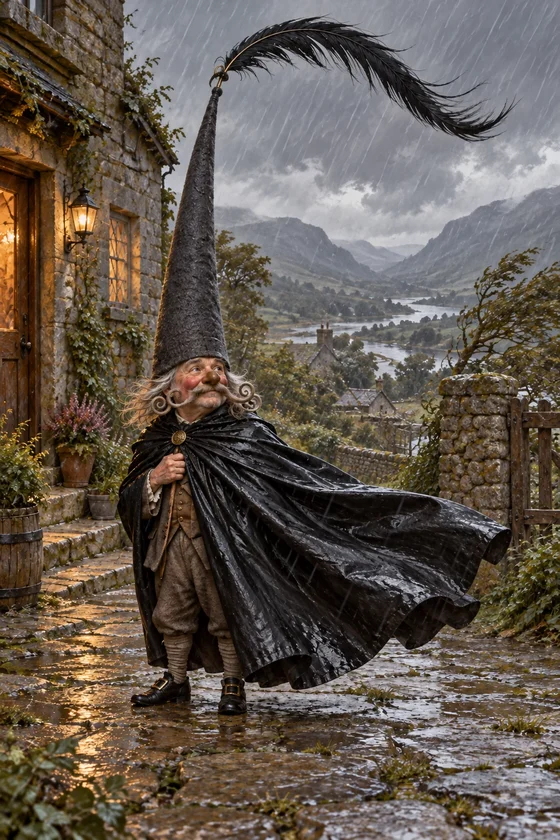
Their household refuses hospitality. Gluck is forbidden to admit anyone or give food away, yet shelters the wet visitor later identified as Southwest Wind, Esquire. The brothers threaten Gluck and attempt to expel their guest. The visitor's power defeats their attacks; the subsequent flood destroys their property, and withdrawal of the West Winds' rain leaves the valley barren. In the city Hans and Schwartz become goldsmiths, proposing to adulterate gold with copper. Their customers disapprove, while their drinking consumes the proceeds. Finally they melt Gluck's cherished mug, leaving the boy to tend the furnace.
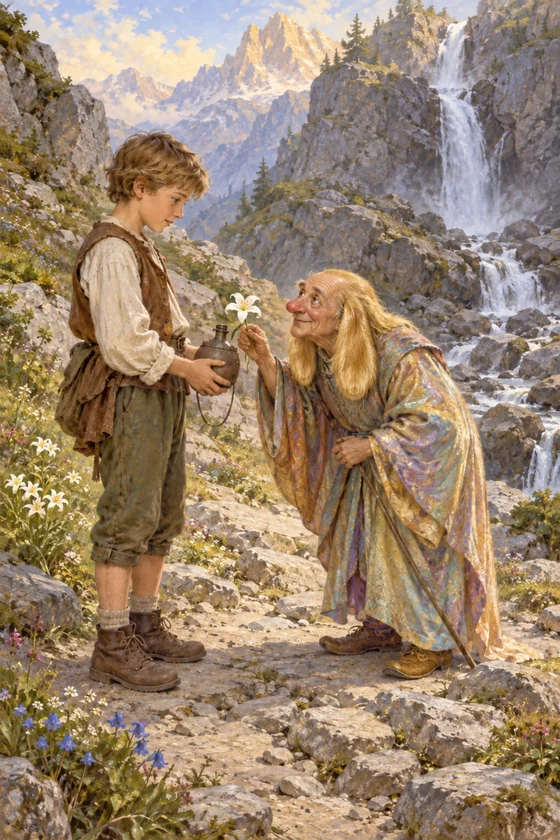
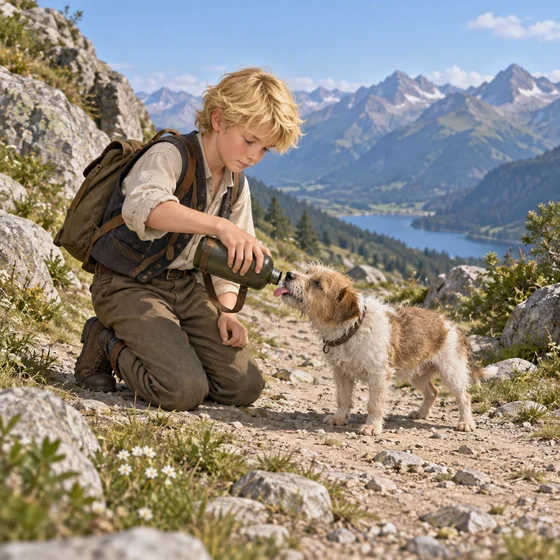
The brothers then pursue the Golden River's supposed gold in separate expeditions. Hans crosses a frightening glacier and climbs in oppressive heat, but refuses water to a dying dog, a child and an old man. He throws his flask into the torrent and disappears beneath it, leaving a black stone. Schwartz welcomes the prospect of keeping the gold to himself. Gluck earns enough to pay his imprisoned brother's fine, and Schwartz obtains water from a corrupt priest. On his climb he likewise ignores sufferers, including an apparent exhausted Hans whose expression becomes mocking before the figure vanishes. The apparition is not proof that Hans has escaped his stone form.
Schwartz casts his flask into the river amid darkness and lightning, and the waters close over him. The conclusion leaves two black stones beside the cataract, still called the Black Brothers. The river monarch explains their transformation through the water they denied to those in need. Their shared failure contrasts with Gluck's generosity, which restores the valley instead of producing literal metal. This collective profile preserves the brothers' common role while distinguishing their individual journeys, Hans's earlier departure and Schwartz's spiteful response. Modern illustrations may interpret garments and workshop design but should retain two human brothers rather than racialising the nickname or inventing demon anatomy.
First appearances & development
John Ruskin's authored fairy tale supplies these characters; its transformations are literary events rather than independently documented regional traditions.
Canon & continuity
Primary narrative passages support the selected character claims.
Selected bibliography
Documented works and useful reading. This is not a list of every appearance.
- 01
The King of the Golden River
Retained original text.
Family & connections
A source-supported family tree or inspiration record has not yet been compiled for this profile. Related reading below indicates a connection in subject matter, not a proven lineage or creative influence.
References
Sources supporting this profile. Linked pages have their own scope and editorial standards.
- PrimaryThe King of the Golden River narrativeResearch access: 2026-10-11
- CustodialProject Gutenberg ebook701 custody and rightsResearch access: 2026-10-11
Image credits
Modern imaginative literary illustrationModern AI interpretation of Hans and Schwartz in their goldsmith workshop.
Faces, garments and workshop arrangement are imagined; two brothers, heavy brows and the adulterated-gold trade follow the authored tale. Full-frame derivative; no upscaling.