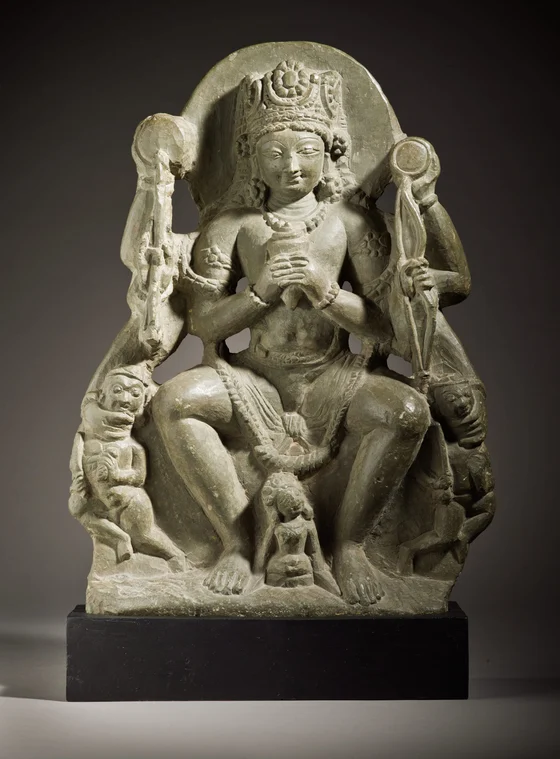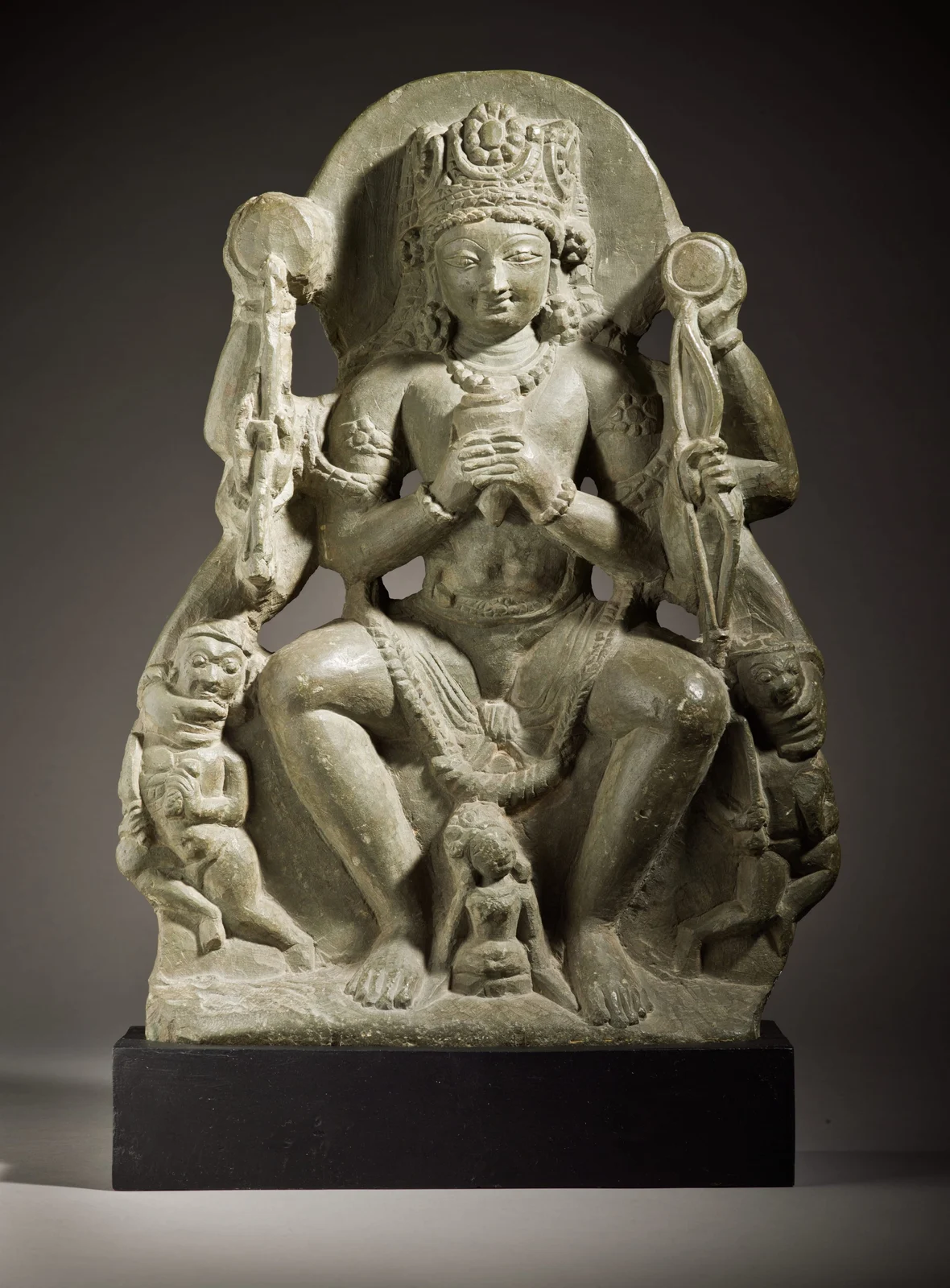
Grey stone sculpture of crowned Vishnu seated with several arms, holding the two small defeated figures of Madhu and Kaitabha at either side; the whole carved slab and black display base are visible.
Kashmir, ca.800. LACMA identifies this sculpture as Vishnu vanquishing Madhu and Kaitabha. The two demons are shown together; the catalogue does not specify which side represents each named demon.
Overview
Kaitabha acts alongside Madhu throughout Medhas’s cosmic-ocean narrative: both originate by Vishnu’s ear, threaten Brahma, fight the awakened Vishnu and are deceived into granting the boon of their own deaths. Their five-thousand-year combat and destruction by the discus belong to the same episode. The passage supplies no separate biography or bodily distinction for Kaitabha; it explains the goddess’s power of delusion through the fate of the pair.
Origins & earliest records
South Asian Hindu sacred narrative
Records & interpretation
Full relevant hosted Pargiter passages directly read; Medhas’s narration within the Markandeya Purana.
Selected bibliography
Documented works and useful reading. This is not a list of every appearance.
- 01
The Mārkaṇḍeya Purāṇa
Canto 81; historical English edition date, not Sanskrit composition date.
Family & connections
A source-supported family tree or inspiration record has not yet been compiled for this profile. Related reading below indicates a connection in subject matter, not a proven lineage or creative influence.
Primary records and illustrations
The Mārkaṇḍeya Purāṇa, Pargiter translation
Devī-Māhātmya; hosted 1904 translation. Canto 81
Full relevant chapter narrative directly read on Wisdomlib; source-specific translation and narrator retained; no illustration claimed.
References
Sources supporting this profile. Linked pages have their own scope and editorial standards.
- Historical primary religious-text translationPargiter, Markandeya Purana — canto 81Research access: 2026-10-05
Image credits
Historical sculpture photographGrey stone sculpture of crowned Vishnu seated with several arms, holding the two small defeated figures of Madhu and Kaitabha at either side; the whole carved slab and black display base are visible.
Kashmir, ca.800. LACMA identifies this sculpture as Vishnu vanquishing Madhu and Kaitabha. The two demons are shown together; the catalogue does not specify which side represents each named demon.