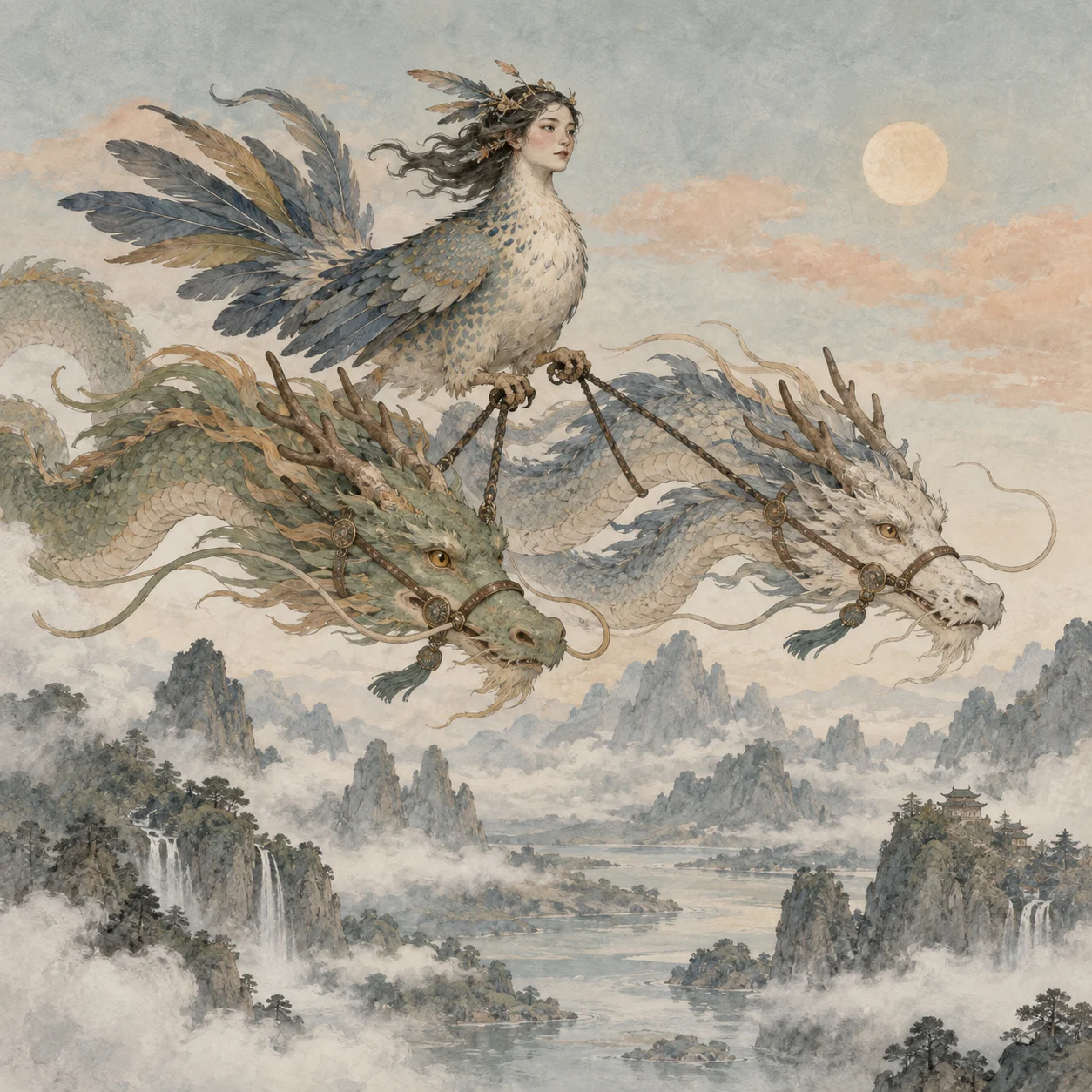
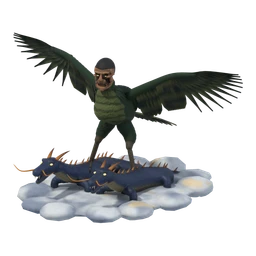
A human-faced bird rides two dragons.
Original AI-generated interpretation; undescribed appearance, colours and setting are imagined. Not ethnographic evidence.
Overview
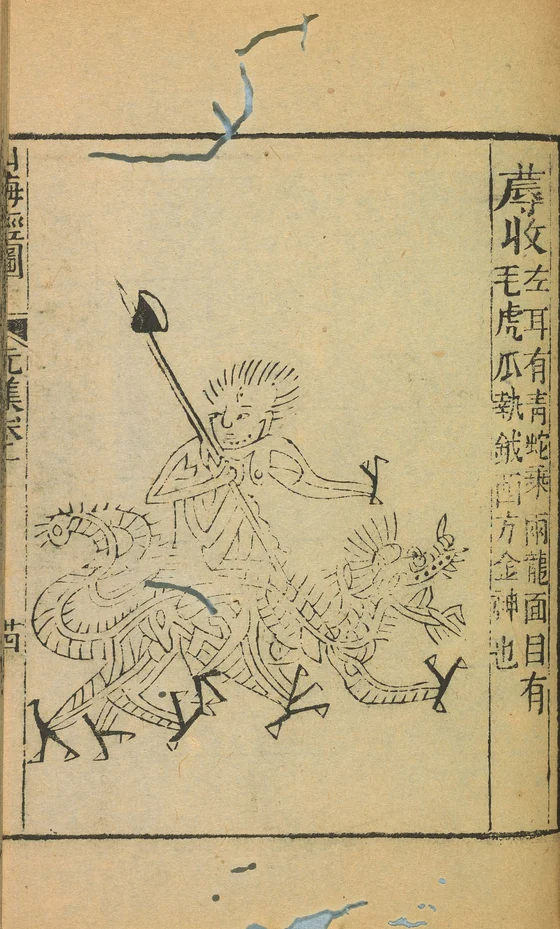
Jumang closes the eastern overseas section of the Shanhaijing. The being has a bird’s body and a human face and rides two dragons. The text’s directional setting is explicit, while a biography, parentage, and ritual instructions are absent from this notice. This profile therefore preserves the compact early description rather than combining it with later theological identifications.
Origins & earliest records
Chinese classical cosmography
Records & interpretation
Complete relevant primary-text passage read in the hosted Chinese transcription.
3D model
An original procedural model made for the Mythscribe World Builder. It is an interpretation based on this entry, not a historical source or a depiction from the records cited here.
Procedural folklore creature kit · 35,300 triangles · 2.2 MB
Opens mythscribe.cloud in a new tab. Sign-in is required.
Selected bibliography
Documented works and useful reading. This is not a list of every appearance.
- 01
Shanhaijing (山海經)
海外東經; Concluding directional notice beginning 東方句芒
Family & connections
A source-supported family tree or inspiration record has not yet been compiled for this profile. Related reading below indicates a connection in subject matter, not a proven lineage or creative influence.
Primary records and illustrations
Shanhaijing (山海經), anonymous received text
海外東經. Concluding directional notice beginning 東方句芒
Complete relevant Chinese paragraph read. No modern anatomy or later identification silently imported; primary-text transcription, not a visual verification of the separate 1667 illustrated edition.
References
Sources supporting this profile. Linked pages have their own scope and editorial standards.
- Primary classical text transcriptionShanhaijing, 海外東經 — Concluding directional notice beginning 東方句芒Research access: 2026-10-05
Image credits
Modern interpretationA human-faced bird rides two dragons.
Original AI-generated interpretation; undescribed appearance, colours and setting are imagined. Not ethnographic evidence.