A sourced illustration has not yet been added. This gap is included in the coverage record.
Overview
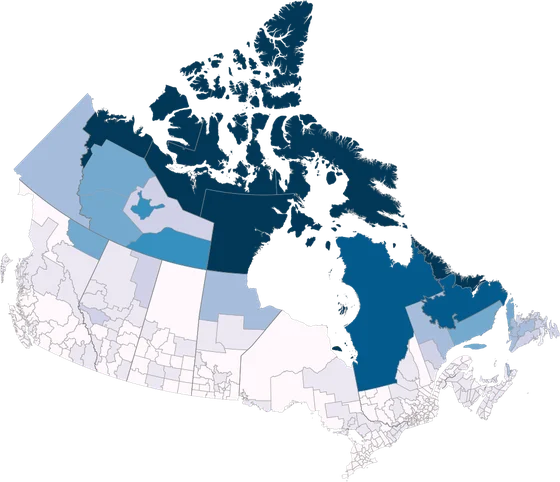
Inuvialuit identify their homeland as Inuvialuit Nunangat in the western Canadian Arctic. Their Living History project names six communities: Aktlarvik, Ikaahuk, Inuuvik, Paulatuuq, Tuktuuyaqtuuq and Ulukhaqtuuq, while recognizing people living elsewhere. The Inuvialuit Final Agreement was signed in 1984. That date records a political agreement, not the origin of the people or a single timeless identity for all Inuit.
The project describes Inuvialuktun through regional varieties shaped by distinct histories: Uummarmiutun, Sallirmiutun and Kangiryuarmiutun, the latter connected with Inuinnaqtun. Language loss through residential schooling is followed by organized renewal. Its account of life on the land emphasizes reciprocal care, seasonal knowledge and adaptation. These are regional community perspectives, not instructions to generalize one Arctic hunting practice or spiritual account across every Inuit society.
Contemporary evidence includes people working with ancestral belongings and changing museum interpretations. Inuvialuit Living History began with a 2009 community visit to the Smithsonian’s MacFarlane Collection. The resulting website increased access to objects held far from home and incorporated Inuvialuit knowledge into catalogue descriptions. Its later activities joined elders and youth in teaching, making and documenting culture. The partnership includes Inuvialuit cultural and communications organizations as well as researchers and heritage institutions. Calling it community-guided preserves that collaborative authorship instead of disguising it as either a wholly external ethnography or an unmediated collective voice. The project records community feedback and translation work as part of its continuing development.
The project’s reading guide points to distinct kinds of authored evidence. Tusaayaksat provides an Inuvialuit magazine archive, while the Inuvialuit Digital Library brings together language materials and audiovisual and written collections. The listed book Across Time and Tundra names Ishmael Alunik, Eddie Kolausok and David Morrison as authors. These routes complement historical inquiry records rather than being interchangeable with them. A bibliography entry establishes a work’s relevance; it does not mean that every issue, interview or book chapter has been read. Nor does an accessible digital collection automatically transfer ownership of the cultural knowledge it contains.
This profile therefore distinguishes regional identity, language varieties, institutional agreements and individual contributors. Archaeological periods are not used as automatic ethnic labels, and political enrolment is not inferred from residence or language fluency. The sources present living communities engaged in interpretation and transmission, with continuing room for differing experiences and accounts.
The Inuvialuit Regional Corporation’s 2025–2026 research portfolio connects language work with contemporary science and control of information. It describes workshops intended to develop climate terminology with translators, language professionals and youth, alongside planned learning-app and dictionary resources in three regional varieties. A separate initiative aims to build an Inuvialuit data strategy covering governance, storage, protection and use of community knowledge. These proposals show an institution articulating priorities for how information is produced and managed. They should not be mistaken for completed applications, an enacted data policy or a finished data centre. The same page identifies a climate glossary as already being shared, making the distinction between available resources and proposed work explicit. Only the written program descriptions were inspected, not the linked glossary, software or underlying research datasets.
History & identity
Regional Inuvialuit self-description and contemporary cultural collaboration; the1984agreement is kept separate from origins.
Sources & representation
Selected English identity/language/land sections, project history and complete public reading-guide body. No independent translation of Inuvialuktun texts or full linked-book reading is claimed.
Selected bibliography
Documented works and useful reading. This is not a list of every appearance.
- 01
Across Time and Tundra: The Inuvialuit of the Western Arctic
Bibliographic reference in the Living History guide; full book not inspected.
- 02
Taimani—At That Time: Inuvialuit Timeline Visual Guide
Inuvialuit Regional Corporation, second edition, copyright2011; colophon physical PDF4. File creation2012 is not publication dating.
Language & cultural connections
These connections link languages or specific cultural works and institutions; they do not establish biological ancestry or ethnic identity.
Inuktut language grouping (Canada)
Statistics Canada and the Office of the Commissioner of Indigenous Languages include Inuvialuktun in their Inuktut grouping. Their introduction also acknowledges a continuum-of-dialects interpretation and preferences for specific language names. This is a linguistic reporting relationship, not biological descent or proof that every Inuvialuit person speaks the same variety.
Located primary passages
Specific passages supporting details in this entry, grouped by their published witness.
Taimani—At That Time: Inuvialuit Timeline Visual Guide
Inuvialuit Regional Corporation, second edition, copyright2011; colophon physical PDF4. File creation2012 is not publication dating.
- The Corporation presents this guide as an educational compilation rather than an exhaustive history. Its introduction distinguishes three language varieties grouped under Inuvialuktun and explains that the collective Inuvialuit designation was adopted in working toward the land claim. It places oral accounts alongside photographs and archival documents, and organizes the timeline through overlapping historical themes rather than a traditional event-by-event chronology.
Colophon physical PDF4; complete foreword PDF8; complete Introduction printed9–12, physical PDF9–12
Remaining chapters and historical narratives not reviewed; dated population figures not carried into current statistics; no practical or ceremonial instructions reproduced.
References
Sources supporting this profile. Linked pages have their own scope and editorial standards.
- Community-guided heritage projectInuvialuit Living History: Who We AreResearch access: 2026-10-05
- Community-guided heritage projectOrigins and development of the projectResearch access: 2026-10-05
- Community-guided heritage projectPublished and digital resourcesResearch access: 2026-10-05
- Regional corporation program statementIRC: ISCC Initiatives 2025–2026Research access: 2026-10-05
Image credits
A sourced illustration has not yet been added. This gap is included in the coverage record.