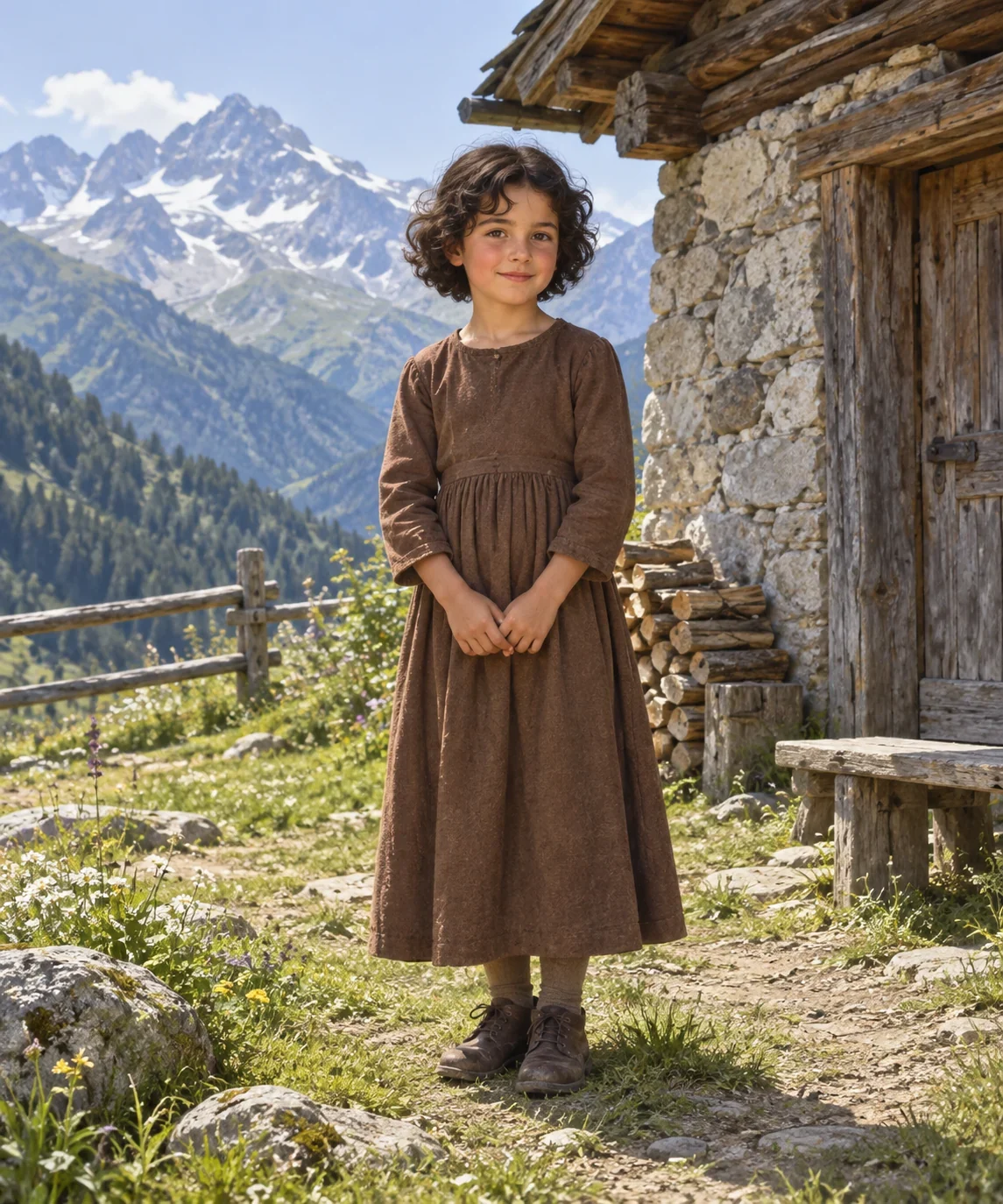
Imagined Heidi in a quiet original-novel portrait.
Unofficial AI interpretation. Heidi pauses beside her grandfather’s mountain hut. Selected object or posture follows the selected original story; exact portrait, unmentioned clothing and scene arrangement are imagined, without an adaptation likeness claim. Full-frame display derivative; no upscaling.
Overview
Heidi is the orphaned Swiss girl whose movement between an Alpine home and Frankfurt shapes Johanna Spyri’s story. Her aunt Dete takes her up the mountain to her grandfather after obtaining employment in the city. At this first arrival she is about five, lively and curious, rather than frightened by the old man’s forbidding reputation. The selected translation also calls her Adelheid and gives her dark eyes and short curly dark hair. She explores the hut, chooses a sleeping place in the hay loft and becomes delighted by the mountain landscape. This account follows the literary child and does not treat a familiar screen costume or hairstyle as an original portrait.
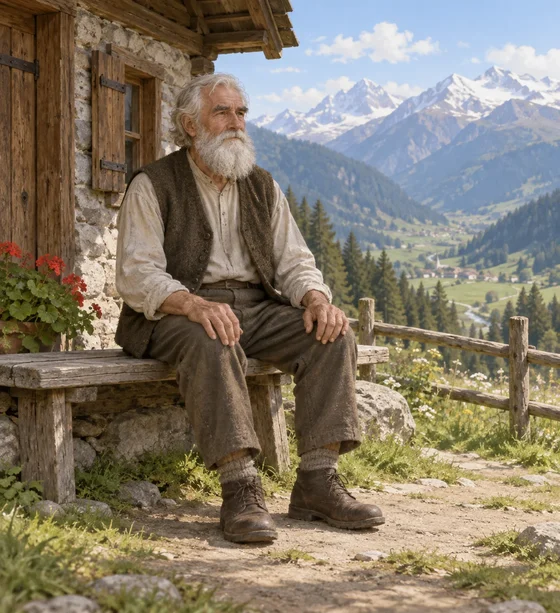
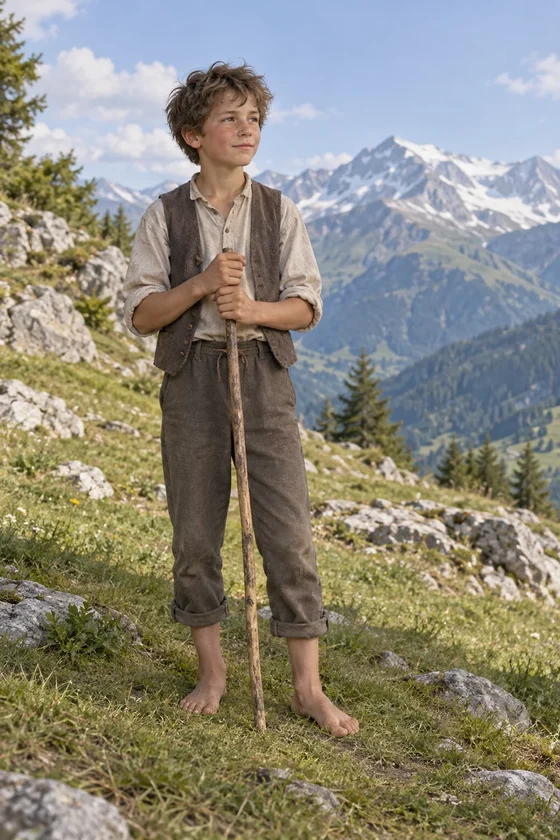
Her life with grandfather includes goat’s milk, bread, outdoor exploration and journeys with Peter’s herd. She notices individual goats and objects to rough treatment of them. Visits to Peter’s blind grandmother bring another kind of companionship: Heidi worries about the old woman’s cold house and difficulty eating hard bread. Grandfather’s repairs and the child’s later wish to bring soft rolls make affection practical. At this stage Heidi does not read, and the grandfather resists demands that she attend school in the village. Her attachment to the mountain is therefore not an uncomplicated account of complete independence from education or other people.
Dete later takes her to Frankfurt to become a companion to Clara Sesemann. Clara welcomes her, but the household’s formal rules and Fraulein Rottenmeier’s judgments bewilder the newcomer. Heidi’s attempts to see the countryside and her accumulation of rolls for grandmother create misunderstandings. Clara’s grandmother treats her more sympathetically and helps her connect reading with desirable stories. Religious instruction also becomes important to the narrative’s explanation of hope and patience. Heidi’s homesickness remains severe, and the supposed haunting of the house is traced to her sleepwalking. The doctor recommends her return to the grandfather instead of accepting the household’s ghost explanation.
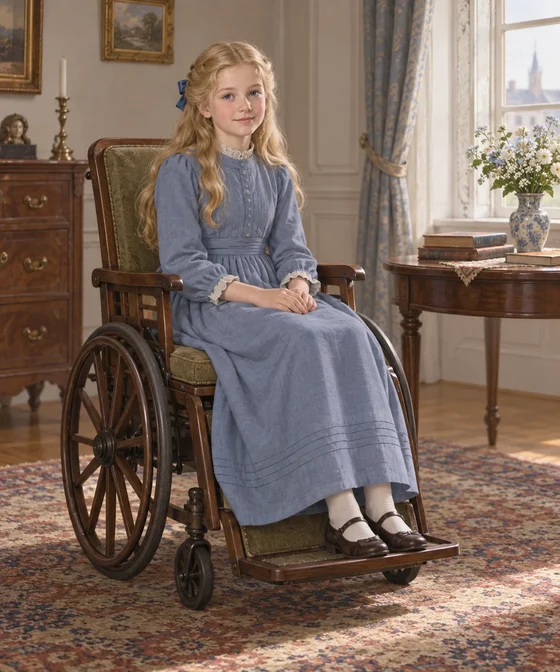
Back on the mountain, Heidi renews old relationships and reads to the blind grandmother. Grandfather’s renewed contact with the village allows schooling during the winter, while her encouragement later helps Peter learn to read. Clara eventually visits the Alpine household. Heidi shares the landscape with her and helps support her first efforts to walk after Peter destroys the wheeled chair. The later improvement is the novel’s narrated outcome, not proof that every mobility difficulty can be resolved by the same circumstances. The closing visits and arrangements strengthen connections between the mountain family and the Sesemanns. This profile keeps Heidi’s care, education and religious confidence within the selected story rather than inventing a later adult biography or literal supernatural power over animals and illness.
First appearances & development
Johanna Spyri’s Heidi establishes this character through Heidi’s mountain and city relationships. This profile follows the selected original narrative and does not combine adaptation continuity with it.
Canon & continuity
Original narrative.
Selected bibliography
Documented works and useful reading. This is not a list of every appearance.
- 01
Heidi
Original.
Family & connections
A source-supported family tree or inspiration record has not yet been compiled for this profile. Related reading below indicates a connection in subject matter, not a proven lineage or creative influence.
References
Sources supporting this profile. Linked pages have their own scope and editorial standards.
- PrimaryHeidiResearch access: 2026-10-12
Image credits
Unofficial modern AI interpretationImagined Heidi in a quiet original-novel portrait.
Unofficial AI interpretation. Heidi pauses beside her grandfather’s mountain hut. Selected object or posture follows the selected original story; exact portrait, unmentioned clothing and scene arrangement are imagined, without an adaptation likeness claim. Full-frame display derivative; no upscaling.