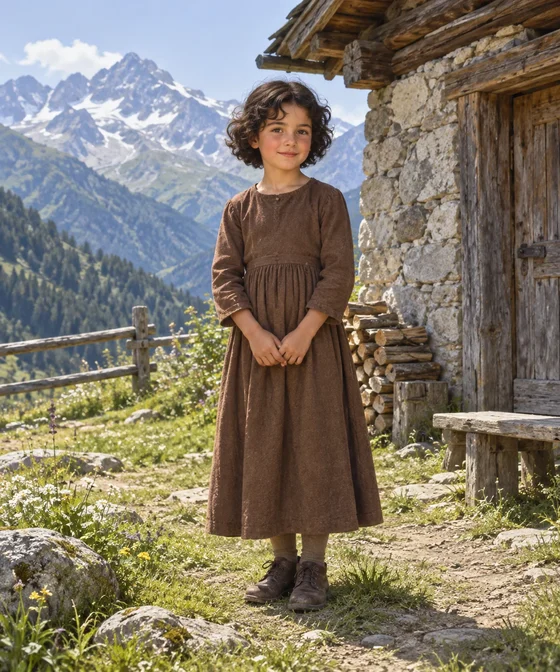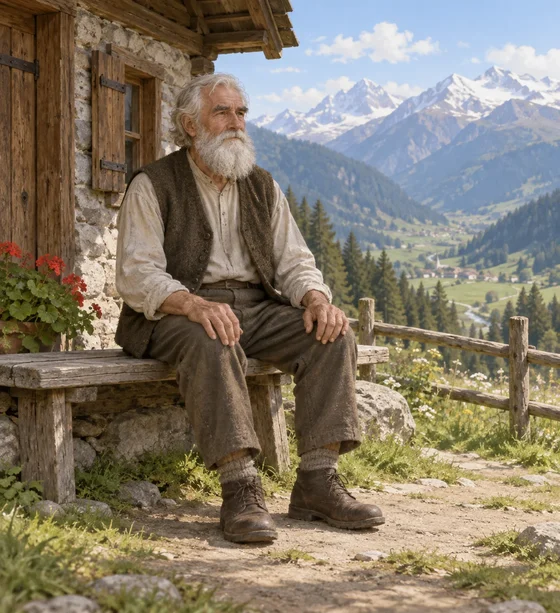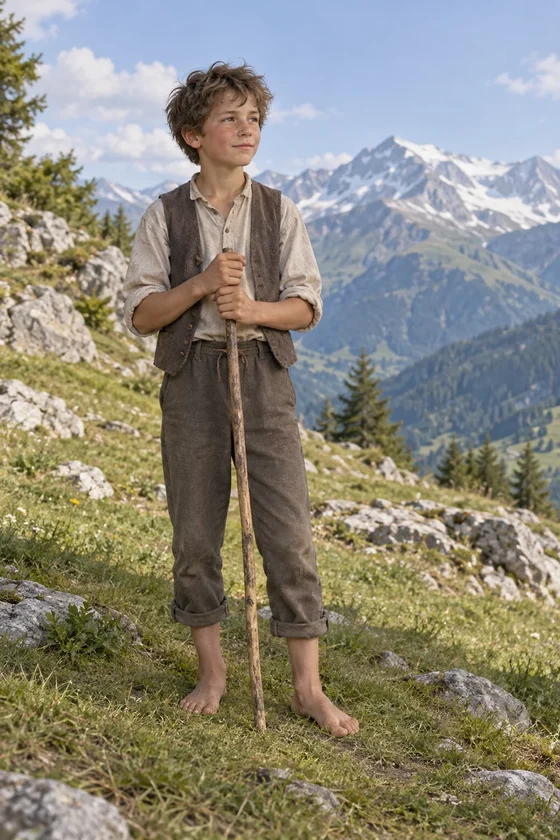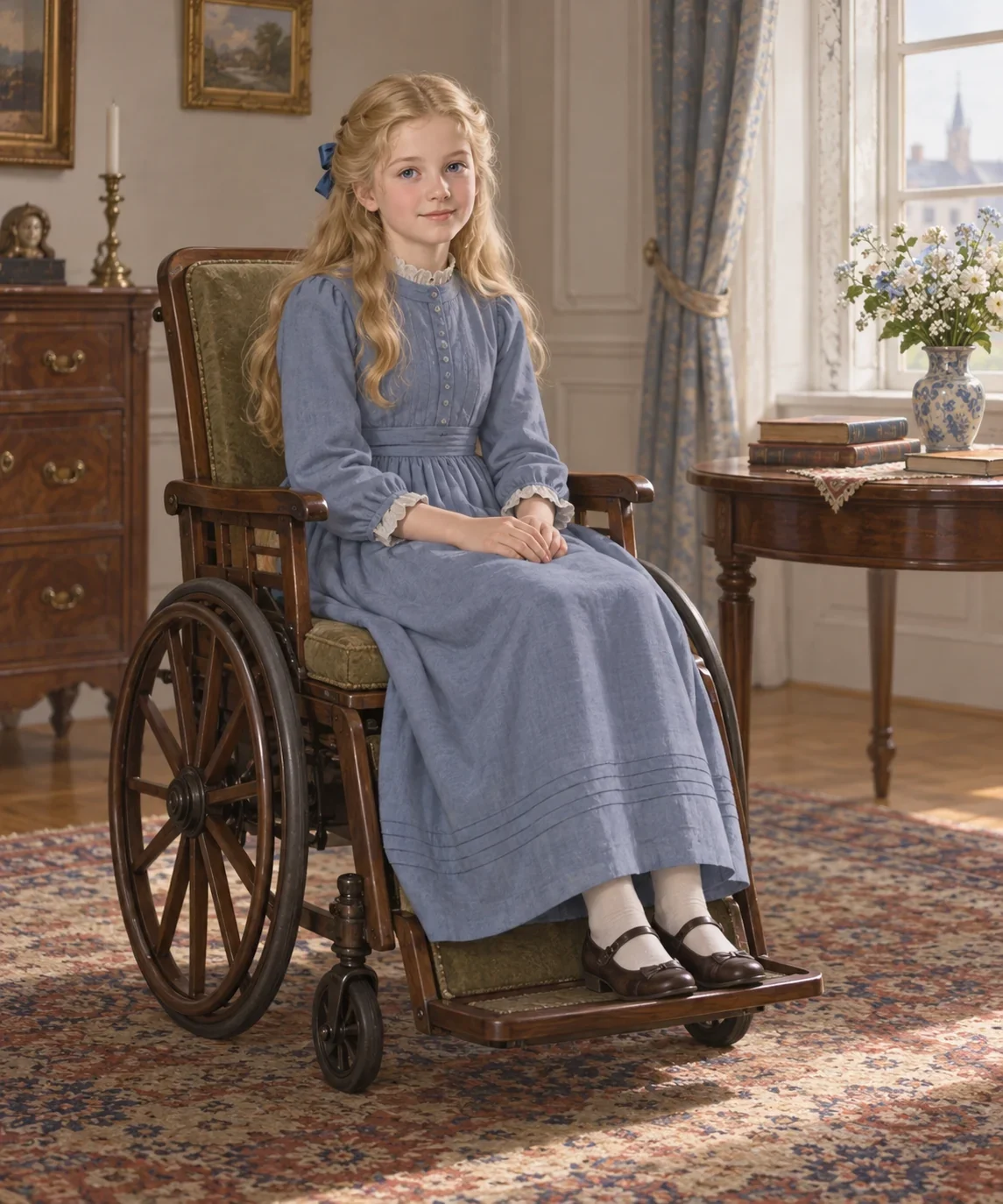
Imagined Clara Sesemann in a quiet original-novel portrait.
Unofficial AI interpretation. Clara sits calmly in her Frankfurt household. Selected object or posture follows the selected original story; exact portrait, unmentioned clothing and scene arrangement are imagined, without an adaptation likeness claim. Full-frame display derivative; no upscaling.
Overview
Clara Sesemann is the Frankfurt girl for whom Heidi is brought to the city as a companion. Her father is frequently away, and Fraulein Rottenmeier supervises the household after her mother’s death. The initial portrait gives a thin pale face and gentle blue eyes; later scenes describe fair hair. She cannot walk at the beginning of the account and uses a wheeled chair, but her character is not exhausted by that condition. She is curious about the unfamiliar mountain child and quickly wants to keep her nearby. Their meeting gives both girls companionship while placing Heidi in circumstances she finds difficult to understand.
Clara enjoys the surprises Heidi brings into the formal house, including misunderstandings that alarm the governess. Her responses are often patient and sympathetic. When Heidi is distressed because the soft rolls saved for grandmother have been confiscated, Clara promises that more can be supplied. She also has a close relationship with her own grandmother, whose visit brings a less rigid approach to the child’s education and emotional needs. The household therefore contains more than one model of care. Clara’s authority over some decisions does not mean that she controls every adult rule or fully recognises the depth of Heidi’s homesickness from the outset.
When the apparent haunting is traced to Heidi’s sleepwalking, the doctor recommends that Heidi return to the mountain. Clara is disappointed but receives an explanation of why the separation is necessary. Plans for her own visit are postponed when she is too unwell to travel, and the doctor goes ahead alone. She eventually arrives with her grandmother and becomes delighted by the scenery and grandfather’s hospitality. Staying in the hut brings new meals, fresh air and attentive assistance. The novel’s association of these changes with increasing strength remains part of its own recovery story; it is not a precise independent diagnosis or a general account of the causes of disability.
Peter’s jealousy leads him to destroy Clara’s chair without her knowledge. Grandfather still takes her to the pasture, and Heidi and Peter help support her movement towards the flowers. She discovers that she can make steps, although the first successful efforts continue to depend on support and are followed by further practice. The later surprise for her grandmother and father shows a more confident ability to walk. Clara’s family expresses gratitude and discusses continued connections with Heidi’s household before the visit ends. This profile preserves the stages, help and relationships of the selected narrative rather than treating Clara’s earlier limitations as a deception, making Peter’s damage benevolent or importing a screen adaptation’s medical explanation and adult biography.
First appearances & development
Johanna Spyri’s Heidi establishes this character through Heidi’s mountain and city relationships. This profile follows the selected original narrative and does not combine adaptation continuity with it.
Canon & continuity
Original narrative.
Selected bibliography
Documented works and useful reading. This is not a list of every appearance.
- 01
Heidi
Original.
Family & connections
A source-supported family tree or inspiration record has not yet been compiled for this profile. Related reading below indicates a connection in subject matter, not a proven lineage or creative influence.
References
Sources supporting this profile. Linked pages have their own scope and editorial standards.
- PrimaryHeidiResearch access: 2026-10-12
Image credits
Unofficial modern AI interpretationImagined Clara Sesemann in a quiet original-novel portrait.
Unofficial AI interpretation. Clara sits calmly in her Frankfurt household. Selected object or posture follows the selected original story; exact portrait, unmentioned clothing and scene arrangement are imagined, without an adaptation likeness claim. Full-frame display derivative; no upscaling.