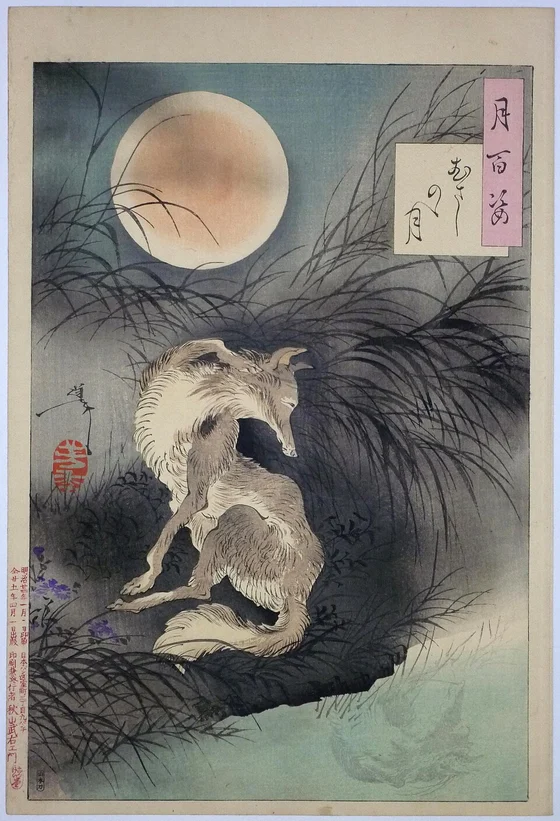
AI-generated interpretation of the cub’s reunion with its parents at the opening of The Grateful Foxes. Rice straw, two fox parents, cub and observing friends follow the tale; their appearance and the surrounding landscape are artistic choices. The written account preserves the story’s later tragic repayment.
A particular historical literary account, not medical evidence or a statement about contemporary Inari practice.
Overview
The Grateful Foxes in Mitford’s Tales of Old Japan begins with two friends gathering fern. Children capture a fox cub to sell for food. One friend purchases it to save its life, nearly quarrelling with his companion before they reconcile. They treat its injured foot with a named herb, offer food and release it when the parents return. The cub rejoins them, and the friends continue their outing. The narrative’s reported recovery does not establish the herb’s medical effectiveness.
The rescuer is a prosperous tradesman whose ten-year-old son later suffers an illness that defeats treatment. A physician prescribes a liver from a living fox. The parents say they will not themselves kill another creature, but ask a mountain resident to buy a liver if hunters obtain one. A messenger soon delivers a jar in that resident’s name, refuses hospitality and leaves without naming the price. The doctor prepares medicine, and the story reports that the boy improves. Three days later the commissioned man arrives to apologise for failing to obtain anything, exposing the unexplained delivery.
That night a woman appears beside the tradesman’s pillow and identifies herself as the mother of the rescued cub. To repay the family, she says, she killed her own young and supplied its liver; the father carried it in the form of the messenger. The tradesman’s wife awakens to find him weeping. After he recounts the revelation, both grieve, pray through the night and tell the household and relatives. The recovered boy later sets up an Inari shrine and honours the fox parents. Kindness thus receives a tragic repayment rather than an uncomplicated gift of prosperity.
The tale also says the foxes receive purchased court rank, but Mitford’s following commentary expressly rejects that claim and discusses offices and fees separately. His medical comparisons are historical authorial commentary, not evidence for the treatment’s effectiveness or a judgement adopted here about Asian medicine. Note 79 distinguishes Inari from the fox attendants, despite the tale’s loose Fox God wording. The retained witness is a 1910 print with an 1871 preface; no underlying Japanese original is identified for this tale. Its human disguises and reciprocal obligations provide a particular fox narrative, not a universal account of kitsune, current shrine teaching or Digimon powers.
Origins & earliest records
Algernon Bertram Freeman-Mitford, later Lord Redesdale, Tales of Old Japan. Retained title prints 1910; complete preface dated London, January 7, 1871. The Grateful Foxes, pp. 213–220. No original Japanese edition collated.
Records & interpretation
Complete named tale, ending and relevant attached notes read, with complete Concerning Certain Superstitions introduction and title/preface. Notes 78–79 and all following rank/medical commentary included. Note 78 is a historical coin gloss; note 79 describes Inari and fox attendants. Purchased rank expressly rejected by editor.
Selected bibliography
Documented works and useful reading. This is not a list of every appearance.
- 01
Tales of Old Japan: The Grateful Foxes, pp. 213–220
Notes 78–79 and all following rank/medical commentary included. Note 78 is a historical coin gloss; note 79 describes Inari and fox attendants. Purchased rank expressly rejected by editor.
Family, evolution & connections
Kitsune
Mitford’s grateful fox parents repay kindness through a costly sacrifice, followed by revelation and remembrance. This specific tale differs from the other Kitsune narratives; its reported treatment and shrine ending do not establish medical effectiveness, universal religious teaching or a modern fictional scene.
References
Sources supporting this profile. Linked pages have their own scope and editorial standards.
- Historical English literary witnessMitford, retained original English collection, PG13015Research access: 2026-10-26
Image credits
Modern interpretation of a historical literary accountAI-generated interpretation of the cub’s reunion with its parents at the opening of The Grateful Foxes. Rice straw, two fox parents, cub and observing friends follow the tale; their appearance and the surrounding landscape are artistic choices. The written account preserves the story’s later tragic repayment.
A particular historical literary account, not medical evidence or a statement about contemporary Inari practice.