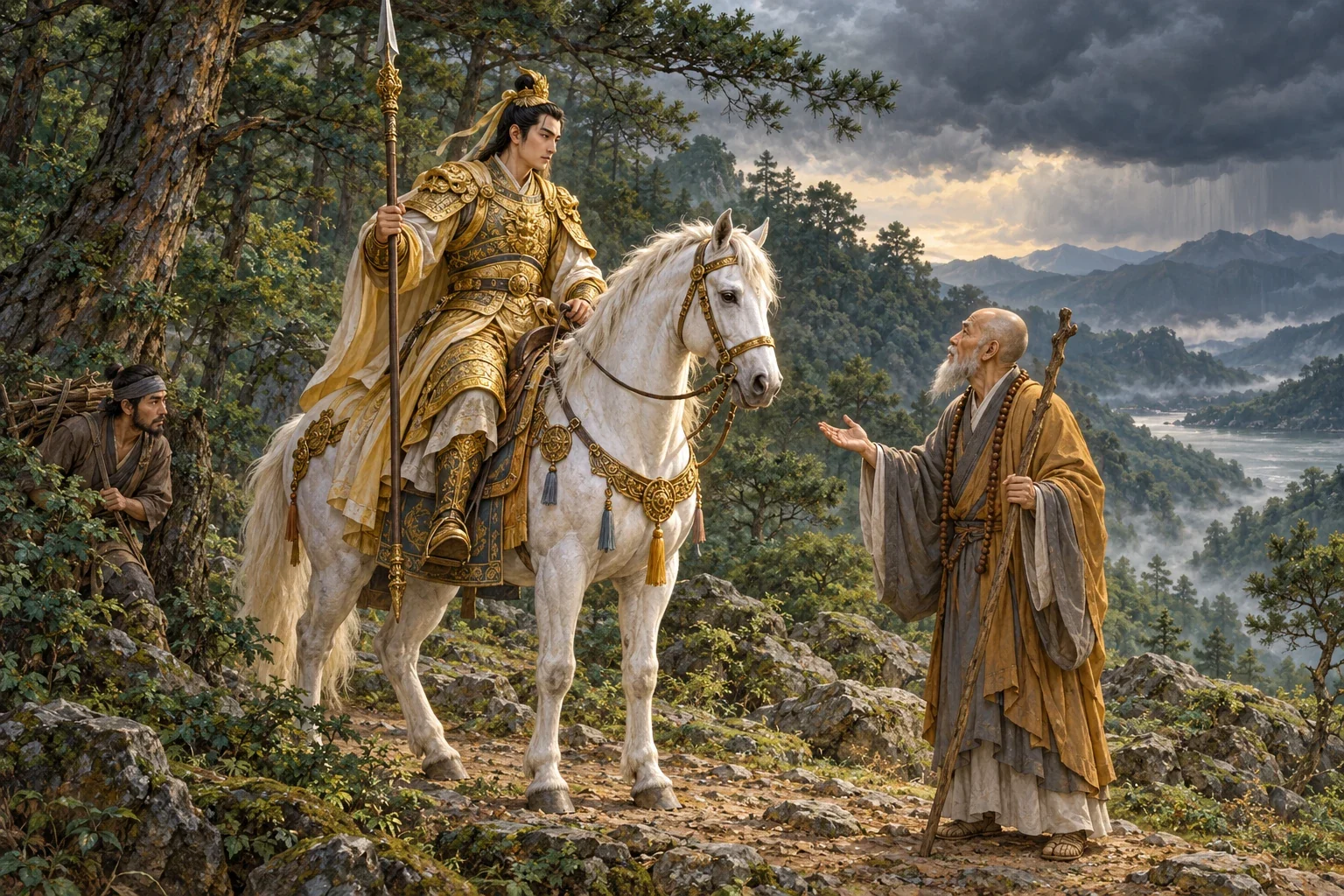
AI-generated interpretation of ChapterIX heavenly rider and priest encountered by woodcutter before the rain. The faces, age, attire details, horse tack, mountain vista and lighting are artistic choices. The spear reaches the upper edge; rider, monk and horse remain legible. This is not an authenticated historical image or ethnographic evidence.
AI-generated interpretation of ChapterIX heavenly rider and priest encountered by woodcutter before the rain. The faces, age, attire details, horse tack, mountain vista and lighting are artistic choices. The spear reaches the upper edge; rider, monk and horse remain legible. This is not an authenticated historical image or ethnographic evidence.
Overview
The heavenly figure in The Visit of the Man of God descends to a hillside in Kang-won Province, where a woodcutter is working. James S. Gale’s translation describes dazzling golden armour, a spear and a white horse. A Buddhist priest carrying a staff follows him. The woodcutter hides among the trees and watches their conversation. No personal name is supplied for either visitor, and the translated labels angel and Man of God should not be mistaken for an independently established identification with a named deity.
The armoured visitor announces that he will flood a region and destroy its inhabitants. The priest intervenes, weeping and asking that the threatened suffering fall on him instead. His appeals bring a partial concession: the visitor narrows the intended devastation and says that he has already reduced the punishment by more than half for the priest’s sake. Further pleas fail. The priest finally submits, and both figures pass upward into heaven. The story gives no cause for the visitor’s anger and does not explain a fault shared by those threatened.
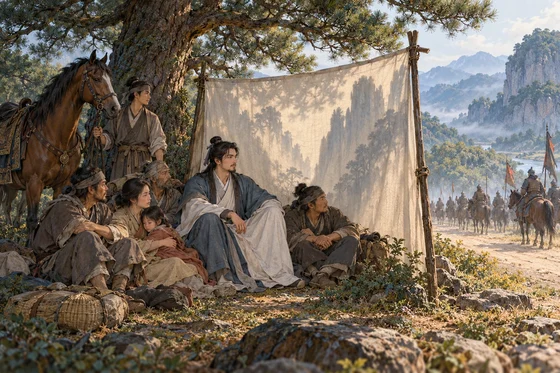
The witness has heard only part of the discussion because of his distance from the speakers. He nevertheless returns home in haste and escapes with his household. Rain begins that day; Mount Otai collapses, the ground becomes a lake and the inhabitants perish. The concluding statement singles out the woodcutter’s escape. That wording sits beside the earlier mention of his family leaving with him, so it should not be expanded into a precise census of survivors. The narrative places the event in 1605, but that date is part of the account rather than independently verified disaster history.
The encounter makes supernatural judgment subject to intercession while leaving the final punishment terrible. Its concrete identifying features are the armoured rider, spear, white horse, priestly companion and return through the air. It does not describe wings, a halo, a special ethnic facial type or an established cult image. The selected witness is Gale’s 1913 English translation of an account attributed to Im Bang. Gale’s religious vocabulary and his preface’s broad claims about Korea belong to that historical translation; this profile does not adopt them as universal statements about Korean belief.
Origins & earliest records
Korean Folk Tales: Imps, Ghosts and Fairies, translated by James S. Gale (London: J. M. Dent; New York: E. P. Dutton,1913), chapter IX; account signed Im Bang. Korean manuscript not independently collated.
Records & interpretation
Complete chapter opening, action and ending read from preserved PG51002 HTML. Complete edition/title/preface framing also read; no attached footnotes occur inside the selected chapters.
Selected bibliography
Documented works and useful reading. This is not a list of every appearance.
- 01
Korean Folk Tales, chapterIX
Complete historical English narrative witness; narrator’s dates retained with qualification.
Family & connections
A source-supported family tree or inspiration record has not yet been compiled for this profile. Related reading below indicates a connection in subject matter, not a proven lineage or creative influence.
References
Sources supporting this profile. Linked pages have their own scope and editorial standards.
- Historical literary translation, public domainGale1913, chapterIXResearch access: 2026-10-27
Image credits
AI-generated interpretationAI-generated interpretation of ChapterIX heavenly rider and priest encountered by woodcutter before the rain. The faces, age, attire details, horse tack, mountain vista and lighting are artistic choices. The spear reaches the upper edge; rider, monk and horse remain legible. This is not an authenticated historical image or ethnographic evidence.
AI-generated interpretation of ChapterIX heavenly rider and priest encountered by woodcutter before the rain. The faces, age, attire details, horse tack, mountain vista and lighting are artistic choices. The spear reaches the upper edge; rider, monk and horse remain legible. This is not an authenticated historical image or ethnographic evidence.