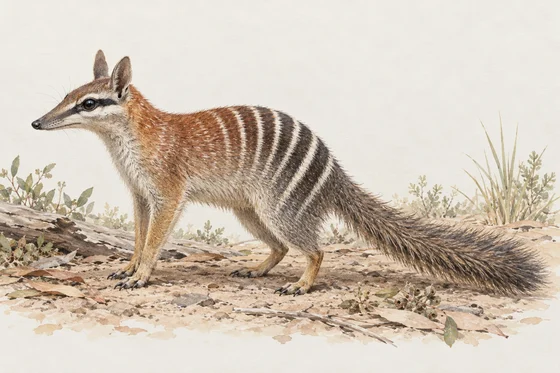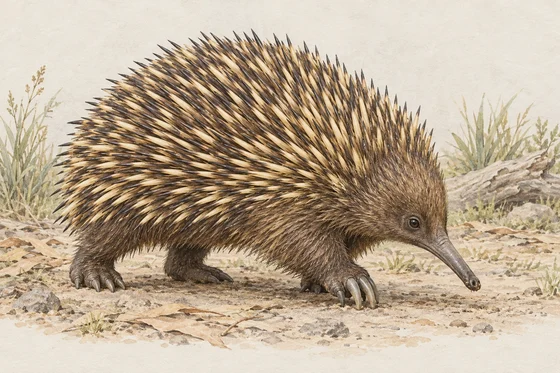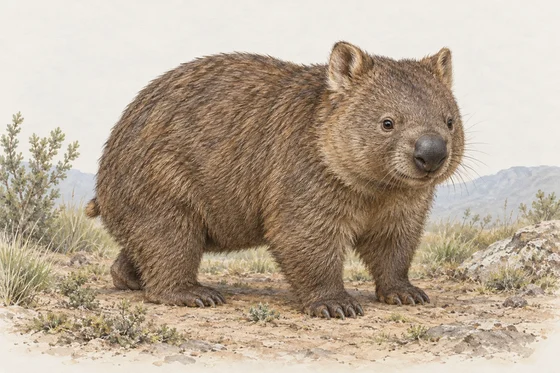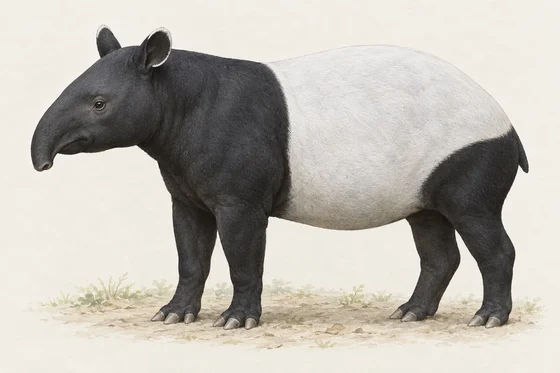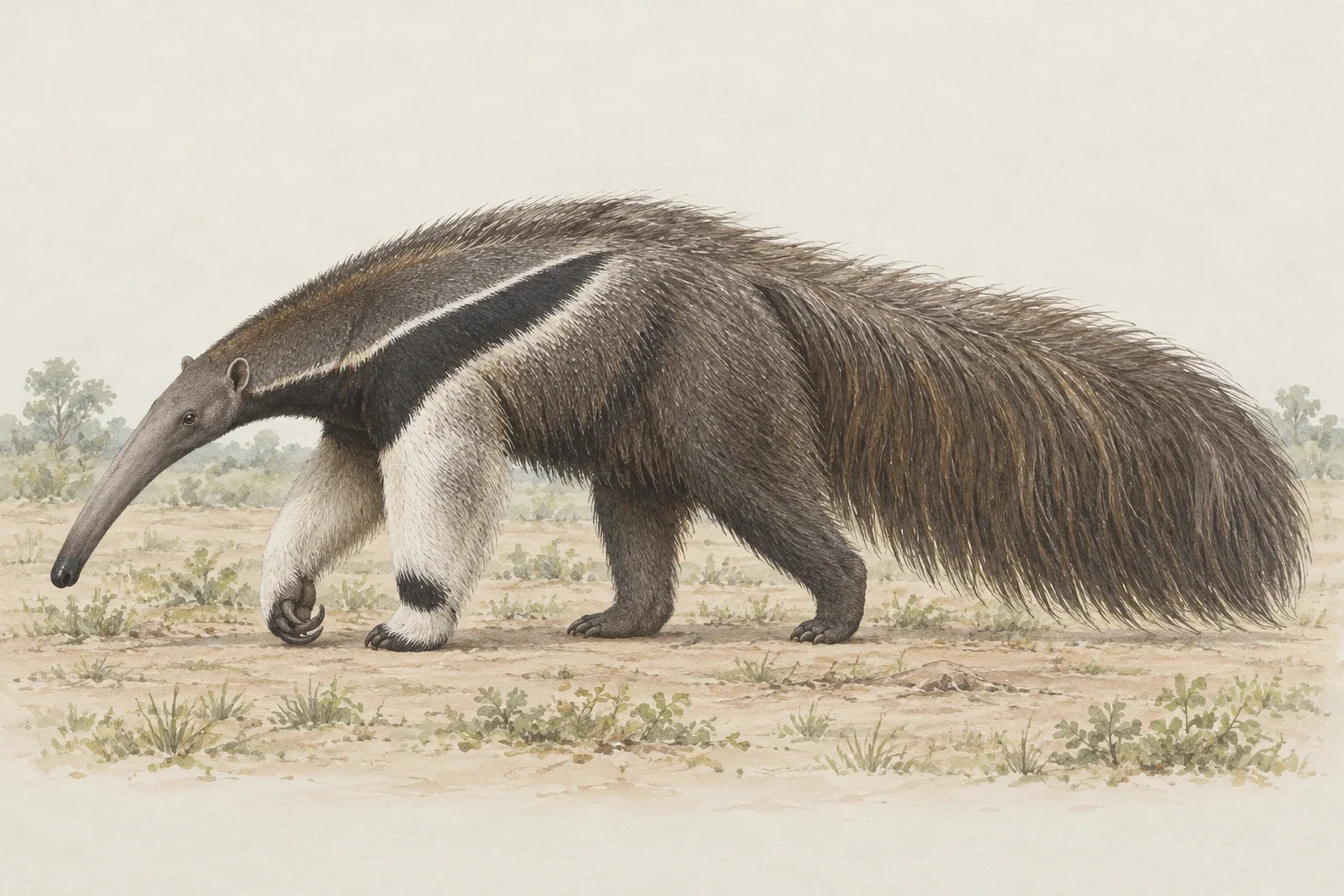
Giant anteater - AI-generated scientific interpretation.
Modern AI-generated scientific illustration. Diagnostic external features follow selected sources; pose, individual pattern and fine details are interpretive. Not photography or independent anatomical evidence.
Overview
The giant anteater combines a long toothless muzzle, powerful forelimbs and a sweeping bristly tail. A broad dark shoulder stripe contrasts with pale forelegs. Front-knuckle walking protects the curved digging claws, while the hind feet support an ordinary walking stance.
Ants and termites supply most of its food. The claws breach nests and a saliva-coated tongue retrieves insects. Smithsonian’s account describes solitary adults and young carried on their mothers’ backs. Activity varies with surroundings, so the species should not be described as universally nocturnal.
Grasslands, wetlands and forests all provide habitat. Smithsonian records local disappearance despite a broad range, and identifies habitat loss and slow reproduction as pressures. A wide geographic range does not establish abundance at any particular site.
Origins & earliest records
An American placental mammal of the anteater family; its insect-feeding anatomy should not be mistaken for a close relationship to the independently specialised numbat or pangolins.
Evidence & interpretation
Smithsonian’s animal account supports external form, feeding and maternal transport. Its collection record independently identifies the species and places Myrmecophagidae in Pilosa; population totals are not inferred.
Selected bibliography
Documented works and useful reading. This is not a list of every appearance.
- 01
Giant anteater
Selected bibliography; institutional account and study limits retained.
- 02
Giant Anteater: collection record
Selected bibliography; institutional account and study limits retained.
Family, evolution & connections
Taxonomic classification
A hierarchy of classified groups, not a chain of direct ancestors.
Source note: Pilosa follows the Smithsonian collection record; the zoo account uses Xenarthra at its order field, a broader grouping.
- ClassMammalia
- OrderPilosa
- FamilyMyrmecophagidae
- GenusMyrmecophaga
- SpeciesMyrmecophaga tridactyla
References
Sources supporting this profile. Linked pages have their own scope and editorial standards.
- InstitutionalGiant anteaterResearch access: 2026-10-10
- InstitutionalGiant Anteater: collection recordResearch access: 2026-10-10
Image credits
AI-generated scientific interpretationGiant anteater - AI-generated scientific interpretation.
Modern AI-generated scientific illustration. Diagnostic external features follow selected sources; pose, individual pattern and fine details are interpretive. Not photography or independent anatomical evidence.