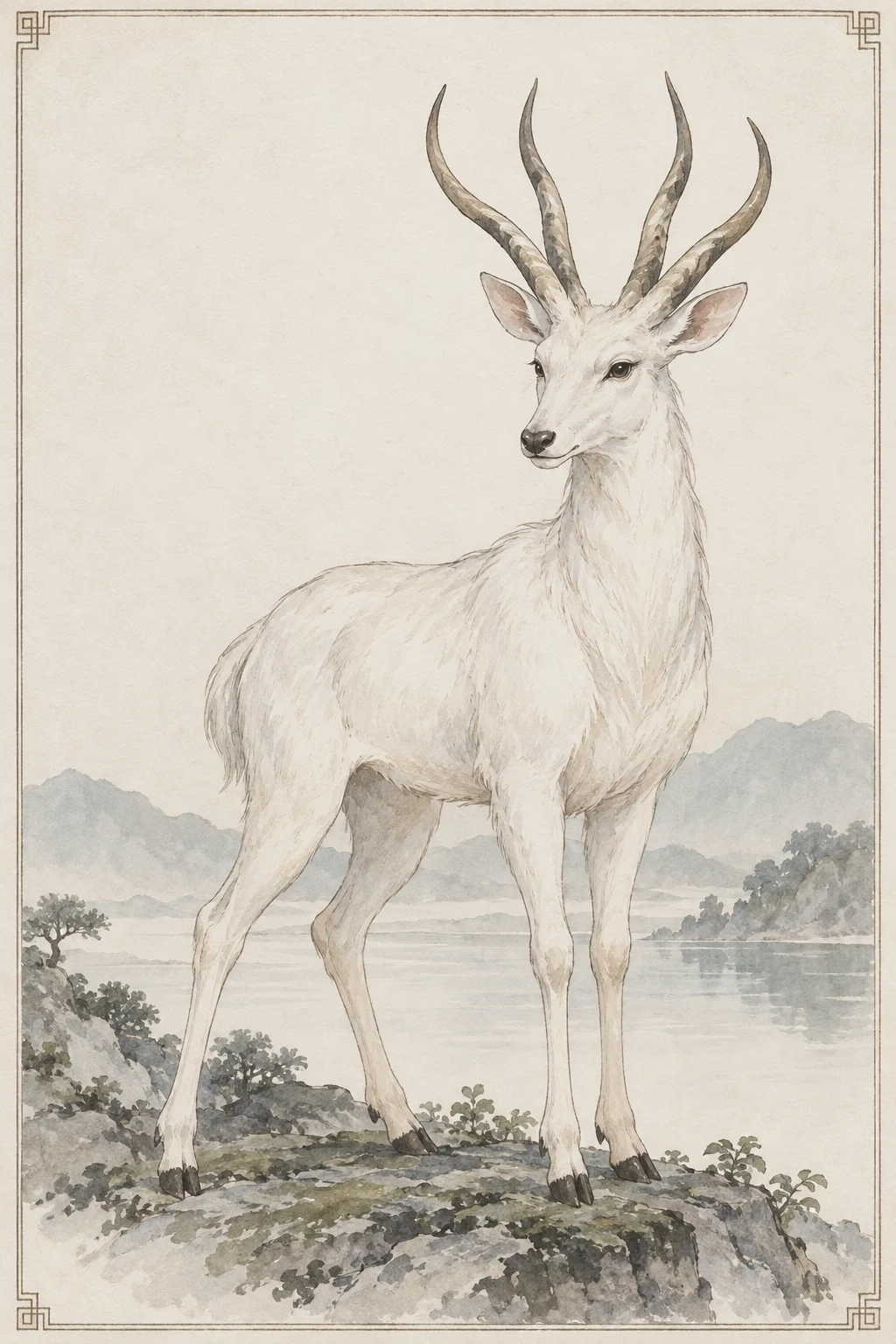
Fuzhu — original modern interpretation.
AI-generated; incidental pose, colors and setting are imagined. Not historical artwork or ethnographic evidence.
Overview
Fuzhu inhabits Mount Aoan in the Shanhaijing’s third central itinerary. It resembles a white deer with four horns. Its appearance foretells great flooding in the locality.
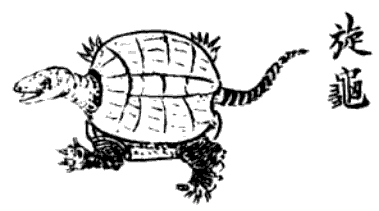
Aoan contains jade, red mineral earth and gold, and is also the home of the spirit Xunchi. The creature’s four horns and white deer form give it a concise visual identity, while its appearance carries the specifically stated flood portent.
Origins & earliest records
China; Shanhaijing Central Mountains
Records & interpretation
Specific named received-primary passage directly read; historical illustration matching remains separate.
3D model
An original procedural model made for the Mythscribe World Builder. It is an interpretation based on this entry, not a historical source or a depiction from the records cited here.
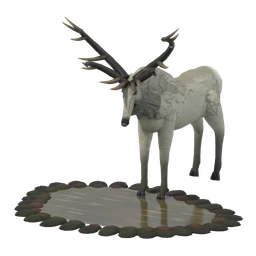
Procedural folklore creature kit · 27,760 triangles · 1.8 MB
Opens mythscribe.cloud in a new tab. Sign-in is required.
Selected bibliography
Documented works and useful reading. This is not a list of every appearance.
- 01
Shanhaijing, Central Mountains
Third central itinerary; Mount Aoan
Family & connections
A source-supported family tree or inspiration record has not yet been compiled for this profile. Related reading below indicates a connection in subject matter, not a proven lineage or creative influence.
Primary records and illustrations
Shanhaijing
Central Mountains. Third central itinerary; Mount Aoan
Specific named received text directly read: 夫諸. Historical image not yet assigned.
References
Sources supporting this profile. Linked pages have their own scope and editorial standards.
- Primary text transcriptionShanhaijing Central Mountains received primary textResearch access: 2026-10-05
Image credits
Original modern interpretation of the cited accountFuzhu — original modern interpretation.
AI-generated; incidental pose, colors and setting are imagined. Not historical artwork or ethnographic evidence.