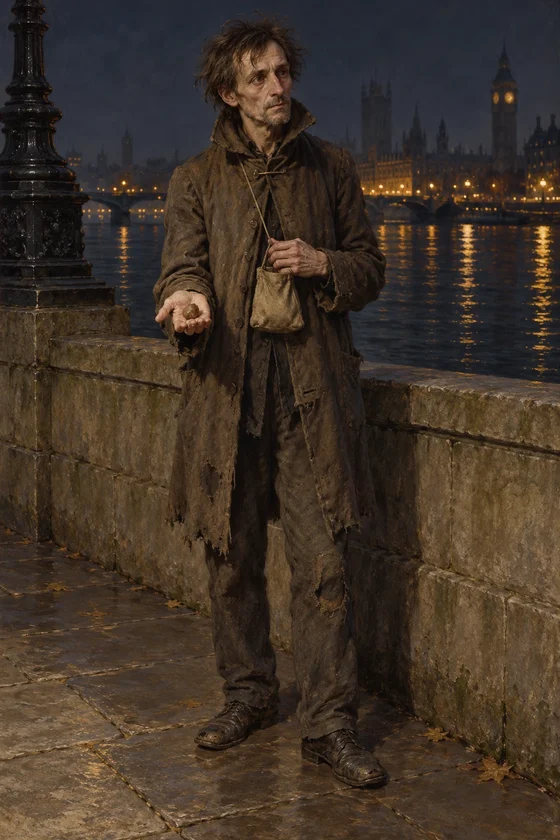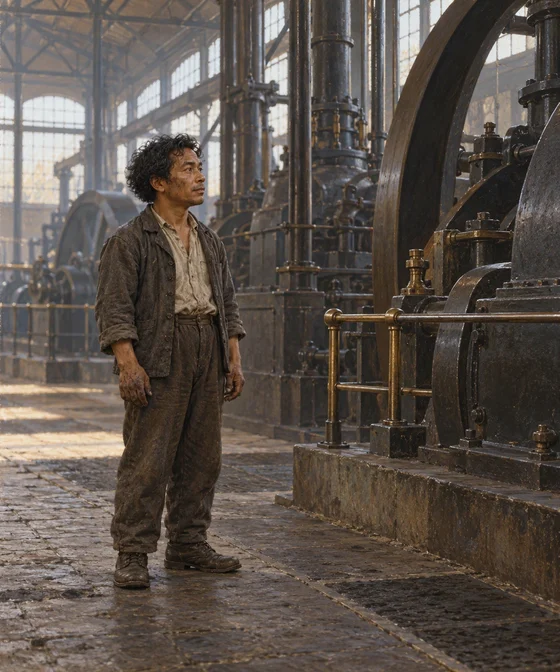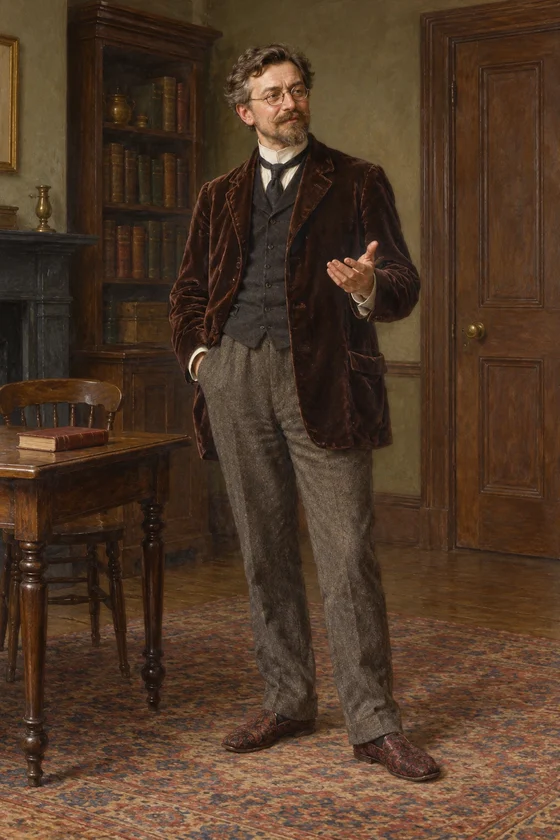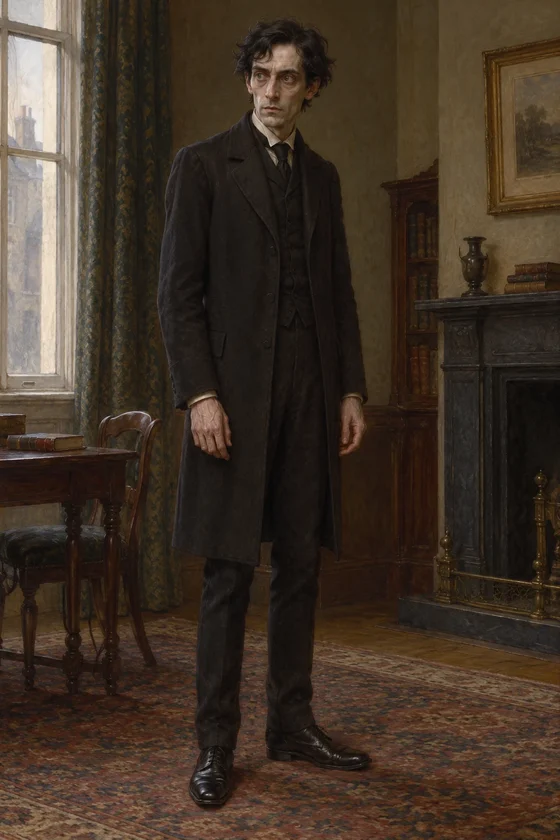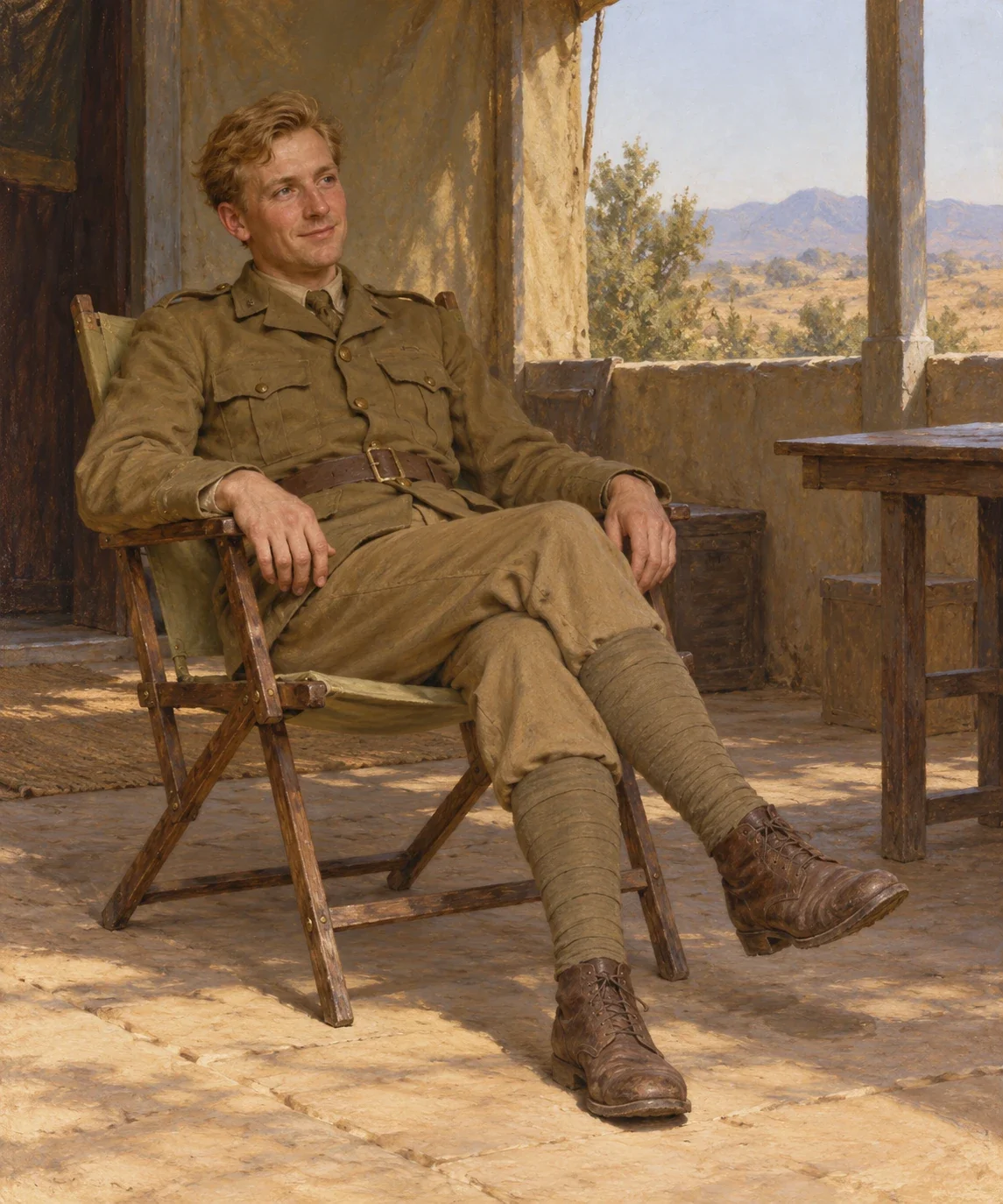
Original AI literary interpretation.
Overview
The flying lieutenant is the unnamed infantry officer whose apparent powers puzzle the visiting ethnologist Graham. The opening conversation describes him as sandy-haired, relaxed in a folding chair and amused by the stories attached to him. Graham reports claims of invulnerability, enormous leaps and black-feathered wings. The officer denies a planned fraud and offers an explanation from an earlier military expedition. These reported powers are the problem the tale explains, rather than abilities the narrative establishes as real.
In the lieutenant's account, Walters sends him with a small mixed party of British soldiers and sepoys to assess a village's disposition during a war. They encounter gunfire, retreat and become trapped on a cliff ledge without adequate food or water. His narrative includes the loss of men and animals, his rescue of an injured soldier onto a mule, and the party's worsening thirst. He recalls resisting a desperate impulse to jump because he is responsible for setting an example. He finally descends using an improvised canvas parachute, reaches water and returns to camp, where a relief party is sent for the survivors. His escape also kills a man below, according to his own account.
The conversation closes with the lieutenant treating the resulting winged legend as a joke, then acknowledging further deaths among those left on the ledge. His cheerful drink of soda and whisky ends a tale whose suffering sits uneasily beside his manner. Both speakers use paternalistic and racist colonial language; their assertions about the people they describe are attributed fictional speech, not verified community testimony. The officer's parachute explanation is itself his retrospective account. The profile concerns this specific literary soldier, without certifying a historical expedition, a genuine indigenous tradition or a supernatural human capable of flight.
First appearances & development
Individual in H. G. Wells’s authored English fiction, retained 1895 collection; no real-life identity or community testimony claimed.
Canon & continuity
Complete selected 52-paragraph tale including its narrative framing and ending; complete original title, dedication, acknowledgments and contents.
Selected bibliography
Documented works and useful reading. This is not a list of every appearance.
- 01
The Stolen Bacillus and Other Incidents
Selected tale: The Flying Man. Retained dated title transcription; no independent physical-copy or first-appearance verification.
Family & connections
A source-supported family tree or inspiration record has not yet been compiled for this profile. Related reading below indicates a connection in subject matter, not a proven lineage or creative influence.
References
Sources supporting this profile. Linked pages have their own scope and editorial standards.
- Primary authored English fictionThe Flying Man - complete historical authored textResearch access: 2026-10-21
Image credits
AI-generated illustrationOriginal AI literary interpretation.