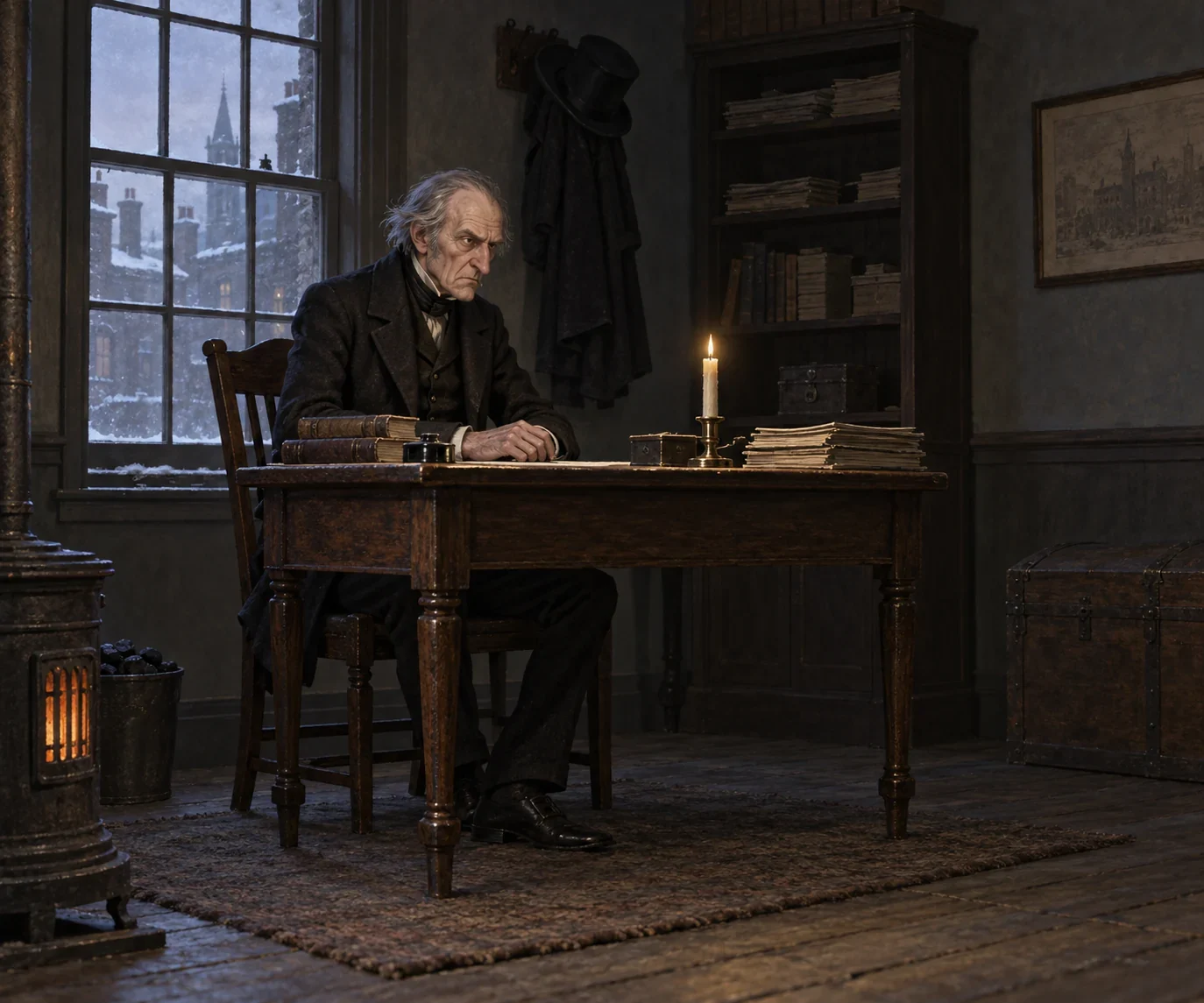
Imagined Ebenezer Scrooge in a quiet original-novel portrait.
Unofficial AI interpretation. Scrooge pauses at his office desk. Selected object or posture follows the original novel; exact portrait, unmentioned clothing and scene arrangement are imagined, without an adaptation likeness claim. Full-frame display derivative; no upscaling.
Overview
Ebenezer Scrooge is the miser whose transformation gives A Christmas Carol its central movement. He continues the business once shared with Jacob Marley, retaining the dead partner’s name on its sign. His cold office and grudging treatment of his clerk Bob Cratchit make his attachment to money visible in everyday conduct. He dismisses his nephew Fred’s invitation and rejects the appeal of visitors collecting for poor people. His references to prisons and workhouses reveal a willingness to let institutions replace personal concern. The narrator’s description of a cold, pinched appearance belongs to this initial portrait, not to a fixed supernatural species or an established numerical age.
Marley’s appearance disturbs the confidence with which Scrooge has dismissed Christmas and charity. The dead partner bears a chain made from the objects of his business life and explains the consequences of failing to care for others. He announces three further visitors. Scrooge initially seeks ordinary explanations for the apparition, but the encounters force him to confront experiences beyond his office. Marley is distinct from the subsequent spirits, and Scrooge’s uncertainty does not prove that the entire night is merely indigestion or an ordinary dream. The story uses fear and doubt as part of the process through which he begins to listen.
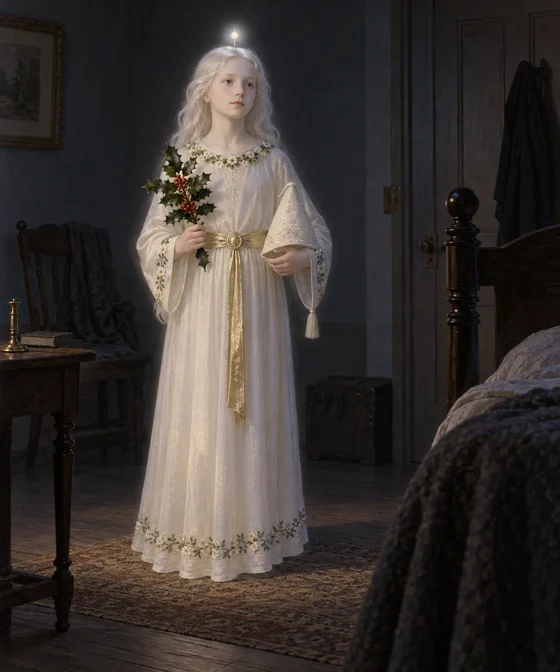
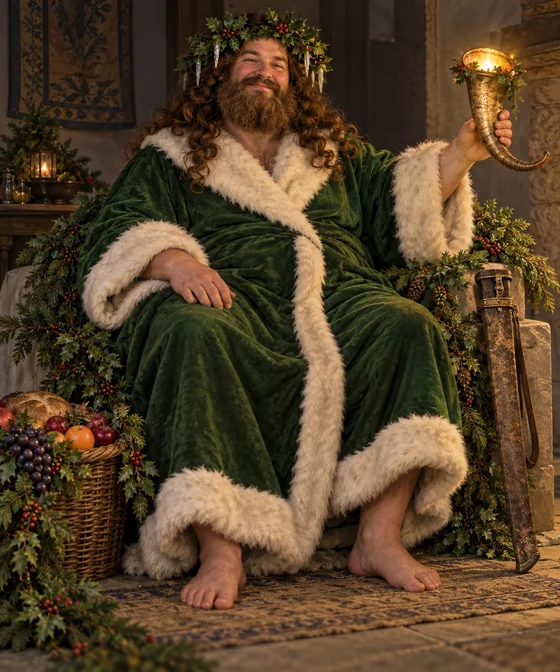
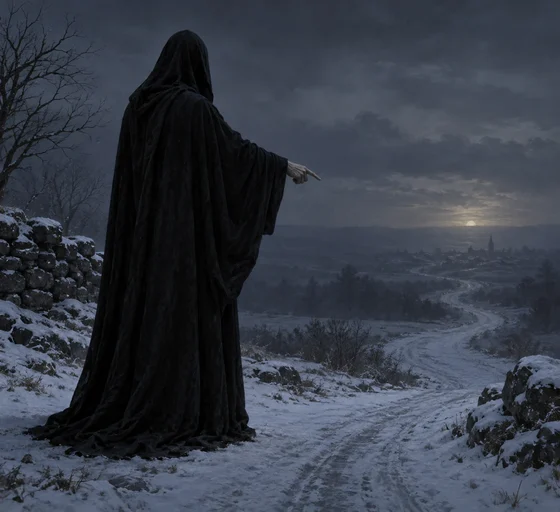
The Ghost of Christmas Past returns him to childhood loneliness, his sister Fan’s affection, the generosity of Fezziwig and the breaking of his engagement to Belle. Those scenes expose losses that commercial success has not repaired. Christmas Present shows him celebrations among people with fewer resources, including the Cratchits, and Fred’s continuing goodwill. Tiny Tim’s vulnerability makes the consequences of Scrooge’s earlier language especially painful. The final spirit shows an unregretted death, the sale of possessions taken from the dead and a neglected grave bearing his own name. Scrooge asks whether these scenes describe an unavoidable future or one that can change, preserving the distinction between warning and a fully settled destiny.
On waking, he discovers that Christmas Day remains available to him. He sends a large turkey to the Cratchits, gives money to the charity collector and joins Fred’s gathering. His later joke at Bob’s expense ends in a promised rise and practical help rather than a return to punishment. The closing narration reports that he keeps his commitments and becomes a supportive figure to Tiny Tim, who survives. His changed life therefore includes sustained conduct beyond one frightened morning. This profile follows Dickens’s original story without combining stage, film or comic additions into its biography. The three guiding spirits and Marley retain distinct roles, while Scrooge’s reform remains an ethical and social change rather than the acquisition of magical powers.
First appearances & development
Charles Dickens’s A Christmas Carol establishes this character through Scrooge’s encounters with the three guiding spirits. This profile follows the selected original narrative and does not combine adaptation continuity with it.
Canon & continuity
Original narrative.
Selected bibliography
Documented works and useful reading. This is not a list of every appearance.
- 01
A Christmas Carol
Original.
Family & connections
A source-supported family tree or inspiration record has not yet been compiled for this profile. Related reading below indicates a connection in subject matter, not a proven lineage or creative influence.
References
Sources supporting this profile. Linked pages have their own scope and editorial standards.
- PrimaryA Christmas CarolResearch access: 2026-10-12
Image credits
Unofficial modern AI interpretationImagined Ebenezer Scrooge in a quiet original-novel portrait.
Unofficial AI interpretation. Scrooge pauses at his office desk. Selected object or posture follows the original novel; exact portrait, unmentioned clothing and scene arrangement are imagined, without an adaptation likeness claim. Full-frame display derivative; no upscaling.