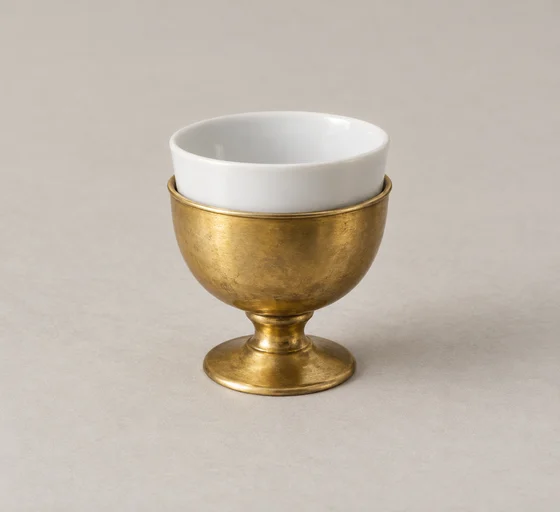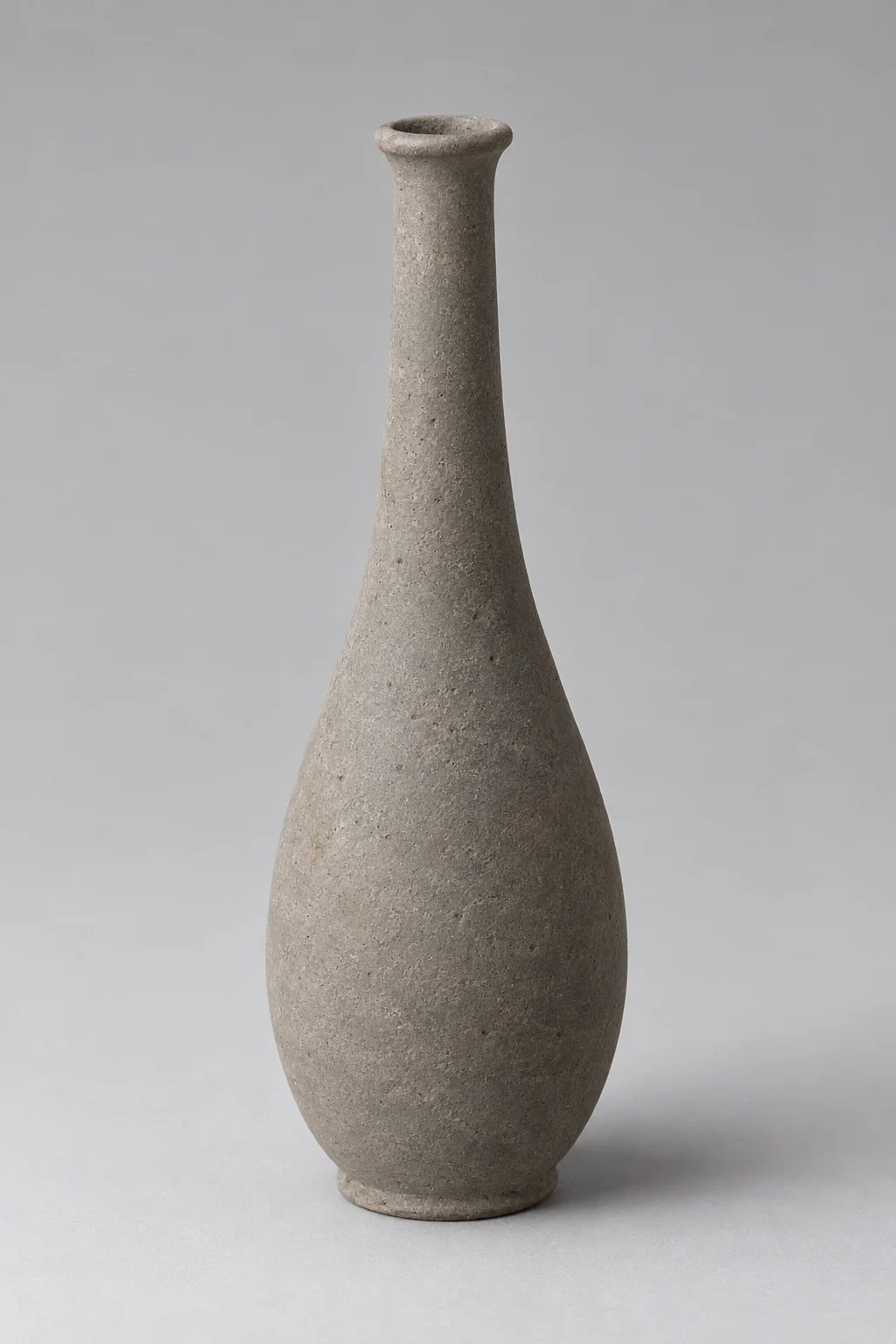
Generated contextual interpretation of vessels in Lane’s dated Cairo account; not an authenticated specimen or exact replica. Colour and surface appearance are interpretive. A narrow-mouthed form is selected; individual vessels in the source group are not all named.
Generated contextual interpretation of vessels in Lane’s dated Cairo account; not an authenticated specimen or exact replica. Colour and surface appearance are interpretive. A narrow-mouthed form is selected; individual vessels in the source group are not all named.
Overview
Lane distinguishes two kinds of earthen water bottle by their mouths: the dórak has a narrow opening, while the kulleh has a wider one. He describes a greyish porous body and says that the bottles were placed in moving air so that evaporation cooled their contents. Their usual tray received the moisture that passed through the clay. The engraving presents several different bottle and jar forms together, including a complete slender, narrow-necked bottle at the right. It does not individually name every vessel in the group. The contextual study therefore shows a plain narrow-mouthed example informed by the text and that visible outline, without claiming that it is a precisely identified surviving specimen.
These vessels also figure in Lane’s description of preparation and service. He says that interiors were sometimes blackened and scented with smoke, and that some people added orange-flower water. His list of stoppers includes several metals, wood and palm leaves, while colder weather could bring a change to china bottles. A note adds further jar and large-bottle names, making clear that his main two-part distinction was not a complete catalogue of water containers. Elsewhere in the same chapter, he describes a shopkeeper’s earthen bottle being refilled by a passing water-carrier. This connects the household object with urban supply and work. The account remains a dated outsider’s description; it offers neither present-day drinking-water advice nor proof of unchanged practice.
History & identity
Edward William Lane’s account was written in Egypt in 1833–1835, using earlier notes. The retained Ward, Lock and Co. reprint says it follows the third edition of 1842. Its transcribed title names London, New York and Melbourne but supplies no printed year; Project Gutenberg catalogues this edition as 1890. These publishing locations do not establish where the illustrated objects were made.
Sources & representation
The published engravings accompany the author’s explanatory text. They support visible forms within a mediated account, not a surviving object’s provenance or an authenticated modern reconstruction.
Selected bibliography
Documented works and useful reading. This is not a list of every appearance.
- 01
An Account of the Manners and Customs of the Modern Egyptians
Ward, Lock and Co. reprint of the 1842 text; catalogue date 1890 distinguished from undated transcribed title. Chapter V, Domestic Life, with its complete notes; author’s preface and third-edition advertisement.
Language & cultural connections
Source-supported language and cultural connections have not yet been compiled for this profile.
References
Sources supporting this profile. Linked pages have their own scope and editorial standards.
- Historical outsider observation with explanatory engravings; later reprintLane, Modern Egyptians: Chapter V and notes, retained historical reprintResearch access: 2026-10-18
Image credits
AI-generatedGenerated contextual interpretation of vessels in Lane’s dated Cairo account; not an authenticated specimen or exact replica. Colour and surface appearance are interpretive. A narrow-mouthed form is selected; individual vessels in the source group are not all named.
Generated contextual interpretation of vessels in Lane’s dated Cairo account; not an authenticated specimen or exact replica. Colour and surface appearance are interpretive. A narrow-mouthed form is selected; individual vessels in the source group are not all named.