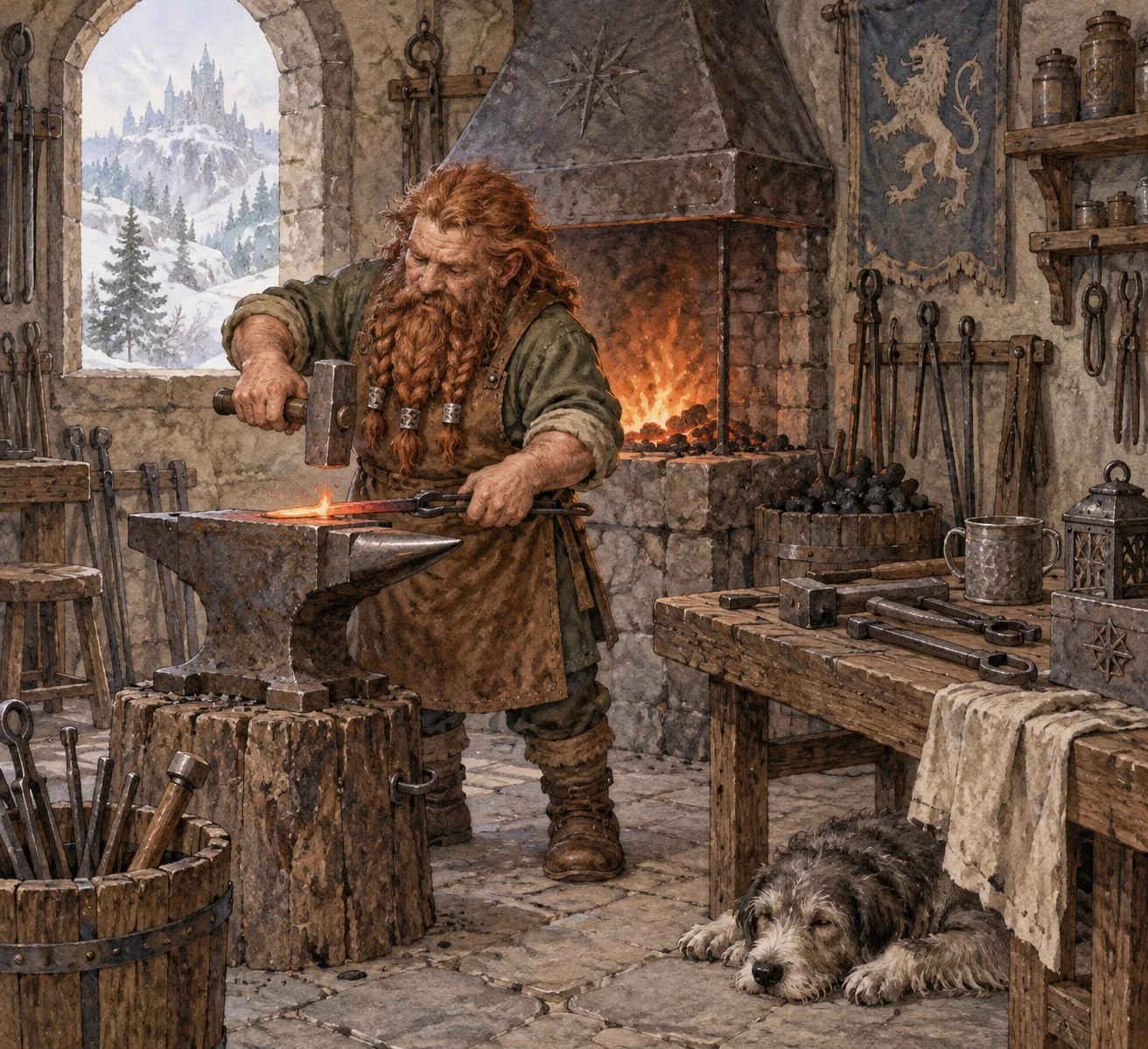
An imagined small Narnian dwarf at a metalworking bench.
Original AI-generated interpretation; undescribed appearance, clothing and incidental setting are imagined, not official design evidence. Unofficial interpretation.
Overview
Narnian dwarfs are small humanoid people with a conspicuous craft tradition and independent political judgements. The Magician's Nephew places their forging within the world's earliest royal arrangements, while the later-published setting of Prince Caspian gives Trumpkin and Nikabrik sharply different responses to crisis. Physical resemblance and a shared name do not make their decisions interchangeable: loyalty, scepticism and desperate opportunism can divide members of the same people.
The Last Battle develops that independence into a darker refusal of trust when a group rejects both the deceptive regime and the genuine rescue offered beyond it. Its treatment does not erase dwarfs who choose differently. Lewis uses the terms Red and Black Dwarfs, but their hair or beard distinctions should not be converted into a rule that every individual has a predetermined morality. This franchise-specific profile follows those literary communities and avoids borrowing mining statistics, clan structures or reproduction claims from other fantasy dwarfs.
First appearances & development
Narnian dwarfs appear in the 1950 Lion, the Witch and the Wardrobe, while later books expand both their political disagreements and the world's creation. The 1955 Magician's Nephew thus describes earlier internal history. The spelling and lore are Lewis's specific treatment; unrelated franchise dwarves and every named individual are not merged into the category.
Canon & continuity
The named novels provide the craft, political conflict and final refusal of trust. The independent dwarf article is cross-checked for those story references, rather than accepted wholesale where it mixes film character labels with book events. Dwarfs are treated as a sapient people with individual differences, not a morally fixed category determined by beard colour.
Selected bibliography
Documented works and useful reading. This is not a list of every appearance.
- 01
The Lion, the Witch and the Wardrobe
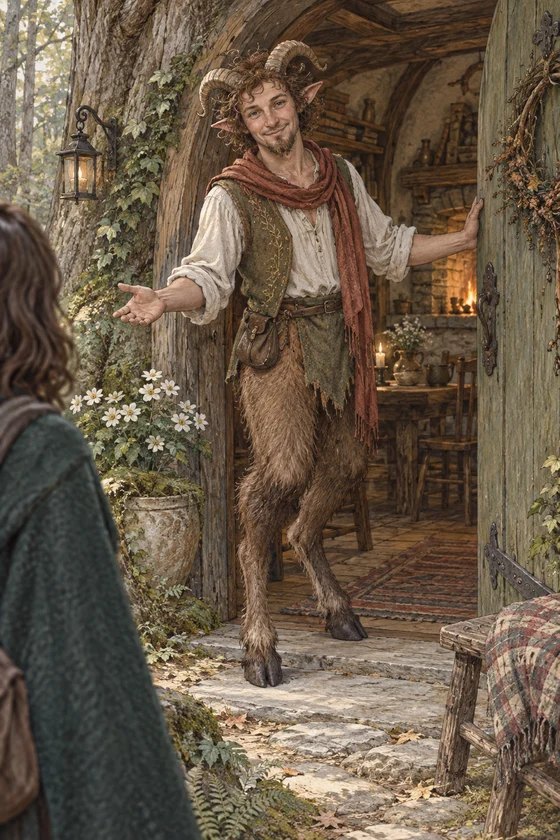
Fauns and Talking Beasts in published Narnia.
- 02
Prince Caspian
Old Narnian peoples under Telmarine rule.
- 03
The Magician's Nephew
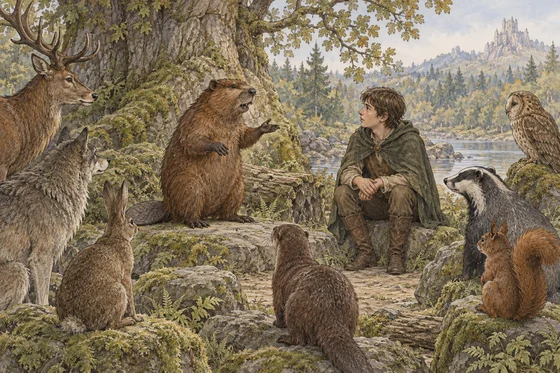
Creation of Narnia and selection of Talking Beasts.
- 04
The Last Battle
Tash's manifestation, dwarfs, tree destruction and Narnia's ending.
Family, evolution & connections
Dwarf
The selected medieval Icelandic account, read through Anderson’s 1901 edition, places dwarfs in earth and rocks and explains their human understanding and form through a divine decision. Its lists distinguish named dwellers in mould from dwellers in rocks. This provides a particular historical use of the name beside the later fictional namesake; it does not establish a shared biography, uniform stature or costume, or the creator’s consultation of this text.
References
Sources supporting this profile. Linked pages have their own scope and editorial standards.
- ReferenceDwarf (Narnia) — reference guideResearch access: 2026-10-05
Image credits
Modern interpretationAn imagined small Narnian dwarf at a metalworking bench.
Original AI-generated interpretation; undescribed appearance, clothing and incidental setting are imagined, not official design evidence. Unofficial interpretation.