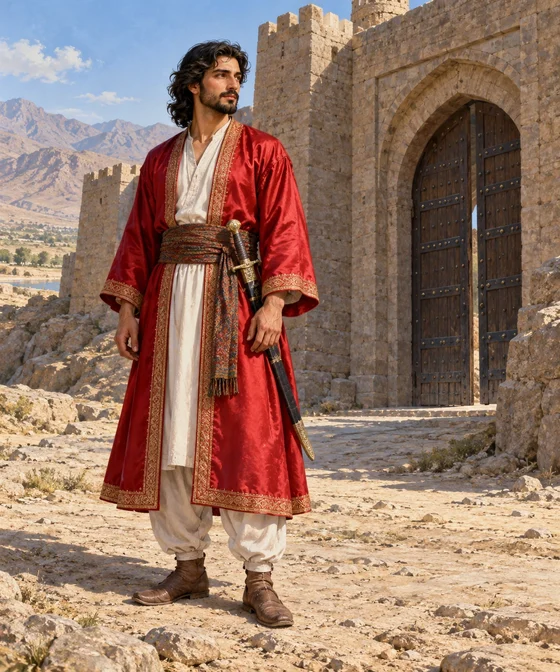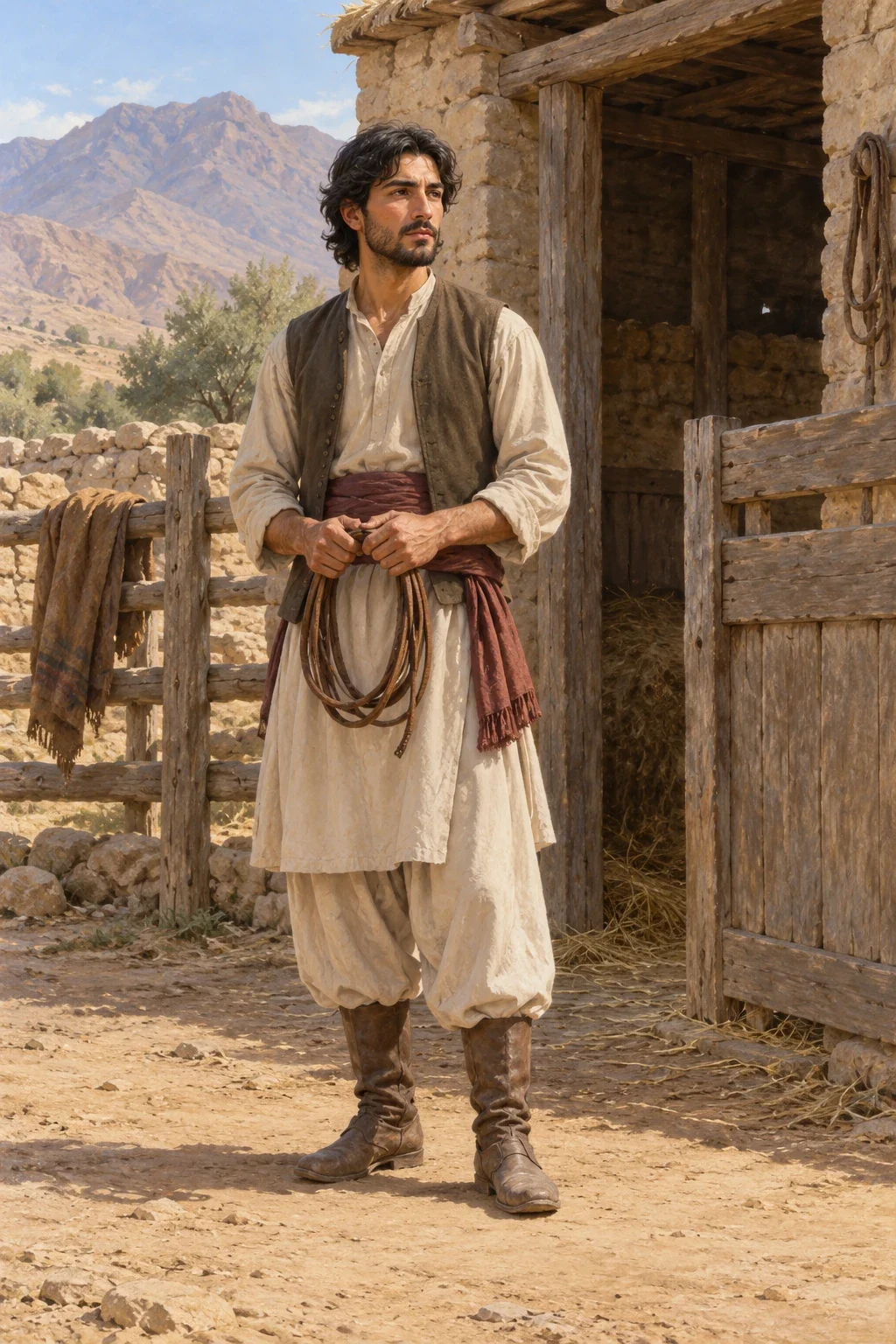
Portrayal of Dosten, the Returning Captive (Dames).
AI-generated portrayal of Dosten during the captive horse-training period. Face, clothes, rein styling, pose and stable are imagined.
Overview
In the prose narrative attached to Dames’s Dosten and Shiren, Dosten is a Rind betrothed to Shiren. Both have learned the Persian character. Raiders seize him and others from their village and imprison them at Harand for many years. Her family eventually arranges a marriage to another Rind who is also named Dosten. Shiren writes a song and sends it to her original betrothed through a faqir. The repeated name is part of the plot: the returning captive and the intended bridegroom are separate men, not successive titles or two lives of the same hero.
The captive becomes a groom and gains the head-groom’s trust. He and a fellow Rind train two fillies, and their fetters are removed on a promise that they will not leave secretly. On a festival race day the governor gives permission for them to go and race. They ask him to confirm his leave, then use it to depart openly at speed, calling back that they have his permission. A pursuit follows, but they escape through the passes. The prose connects the route with places named for exhausted horses; Dames’s note questions whether the names originally referred to horses at all. Neither the itinerary nor the proposed historical setting is treated here as independently established biography.
At home Dosten meets his weeping younger brother and learns that Shiren’s wedding is taking place that day. He and his companion present themselves as musicians and obtain a dambiro. Dosten sings the message Shiren had sent. The embedded poem includes her longing, seasonal movement and hope of his return, rather than a second account of his escape. She recognises his voice and names him. The other Dosten then relinquishes his claim and wedding expenses, and the returning captive marries her. Recognition through their exchanged song resolves the episode; the source gives him no magical horse, invulnerable body or supernatural means of release.
Origins & earliest records
Dames, Popular Poetry of the Baloches, XLI: collected prose of Ghulam Muhammad Balachani and a collated poem first recorded from Brahim Shambam, revised in the 1906 volume.
Records & interpretation
Complete XLI, printed pp. 118-123, including source-history note, prose, full embedded poem, toponym notes and final recognition/marriage; selected original framing retained.
Selected bibliography
Documented works and useful reading. This is not a list of every appearance.
- 01
Popular Poetry of the Baloches, Volume I
XLI, Dosten and Shiren, pp. 118-123, full prose and poem. Title year retained despite catalogue-derived 1907 cache filenames; original Balochi not independently collated.
Family & connections
A source-supported family tree or inspiration record has not yet been compiled for this profile. Related reading below indicates a connection in subject matter, not a proven lineage or creative influence.
References
Sources supporting this profile. Linked pages have their own scope and editorial standards.
- Historical English translation/compilation of Baloch narrative poetryDames1906 original English narrative and editorial notesResearch access: 2026-10-18
Image credits
AI-generatedPortrayal of Dosten, the Returning Captive (Dames).
AI-generated portrayal of Dosten during the captive horse-training period. Face, clothes, rein styling, pose and stable are imagined.