A sourced illustration has not yet been added. This gap is included in the coverage record.
Overview
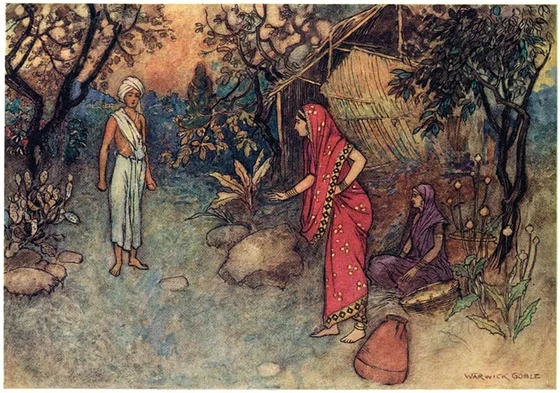
A king bargains with a ravaging Rakshasi to leave his remaining subjects alive in exchange for one person placed in a temple each night. Each household must supply a victim in turn. Sahasra Dal and Champa Dal take the place of a member of the family lodging them.
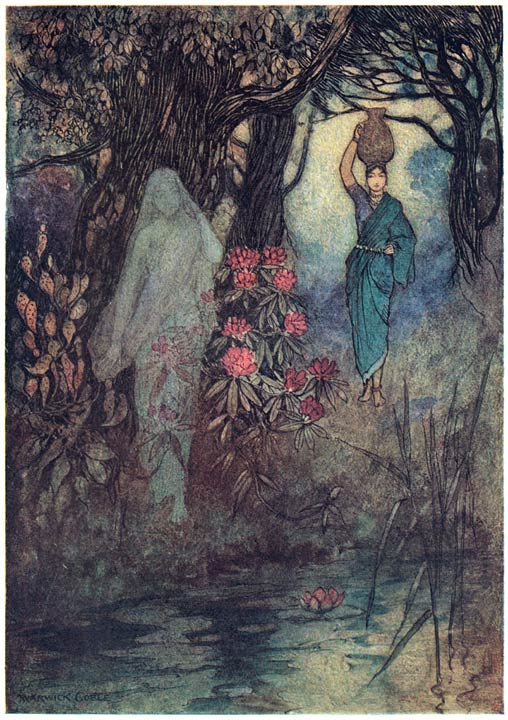
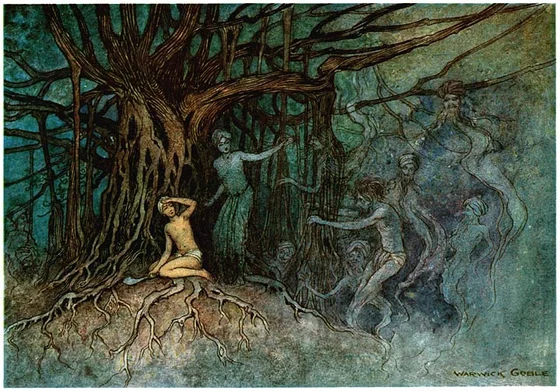
Arriving with a tempestlike sound, she smells a human and demands to know who watches inside. Naming Sahasra first repels her because he has Rakshasa blood. When Champa reverses the names she breaks in, but Sahasra cuts off her head. Her fallen body covers many acres. Woodcutters take fragments to claim the reward, while the brothers’ possession of her head establishes the true victor.
Origins & earliest records
Bengali oral storytelling translated by Lal Behari Day
Records & interpretation
Complete relevant tale, attached notes,1883 preface and1912 edition credits directly read.
Selected bibliography
Documented works and useful reading. This is not a list of every appearance.
- 01
Folk-Tales of Bengal
IV, The Story of the Rakshasas, pp.69–75; complete tale61–88 and notes; first edition1883, illustrationsWarwickGoble
Family & connections
A source-supported family tree or inspiration record has not yet been compiled for this profile. Related reading below indicates a connection in subject matter, not a proven lineage or creative influence.
Primary records and illustrations
Lal Behari Day, Folk-Tales of Bengal (Macmillan,1912; first edition1883)
IV. IV, The Story of the Rakshasas, pp.69–75; complete tale61–88 and notes
Complete tale and footnotes read, pluspreface andeditionhistory. Bengali oral informants described collectively, individual teller of this tale not identified. Original paraphrase; no source-image verification claimed.
References
Sources supporting this profile. Linked pages have their own scope and editorial standards.
- Historical translated oral narrative and collector notesLal Behari Day, Folk-Tales of Bengal (1912), IV, The Story of the Rakshasas, pp.69–75; complete tale61–88 and notesResearch access: 2026-10-05
Image credits
A sourced illustration has not yet been added. This gap is included in the coverage record.