A sourced illustration has not yet been added. This gap is included in the coverage record.
Overview
The queen-mother’s indispensable servant has unusual strength and efficiency. At night she resumes Rakshasi form and devours livestock, including horses and elephants. To remove Champa Dal, who observes her, she falsely accuses him of indecent behavior; the queen-mother secures his expulsion.
Later she travels in a magically directed boat of Hajol wood with Mon Paban oars to fetch Keshavati. Claiming to be the princess’s aunt, she leaves poisoned sweets for Champa and lures Keshavati aboard. The boat carries the captive back to Sahasra’s kingdom. Champa avoids the poison, finds his wife and exposes the servant by publicly telling their history; Sahasra orders her buried alive. Dasi in the dialogue is explained as a general term for a maid, not a personal name.
Origins & earliest records
Bengali oral storytelling translated by Lal Behari Day
Records & interpretation
Complete relevant tale, attached notes,1883 preface and1912 edition credits directly read.
Selected bibliography
Documented works and useful reading. This is not a list of every appearance.
- 01
Folk-Tales of Bengal
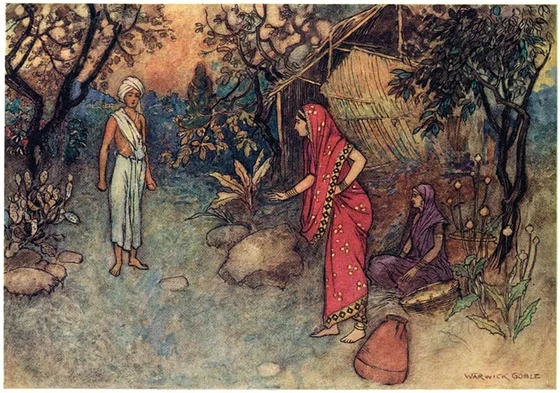
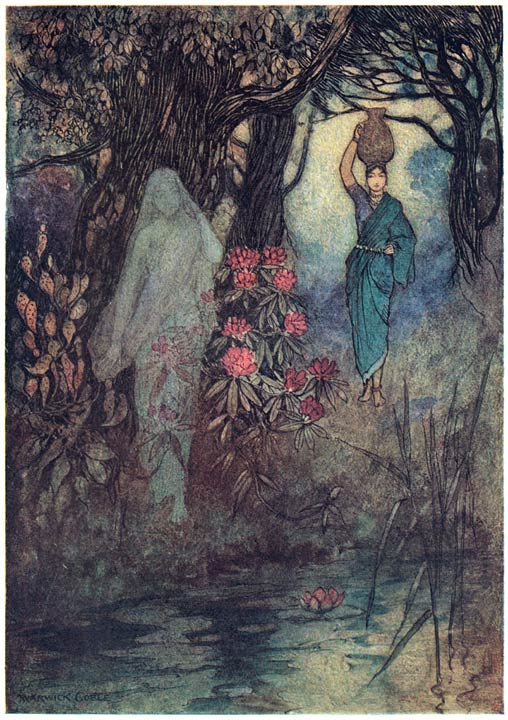
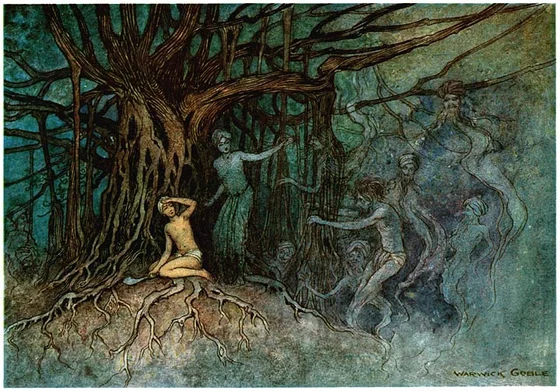
IV, The Story of the Rakshasas, pp.75–88; complete tale61–88 and notes; first edition1883, illustrationsWarwickGoble
Family & connections
A source-supported family tree or inspiration record has not yet been compiled for this profile. Related reading below indicates a connection in subject matter, not a proven lineage or creative influence.
Primary records and illustrations
Lal Behari Day, Folk-Tales of Bengal (Macmillan,1912; first edition1883)
IV. IV, The Story of the Rakshasas, pp.75–88; complete tale61–88 and notes
Complete tale and footnotes read, pluspreface andeditionhistory. Bengali oral informants described collectively, individual teller of this tale not identified. Original paraphrase; no source-image verification claimed.
References
Sources supporting this profile. Linked pages have their own scope and editorial standards.
- Historical translated oral narrative and collector notesLal Behari Day, Folk-Tales of Bengal (1912), IV, The Story of the Rakshasas, pp.75–88; complete tale61–88 and notesResearch access: 2026-10-05
Image credits
A sourced illustration has not yet been added. This gap is included in the coverage record.