A sourced illustration has not yet been added. This gap is included in the coverage record.
Overview
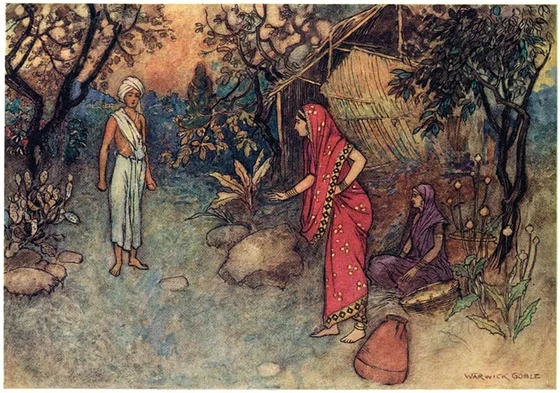
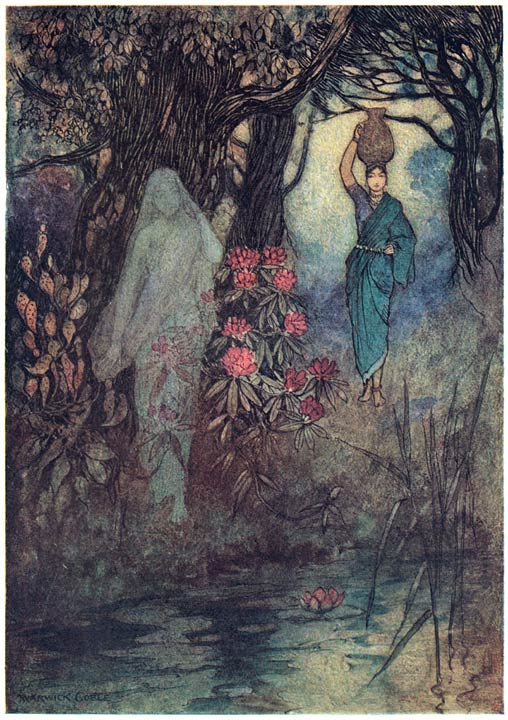
A prince follows a wounded stag northward into a house, where he finds a beautiful woman at a dice table. She wins three games from him, taking first his hawk, then his puppy, and finally the prince himself. Each is confined in a covered hole. The narrator identifies her as a Rakshasi who intends to eat the prince the next day because she has already eaten that day.
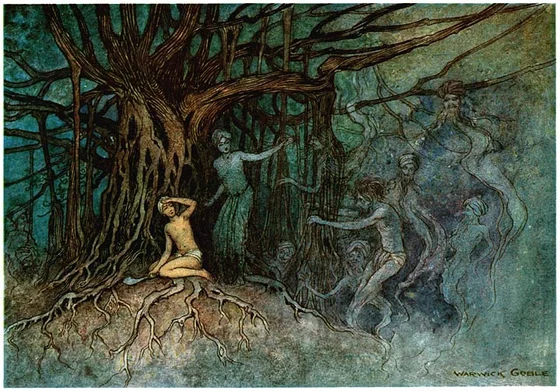
His identical younger brother follows and wins the same sequence of wagers, recovering the two animals and his captive brother. The Rakshasi asks to be spared and reveals that the elder prince’s mendicant guardian plans to sacrifice him as the seventh victim in a quest for supernatural perfection. This information directs the brothers to six speaking skulls at Kali’s temple. The deer guides both brothers into the encounter, but no detailed deer-to-woman transformation is narrated.
Origins & earliest records
Bengali oral storytelling translated by Lal Behari Day
Records & interpretation
Complete relevant tale, attached notes,1883 preface and1912 edition credits directly read.
Selected bibliography
Documented works and useful reading. This is not a list of every appearance.
- 01
Folk-Tales of Bengal
XIII, The Man who wished to be Perfect, pp.178–187; first edition1883, illustrationsWarwickGoble
Family & connections
A source-supported family tree or inspiration record has not yet been compiled for this profile. Related reading below indicates a connection in subject matter, not a proven lineage or creative influence.
Primary records and illustrations
Lal Behari Day, Folk-Tales of Bengal (Macmillan,1912; first edition1883)
XIII. XIII, The Man who wished to be Perfect, pp.178–187
Complete tale and footnotes read, pluspreface andeditionhistory. Bengali oral informants described collectively, individual teller of this tale not identified. Original paraphrase; no source-image verification claimed.
References
Sources supporting this profile. Linked pages have their own scope and editorial standards.
- Historical translated oral narrative and collector notesLal Behari Day, Folk-Tales of Bengal (1912), XIII, The Man who wished to be Perfect, pp.178–187Research access: 2026-10-05
Image credits
A sourced illustration has not yet been added. This gap is included in the coverage record.