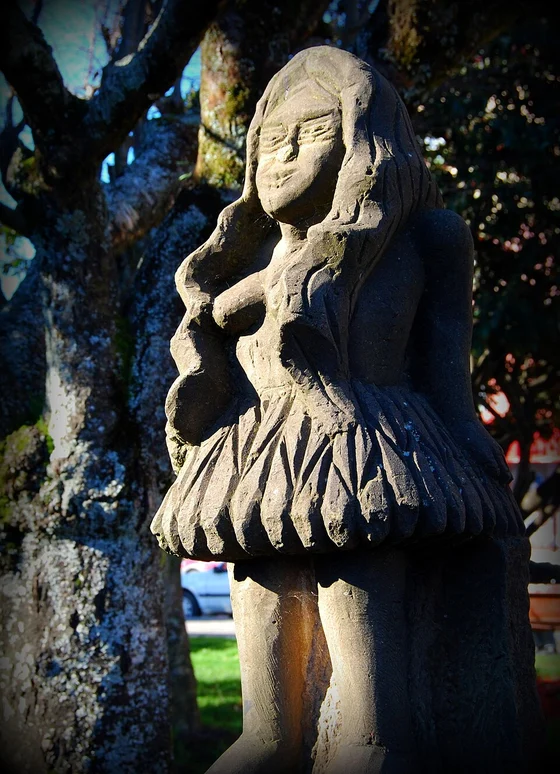
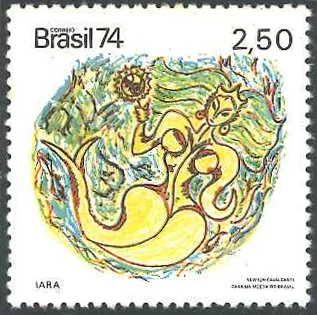
A sourced illustration has not yet been added. This gap is included in the coverage record.
Overview
Genoveva Oyarzún of Castro tells Saunière of an impoverished older woman gathering food beside the sea. After a storm she finds an unusually large cochodoma, a female crab. When she opens it at home, a living child lies inside. The infant shines like mother-of-pearl, has green eyes and long hair, and ends in a fish tail instead of legs.
A consulted machi advises returning the child to the shore. There the mother appears, a fish-tailed woman whose long hair carries pearls. She explains that she concealed her infant from a dangerous cahuel after her husband's death. The gatherer raises the child and brings her daily for nursing, receiving abundant fish and shellfish. After the daughter can swim and rejoins her mother, affection and pearl gifts continue. This is a reciprocal-care story rather than an attacking-crab account.
The sea mother identifies the threat more precisely than a general danger from marine animals. A cahuel wishing to marry her has killed her husband, and she conceals the infant to prevent him from finding her. The machi first advises placing the child on a shoreline rock and waiting; the old woman hides behind it until the mother calls her out. The mother nurses the baby on the rock before asking the woman to continue caring for her ashore. Their arrangement supplies more fish and shellfish than the foster carer can carry home. When the child becomes strong enough to swim, her return to the sea ends the daily nursing arrangement but not the bond: affection, pearls and food continue, and the account expressly keeps the old woman fed until her death.
Origins & earliest records
The inspected historical source is Saunière's periodical collection, published across 1916–1918, which credits Genoveva Oyarzún of Castro. The heading names a crab and the tale; it does not establish Cochodoma as the sea child's personal name. No first telling is dated, and the collector's introductory biography is not adopted as a judgment on the narrator.
Records & interpretation
The printed episode supplies the infant's appearance and the continuing relationship with her mother and foster carer. Saunière speculates in a note that the unidentified sea queen might be Pincoya or another mermaid, but says the narrator could not identify her. That uncertainty is retained rather than turning the mother into an established Pincoya appearance.
Selected bibliography
Documented works and useful reading. This is not a list of every appearance.
- 01
Cuentos populares araucanos y chilenos recogidos de la tradición oral
Complete six-part La Cochodoma, Genoveva Oyarzún of Castro, printed70–73, PDF9–12, including its footnotes; following general comparative Sirena essay is outside this scoped reading.
Family & connections
A source-supported family tree or inspiration record has not yet been compiled for this profile. Related reading below indicates a connection in subject matter, not a proven lineage or creative influence.
References
Sources supporting this profile. Linked pages have their own scope and editorial standards.
- Primary textSaunière's collected stories, Biblioteca Nacional de ChileResearch access: 2026-10-05
Image credits
A sourced illustration has not yet been added. This gap is included in the coverage record.