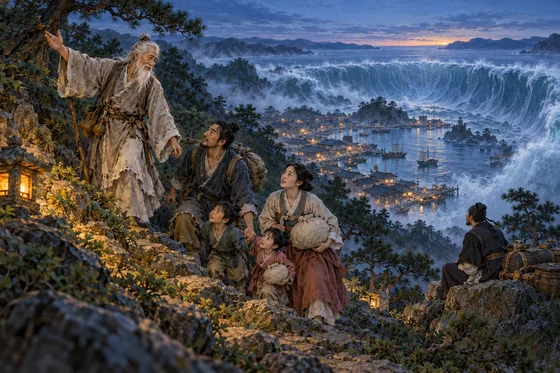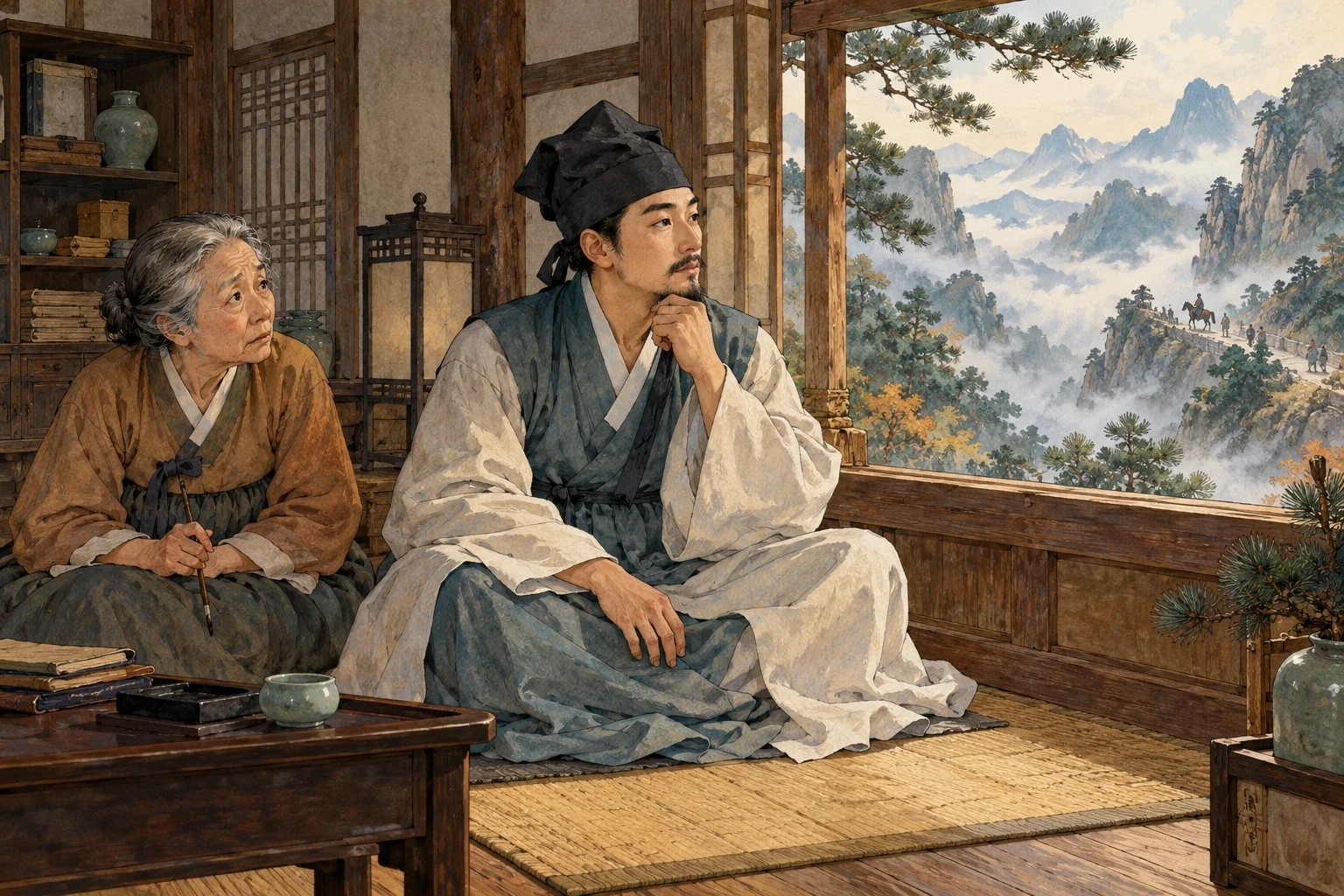
AI-generated interpretation of Cheung Puk-chang describing an absent servant’s whereabouts to his aunt in GaleIV. The seated conversation and reported distant vision follow the narrative; faces, age, scholarly dress, room, furnishings and window landscape are artistic choices. The distant pass is a visual evocation rather than a claimed actual line of sight. No authentic portrait, historical reconstruction or evidence of paranormal ability is implied.
AI-generated interpretation of Cheung Puk-chang describing an absent servant’s whereabouts to his aunt in GaleIV. The seated conversation and reported distant vision follow the narrative; faces, age, scholarly dress, room, furnishings and window landscape are artistic choices. The distant pass is a visual evocation rather than a claimed actual line of sight. No authentic portrait, historical reconstruction or evidence of paranormal ability is implied.
Overview
Cheung Puk-chang is presented as a supernatural seer in a complete account translated by James S. Gale and attributed to Im Bang. Its opening characterises his extraordinary memory and intuitive command of learned subjects. During a journey to Peking with his father, he is said to communicate with unfamiliar visitors after hearing their speech. Understanding birds and the sounds of nature belongs to the same portrait of exceptional knowledge. These are narrated accomplishments, not independently demonstrated linguistic or medical abilities.
The central episode concerns his paternal aunt’s anxiety about an overdue servant. She has sent the man to attend to harvesting in Yong-nam and fears that theft, fire or some other mishap has delayed him. Puk-chang offers to tell her where he is. Looking toward the south while remaining seated, he says that the servant is crossing Bird Pass in Mun-kyong County, Kyong-sang Province, and is receiving a beating. The detail makes the vision unwelcome as well as reassuring: he says the man is alive but has offended a passing gentleman.
Puk-chang explains that the servant rode past without dismounting while the gentleman was eating. The offended traveller had him pulled from his horse and struck with rough straw shoes. The aunt initially treats this as a joke, yet writes the date on the wall. When her servant returns, she asks when he crossed the pass and whether he got into trouble there. His answer, the narrator says, confirms Puk-chang’s account down to its details. That reported comparison completes the episode; the servant’s own independent testimony has not survived here as a separately checked document.
The chapter also includes bracketed framing that requires a different attribution from the signed story. One biographical section invokes the Yol-ryok Keui-sul and describes Puk-chang as a Taoist receiving revelations, while another explanatory section discusses distant vision through examples involving other sages. Its image of rays issuing from the head is not stated as an observed appearance of Puk-chang in his aunt’s room. This profile keeps the named seer’s episode distinct from that broader commentary. It follows Gale’s1913 English witness rather than reconstructing an original Korean manuscript or treating every general claim in the framing as a power uniquely belonging to this man.
Origins & earliest records
Im Bang account in Korean Folk Tales: Imps,Ghosts and Fairies, chapterIV, translated James S.Gale, London J.M.Dent/NewYork E.P.Dutton,1913. Chapter’s bracketed biographical and distant-vision framing distinguished from signed story.
Records & interpretation
Complete chapterIV including all bracketed framing, actual story and corroboration ending read; complete title and preface retained. Original Korean and named biographical work not independently collated.
Selected bibliography
Documented works and useful reading. This is not a list of every appearance.
- 01
Family & connections
A source-supported family tree or inspiration record has not yet been compiled for this profile. Related reading below indicates a connection in subject matter, not a proven lineage or creative influence.
References
Sources supporting this profile. Linked pages have their own scope and editorial standards.
- Public-domain historical literary translationGale1913 chapterIV completeResearch access: 2026-10-27
Image credits
AI-generated illustrationAI-generated interpretation of Cheung Puk-chang describing an absent servant’s whereabouts to his aunt in GaleIV. The seated conversation and reported distant vision follow the narrative; faces, age, scholarly dress, room, furnishings and window landscape are artistic choices. The distant pass is a visual evocation rather than a claimed actual line of sight. No authentic portrait, historical reconstruction or evidence of paranormal ability is implied.
AI-generated interpretation of Cheung Puk-chang describing an absent servant’s whereabouts to his aunt in GaleIV. The seated conversation and reported distant vision follow the narrative; faces, age, scholarly dress, room, furnishings and window landscape are artistic choices. The distant pass is a visual evocation rather than a claimed actual line of sight. No authentic portrait, historical reconstruction or evidence of paranormal ability is implied.