A sourced illustration has not yet been added. This gap is included in the coverage record.
Overview
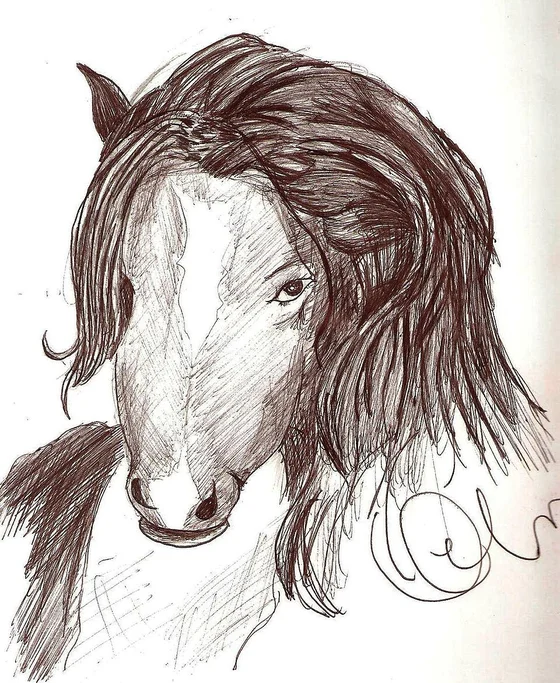
ASALE records Cegua in Honduras, El Salvador, Nicaragua and Costa Rica: she travels lonely roads at night and appears to men as an attractive woman before revealing a horse's face. That brief definition identifies the encounter's central reversal without prescribing one dress, skeletal body or fixed personal biography. It also connects the name linguistically with ciguanaba; regional stories still require their own witnesses.
Alberto Cañas's La Segua gives the legend a different dramatic use in colonial Cartago. Encarnación Sancho comes to believe that her celebrated beauty makes her the apparition responsible for a former lover's madness. She chooses a wealthy blind husband who cannot watch her age. Irene González Muñoz's 2020 study examines the play's gossip, disputed explanations and framing scenes, treating the legend as a starting point for another story rather than a straightforward reenactment.
Cañas himself explains the adaptation in an afterword. Alfaro's account of a witchcraft prosecution prompted an imagined Segua encounter, but Encarnación became a study of narcissism rather than a biographical reconstruction. He expressly invented Camilo de Aguilar and don Félix Fernández. His preferred psychological interpretation is the author's position, distinct from subsequent critics' readings. The prologue places the horse-faced encounter in María Francisca's report to Encarnación; that accusation is dramatic dialogue, not independent testimony about the colonial case.
Origins & earliest records
The dictionary's 2010 publication documents contemporary regional usage, not the apparition's beginning. Cañas's play is discussed as a 1967/1979 work by González Muñoz. Its colonial setting and borrowed 1775 witchcraft case must not be treated as an eighteenth-century attestation of Cegua: the study explicitly separates that legal case from the legend.
Records & interpretation
The institutional dictionary's indexed definition was inspected; direct page retrieval returned a fetch error. The university article was read directly, including its account of Cañas's plot and source distinctions. The play's competing explanations for madness are characters' claims, not verified diagnoses or evidence that a supernatural encounter occurred. The prologue and complete afterword were read directly in the SINABI scan; the full play remains unread.
Selected bibliography
Documented works and useful reading. This is not a list of every appearance.
- 01
Diccionario de americanismos: Cegua
Regional lexical definition naming Honduras, El Salvador, Nicaragua and Costa Rica.
- 02
El chisme como género discursivo contestatario en La Segua. Comedia en tres actos con prólogo y estrambote inspirada remotamente en un relato de Anastasio Alfaro
Revista de Filología y Lingüística de la Universidad de Costa Rica 46, Esp. 2; scholarly reading of Cañas's drama.
- 03
La Segua
August 2004 printing, SIEDIN, Universidad de Costa Rica. Prologue pp. 11–15; complete author afterword pp. 76–84. Composition 1967; premiere 20 September 1971.
Family & connections
A source-supported family tree or inspiration record has not yet been compiled for this profile. Related reading below indicates a connection in subject matter, not a proven lineage or creative influence.
References
Sources supporting this profile. Linked pages have their own scope and editorial standards.
- ReferenceASALE: Cegua, Diccionario de americanismosResearch access: 2026-10-05
- ResearchIrene González Muñoz: El chisme como género discursivo contestatario en La Segua (2020)Research access: 2026-10-05
- Primary textSINABI: Alberto Cañas, La SeguaResearch access: 2026-10-05
Image credits
A sourced illustration has not yet been added. This gap is included in the coverage record.