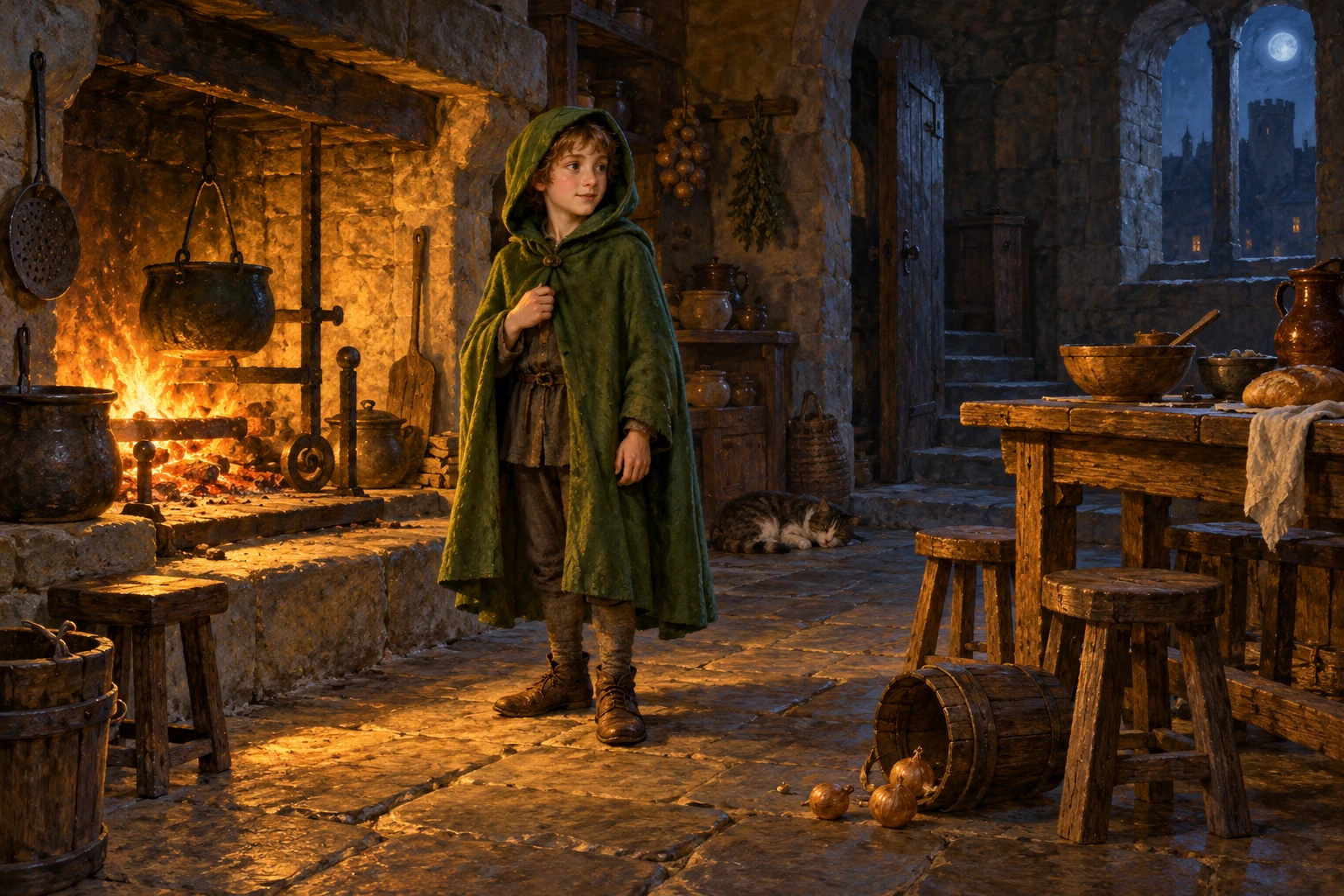
AI-generated interpretation of the Cauld Lad after receiving the green cloak and hood in Henderson’s Hilton account. His face, other garments, kitchen, utensils and sleeping cat are imagined additions. This is not a portrait of a known historical child or a Harry Potter character design.
The green cloak and hood follow the selected account. The illustration represents a peaceful household-spirit scene, not the reported killing or proof that a haunting occurred.
Overview
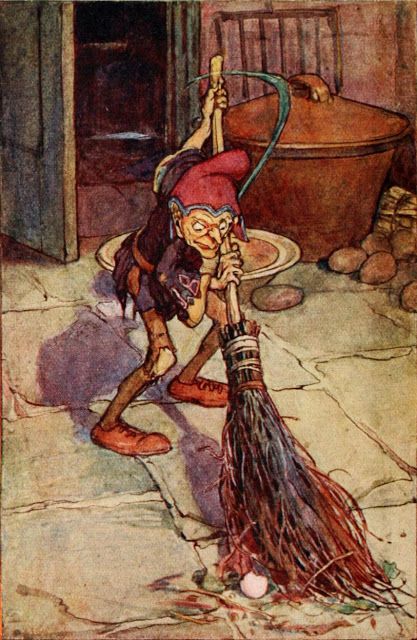
Henderson locates this Cauld Lad at Hilton Castle in the valley of the Wear. The servants usually hear rather than see him. His work follows a contrary rule: a kitchen already left tidy is thrown into confusion, while a disordered kitchen is carefully arranged. This makes him an unpredictable presence in the household routine rather than simply an obedient unpaid worker. His name and place distinguish this account from other beings called Cauld Lad.
The servants tire of the disturbance despite the narrator describing him as apparently harmless. They leave a green cloak and hood before the kitchen fire and watch. At midnight the visitor enters, examines the clothes, dresses himself and frisks about. When the cock crows he disappears, announcing in verse that he will do no more good. The clothing is therefore explicitly part of his departure in this witness. The text does not state a general legal rule that garments free every household spirit, nor does it specify that the donor must be a master.
Henderson identifies the domestic behaviour with the Brownie type, then sets beside it a different local explanation: the being is thought to be a servant boy killed by a baron of Hilton. The baron has ordered a horse prepared, grows angry when it is delayed, and finds the lad asleep in the stable. A blow with a hay-fork kills him. The account says the body is hidden under straw until night and then thrown into a pond; the later finding of a boy’s skeleton is part of the reported story. It is not independently verified evidence establishing the crime or the identity of a historical victim.
A second verse attributed to the lad imagines the distant future of his laying to rest. An acorn has not yet fallen; its tree must supply wood for a cradle, whose infant must grow into the man who will lay him. Henderson regards this lament as consistent with the ghost explanation. The account preserves both a clothing departure and an unfulfilled future laying without explaining their relationship. They should remain neighbouring reported motifs rather than being forced into a single consistent supernatural mechanism.
Henderson also repeats a story told to him by the late Canon Humble. A friend walking from Hilton toward Sunderland after discussing the Cauld Lad feels a sudden warm blast in his face. Fright gives way to curiosity, and he discovers a cow with its head through a hedge. This continuation records an ordinary resolution to an apparent nocturnal encounter. The next paragraph describes a different Cauld Lad at Gilsland, known through Mrs Murray’s childhood recollection: a cold and ill-omened family ghost. Its bedside sickness warnings and icy touch belong to that separate account and are excluded from the Hilton figure’s traits.
Origins & earliest records
The 1879 printed witness collects and interprets local northern English stories. It documents a named Hilton tradition and competing household-spirit and servant-ghost explanations; it does not establish a medieval date, a verified murder or an earliest origin. Hilton is Henderson’s spelling, while Hylton is a modern reference spelling.
Records & interpretation
Complete selected cached OCR witness read through the Hilton ending, the acorn verse and the Canon Humble cow continuation, with adjacent Gilsland paragraph read for disambiguation. Running headings and OCR remain uncollated with facsimile.
Selected bibliography
Documented works and useful reading. This is not a list of every appearance.
- 01
Notes on the folk-lore of the northern counties of England and the borders
Printed pp.266–267; complete Hilton unit and adjacent context read from cached original OCR.
Family, evolution & connections
House-elf (Harry Potter)
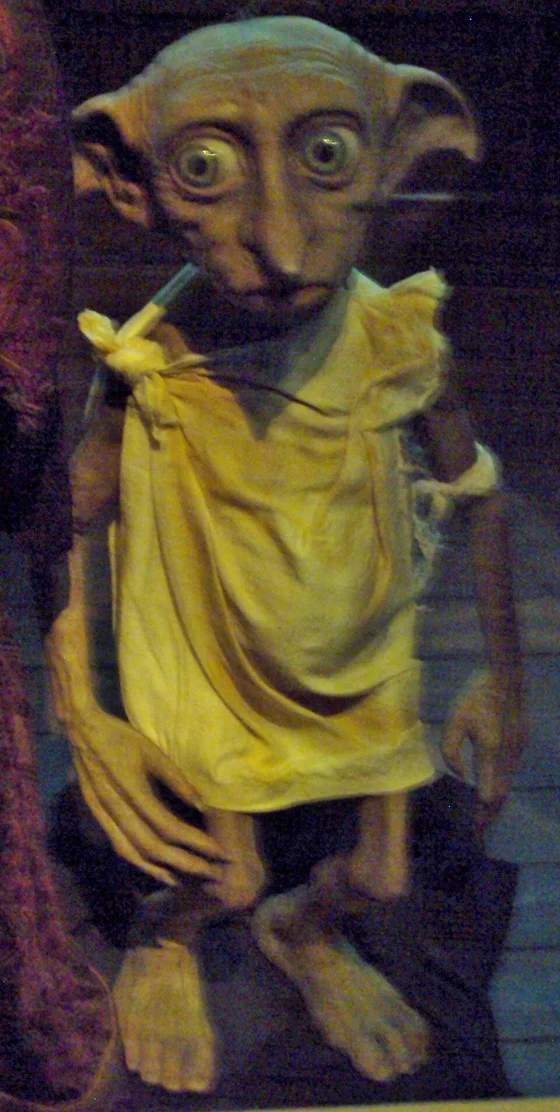
Henderson’s clothing departure and domestic work supply historical household-helper context beside the fictional Potter house-elf. Henderson states no master-only clothing rule; he classifies the visitor as Brownie-like while local belief calls it a servant ghost. This comparison does not establish Rowling’s use of Henderson.
Brownie
Henderson explicitly compares the kitchen spirit to a Brownie. The local killed-servant explanation and contrary tidying rule belong specifically to this Hilton witness.
References
Sources supporting this profile. Linked pages have their own scope and editorial standards.
- Collected primary folklore witness; cached OCRHenderson, 1879, Hilton Cauld Lad account, pp.266–267Research access: 2026-10-26
Image credits
Modern interpretation of a historical literary accountAI-generated interpretation of the Cauld Lad after receiving the green cloak and hood in Henderson’s Hilton account. His face, other garments, kitchen, utensils and sleeping cat are imagined additions. This is not a portrait of a known historical child or a Harry Potter character design.
The green cloak and hood follow the selected account. The illustration represents a peaceful household-spirit scene, not the reported killing or proof that a haunting occurred.