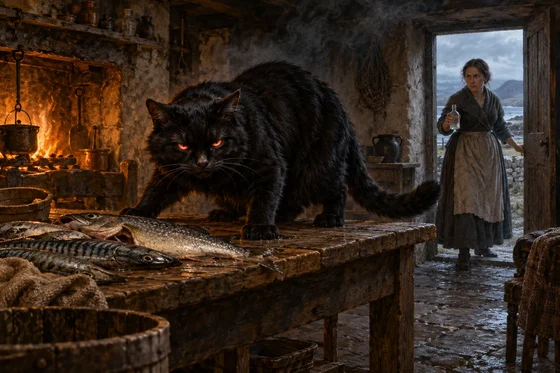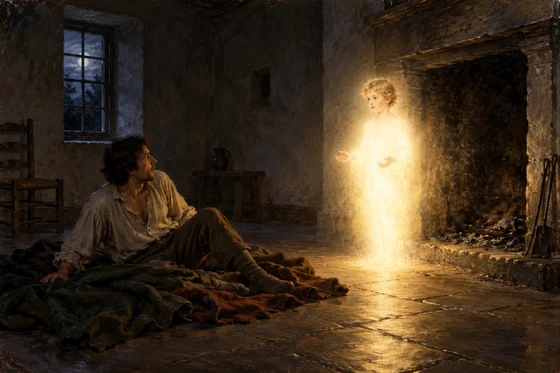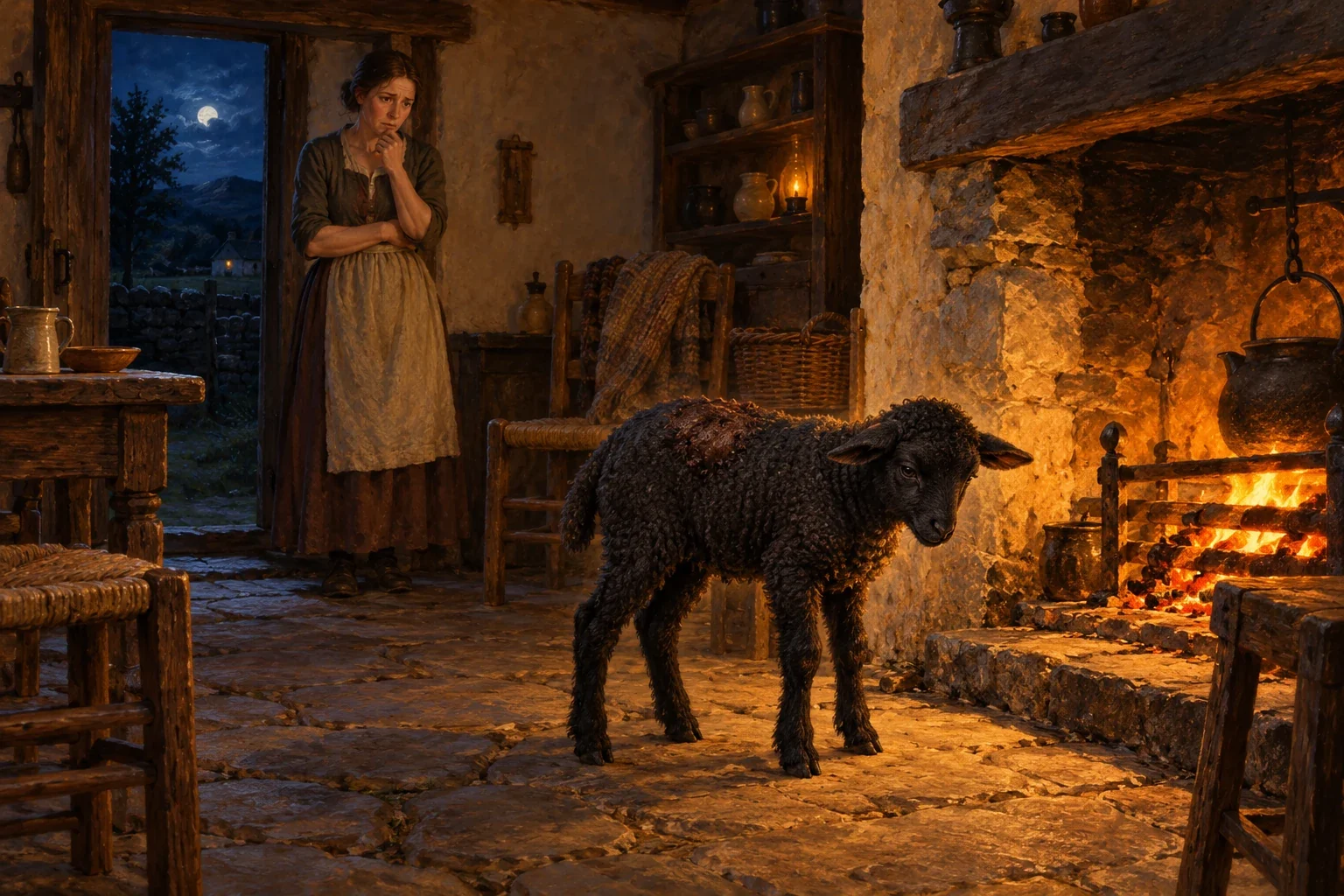
AI-generated interpretation of Lady Wilde’s Black Lamb entering an imagined Irish cottage. The black lamb and hearth follow the tale; clothing, room, posture and a non-graphic suggestion of injured wool are artistic choices. This is not evidence of an observed apparition.
AI-generated interpretation of Lady Wilde’s Black Lamb entering an imagined Irish cottage. The black lamb and hearth follow the tale; clothing, room, posture and a non-graphic suggestion of injured wool are artistic choices. This is not evidence of an observed apparition.
Overview
In Lady Wilde’s account, a black lamb becomes the visible form of an injured spirit. The story begins with a warning custom: people throwing water out at night call aloud so that wandering spirits will move aside. A woman forgets the warning and empties a pail of boiling water into the darkness. An unseen cry follows. The next night a black lamb enters the house with a freshly scalded back, lies moaning beside the hearth and dies. The household understands it as the spirit struck by the water.
They carry the lamb outside and bury it reverently. Burial does not end the visitation. At the same hour on successive nights it enters again, lies down, moans and dies. Eventually a priest is summoned, and the tale attributes the end of the appearances to his exorcism. When the grave is searched, the buried body has disappeared. The narrative thus joins an injury, an animal-shaped apparition and repeated apparent death; it does not identify the dead person whose spirit the family believes it has encountered.
Yeats places this selection among ghost accounts and attributes it to Lady Wilde, with a note naming Ancient Legends of Ireland. His preceding discussion also reports souls appearing as animals, but the lamb’s particular injury and repeated visits belong to this tale. The account presents the household’s interpretation and the story’s religious resolution, rather than independent evidence that a spirit or an exorcism was observed.
Origins & earliest records
Source-specific narrative in Fairy and Folk Tales of the Irish Peasantry, edited and selected by W. B. Yeats. The retained title names Walter Scott Publishing Co., Ltd., London and Felling-on-Tyne, with a New York address; its physical print year is not stated.
Records & interpretation
Complete selected account, byline, ending and attached note where present read from retained Project Gutenberg33887 witness. Claims remain attributed to the narrator.
Selected bibliography
Documented works and useful reading. This is not a list of every appearance.
- 01
Fairy and Folk Tales of the Irish Peasantry, edited and selected by W. B. Yeats
Printed pp.134. Note18.
Family & connections
A source-supported family tree or inspiration record has not yet been compiled for this profile. Related reading below indicates a connection in subject matter, not a proven lineage or creative influence.
References
Sources supporting this profile. Linked pages have their own scope and editorial standards.
- Historical primary literary/folklore collectionFairy and Folk Tales of the Irish Peasantry, edited and selected by W. B. Yeats — complete selected account and apparatusResearch access: 2026-10-27
Image credits
Modern AI interpretation of a historical accountAI-generated interpretation of Lady Wilde’s Black Lamb entering an imagined Irish cottage. The black lamb and hearth follow the tale; clothing, room, posture and a non-graphic suggestion of injured wool are artistic choices. This is not evidence of an observed apparition.
AI-generated interpretation of Lady Wilde’s Black Lamb entering an imagined Irish cottage. The black lamb and hearth follow the tale; clothing, room, posture and a non-graphic suggestion of injured wool are artistic choices. This is not evidence of an observed apparition.