Bifang
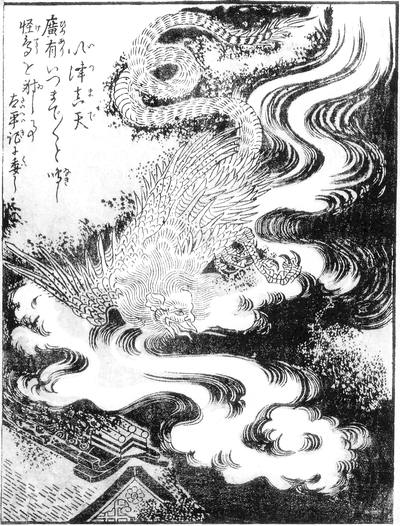
Image associated with the exact linked encyclopedia article; consult credited file description for its interpretation.
Overview
Bifang is a distinctive bird in Chinese classical literature, especially recognizable through its single leg. The Classic of Mountains and Seas describes a crane-like form with contrasting colours and associates its appearance with fire. Other learned texts give different emphases, including companionship with the Yellow Emperor or a place within elemental associations. Those witnesses make the bird part of a textual network rather than a uniformly classified mythical species.
A one-legged bird offers a clear visual feature, but the function of an omen must remain attributed to a specific account. This profile records the fire-associated bestiary form and notes the differing literary roles. It does not claim that every representation of a bird standing on one leg is Bifang, or mistake a natural resting posture for supernatural identification. The age and layering of the classical compilation remain matters for textual scholarship.
In the Smithsonian digitized illustrated edition, catalogued as 1667, a crane-like bird balanced on a single leg; the caption gives red markings on blue-green plumage and a white beak. The engraving is a later visual interpretation of the textual creature. Its labelled page helps establish the pictured subject without treating the illustrator’s choices as evidence of an ancient animal sighting.
Origins & earliest records
The selected work or object is a witness to this representation. Its date is not asserted to be the beginning of the tradition; textual layers and regional variants need separate review.
Records & interpretation
The linked source and contextual bibliography support the stated motifs. Material objects document iconography; narratives document imagined encounters. Neither alone is zoological confirmation.
Selected bibliography
Documented works and useful reading. This is not a list of every appearance.
- 01
Classic of Mountains and Seas; Huainanzi
Selected reading or object; bibliography is not exhaustive. Secondary links identify primary passages where a direct primary edition was not verified.
Family & connections
A source-supported family tree or inspiration record has not yet been compiled for this profile. Related reading below indicates a connection in subject matter, not a proven lineage or creative influence.
Primary records and illustrations
Shan hai jing: er shi san juan (Smithsonian digitized edition)
Physical volume 2; Shan hai jing tu illustration sequence. IIIF canvas index 68 (zero based), labelled 畢方; no printed page number asserted
Actual 1000-pixel page image directly inspected. A crane-like bird balanced on a single leg; the caption gives red markings on blue-green plumage and a white beak. Smithsonian-supplied Internet Archive catalog dates this physical volume 1667 and labels it public domain. This is the later printed illustration witness, not an image made in the ancient text’s composition period. Printed volume identification and canvas index are kept separate. Earlier directly read textual witness retained in additionalNarrativeSources.
The Zhang’e Mountain passage first lists a red leopard-like beast with five tails and one horn, then separately describes Bifang. The bird resembles a crane but has one leg, red markings on a qing-coloured body and a white beak. Its call repeats its own name, and its appearance is associated with unusual fire in the settlement. That compact catalogue entry places anatomy, sound and omen in a geographical framework. It does not say that every one-legged bird is Bifang, nor that the bird deliberately sets a building alight. The phrase about fire is therefore retained as the account’s ominous association, rather than expanded into a modern fire-throwing power.
Encyclopedia background
An additional attributed reference, separate from the editorial profile above.
Read the open encyclopedia overview
The Bifang (traditional Chinese: 畢方; simplified Chinese: 毕方; pinyin: Bì Fāng; Wade–Giles: Pi Fang) is a mythological bird, encountered in Chinese mythology. The Bifang is thought to have one leg. However, sources vary in terms of its description.
Text from Wikipedia contributors, “Bifang”. CC BY-SA 4.0. Extracted introduction; formatting changed. Retrieved 5 October 2026. The source article may have changed since retrieval.
References
Sources supporting this profile. Linked pages have their own scope and editorial standards.
- Secondary reference with scholarly bibliographyClassic of Mountains and Seas; HuainanziResearch access: 2026-10-05
- Primary-text transcriptionShanhaijing, Western Mountains Classic — exact primary passageResearch access: 2026-10-05
- Primary illustrated bookSmithsonian Libraries digitized Shan hai jing, v.2, canvas 68: 畢方Research access: 2026-10-05
Image credits
Reference illustrationBifang
Image associated with the exact linked encyclopedia article; consult credited file description for its interpretation.