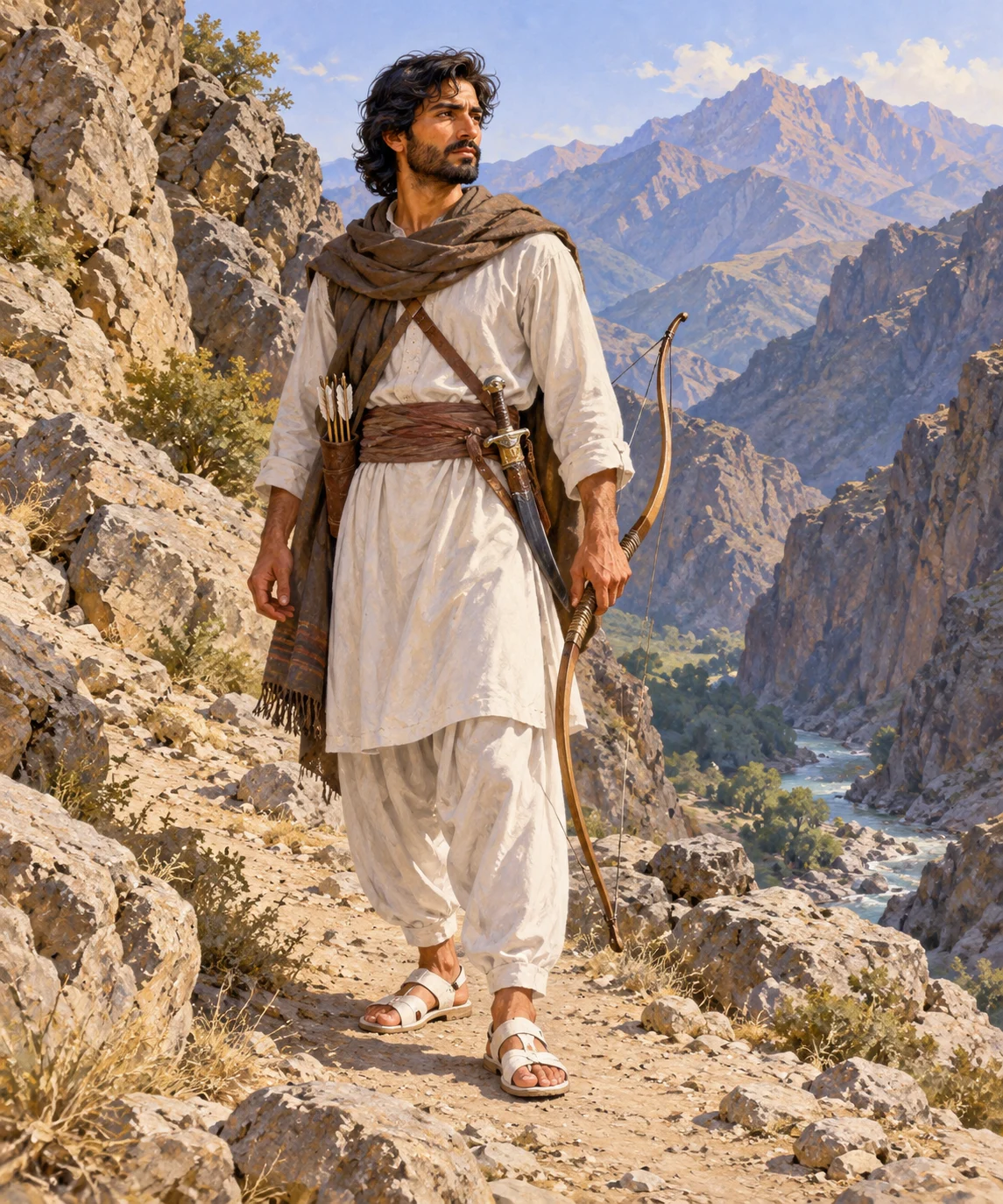
Balach on foot with bow and white sandals; appearance, clothing and mountain setting imagined.
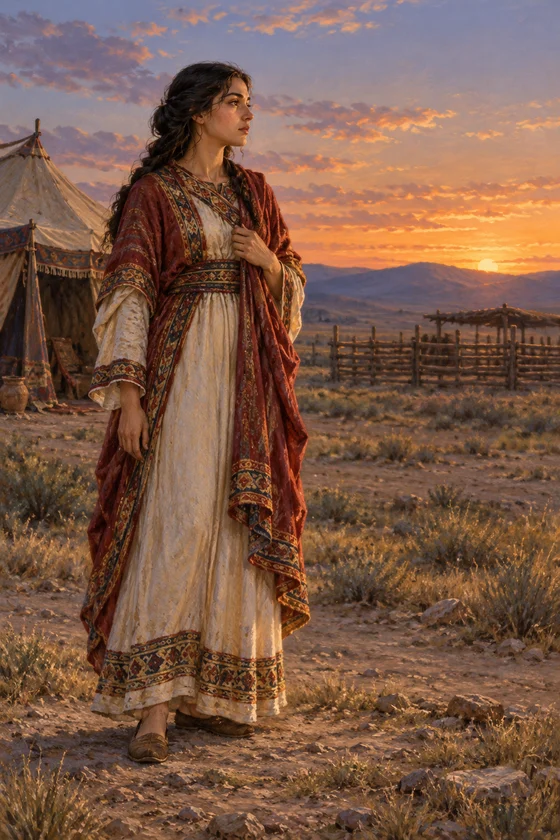
Original narrative illustration; appearance, clothing and staging imagined, not an authenticated portrait or cultural record.
Overview
The prose story begins with nineteen mysterious cows whose tracks never leave the field where they graze. Their finder regards them as heaven-sent and gives them to his wife Sammi, entrusting them to Doda’s protection against future claims by his heirs. After the husband dies, the Buledhis raid the herd and kill Doda during its attempted recovery. A further raid destroys Rais and his brothers, leaving Balach alive. Balach serves pilgrims at Sakhi Sarwar’s shrine for three years. In a vision the saint commands him to fight. He buys a bow, leaves it unstrung overnight and finds it strung in the morning, which the story presents as the sign that he may depart.
With his half-brother Nakhifo as his sole companion, Balach wages a campaign through the named hill country. The tale attributes sixty-one deaths to their attacks and says the Buledhis then move into the plains. It does not end with his invulnerability or permanent triumph: when he is old and living at Sangsila, hostile horsemen confront and kill him after he kills one of them. The accompanying songs give the avenger a defiant first-person voice. He answers a taunt about hiding like a jackal by treating the mountains and gorges as his allies, his white sandals as his steed and his weapons as family. Dames warns that the surviving song sequence lacks an intervening poem from his adversary; the complete prose ending and that incomplete poetic exchange should not be mistaken for one uninterrupted ballad.
Origins & earliest records
Dames says he took the prose story from Ghulam Muhammad Balachani in 1884 and also recorded the two songs attributed to Balach from his recitation. His 1906 volume places the prose account beside those songs and a poem about Doda drawn from Hetu Ram’s Biluchi-nama. These are related witnesses within a transmitted heroic cycle, not an independently verified biography.
Records & interpretation
Dames XVIII, pp.40–46: provenance note, full prose story and the three supplied poems. The prose supplies the old-age ending; the editor explicitly identifies the missing opposing song.
Selected bibliography
Documented works and useful reading. This is not a list of every appearance.
- 01
Popular Poetry of the Baloches, volume I
London: David Nutt for the Folk-Lore Society; original title dated 1906. English prose renderings with explanatory notes.
Family & connections
A source-supported family tree or inspiration record has not yet been compiled for this profile. Related reading below indicates a connection in subject matter, not a proven lineage or creative influence.
References
Sources supporting this profile. Linked pages have their own scope and editorial standards.
- Historical collected folklore and original English translationDames, Popular Poetry of the Baloches: original English narratives, poems and source notesResearch access: 2026-10-18
Image credits
AI-generatedBalach on foot with bow and white sandals; appearance, clothing and mountain setting imagined.
Original narrative illustration; appearance, clothing and staging imagined, not an authenticated portrait or cultural record.