A sourced illustration has not yet been added. This gap is included in the coverage record.
Overview
Atkinson names Arzang as a demon leader entrusted with captured royal treasures and with escorting Kai Kavus and the blinded Iranian captives into Mazandaran. He belongs to the armed and organized supernatural opposition in the king’s disastrous campaign.
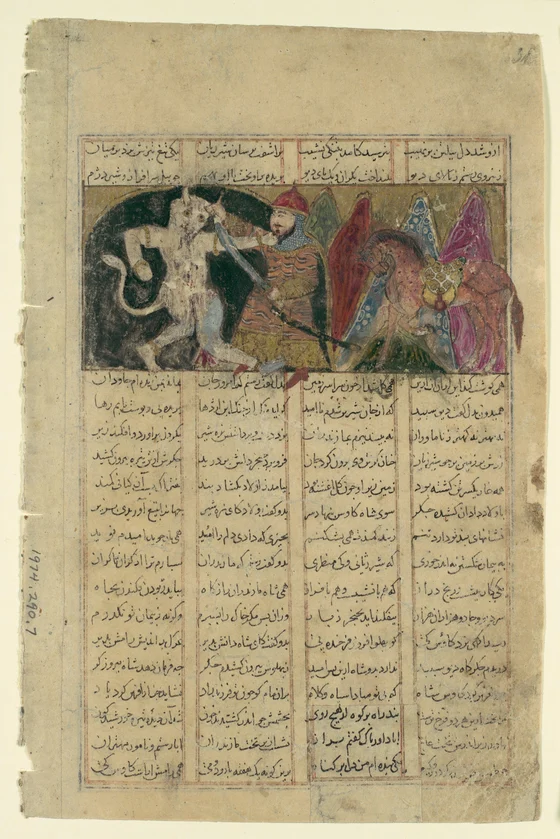
During Rustam’s rescue journey, the hero reaches the demon chiefs’ encampment and calls out a challenge. Arzang emerges from his tent; Rustam seizes him, tears off his head and throws it among the frightened demons, who flee. The account gives his command and narrative position without assigning him the White Div’s separate cave, weapon or bodily description.
Origins & earliest records
Persian epic traditions; named source setting
Records & interpretation
Identified primary narrative or custodial object record directly read; image pixels verified only where explicitly noted.
Selected bibliography
Documented works and useful reading. This is not a list of every appearance.
- 01
Shahnama in Persian Literature, Volume1
Kai-Káús; Rustam’s Heft-Khan, fifth stage
Family & connections
A source-supported family tree or inspiration record has not yet been compiled for this profile. Related reading below indicates a connection in subject matter, not a proven lineage or creative influence.
Primary records and illustrations
Shahnama in Persian Literature, Volume1
Persian epic traditions. Kai-Káús; Rustam’s Heft-Khan, fifth stage
Actual passage or object record read directly. Museum image bytes not yet visually inspected for these new West Asian objects.
References
Sources supporting this profile. Linked pages have their own scope and editorial standards.
- Primary narrative in historical translationShahnama in Persian Literature, Volume1 — Kai-Káús; Rustam’s Heft-Khan, fifth stageResearch access: 2026-10-05
Image credits
A sourced illustration has not yet been added. This gap is included in the coverage record.