Ammit
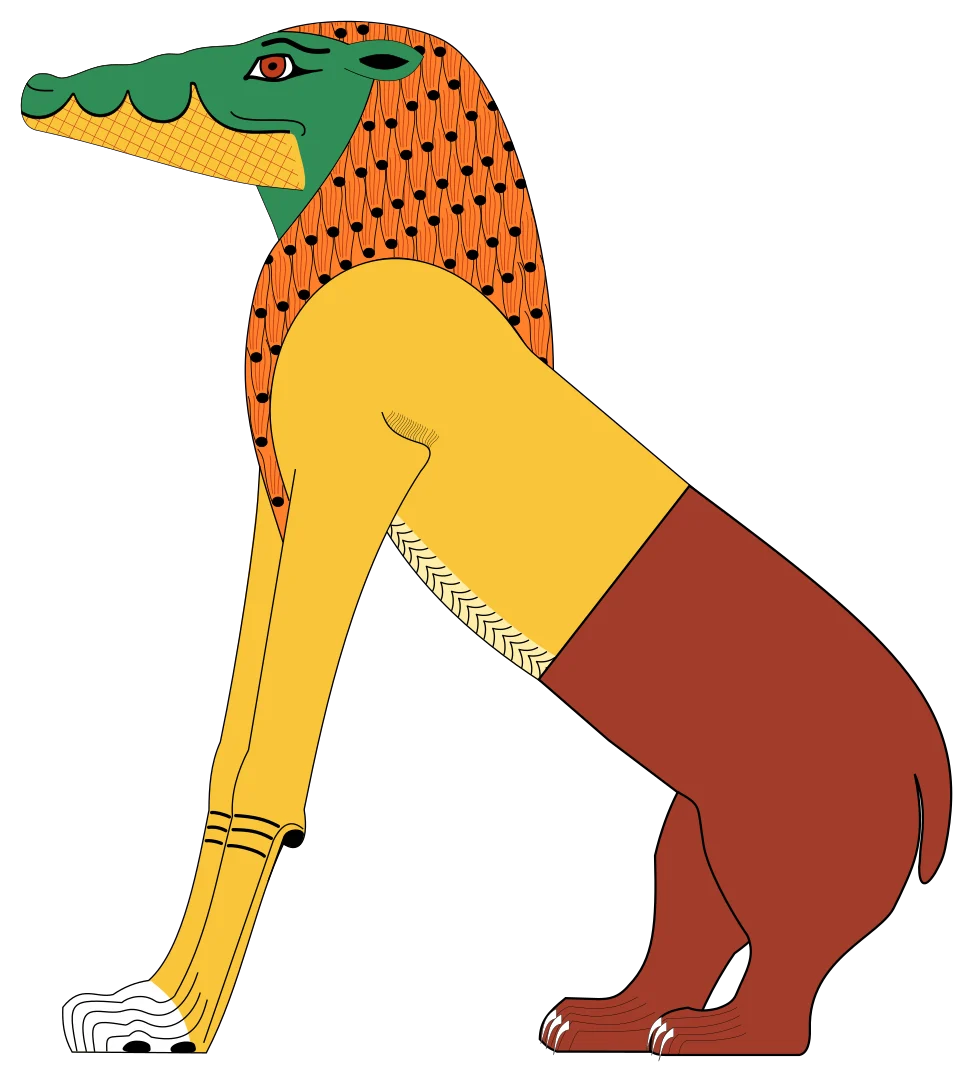
Modern vector interpretation of Egyptian deity iconography, based on historical representations; not a photograph or an original ancient painting. See the credited file description for shared iconography and artistic liberties.
Overview
Ammit’s composite body draws on a crocodile, lion and hippopotamus, animals whose force creates a formidable image. In the famous judgment scene of the Papyrus of Ani, she waits near the scales while the deceased’s heart is weighed. The visual arrangement places danger within a moral and religious process rather than an ordinary hunt.
Her role is commonly described as devouring the heart of someone who fails the judgment. Understanding the vignette requires attention to Egyptian ideas of order, the heart and the deceased’s future. Ammit should not be turned into a universal demon with a standardized combat profile; the manuscript is part of a funerary practice designed to secure a successful outcome.
The British Museum’s 1920 guide, associated with E. A. Wallis Budge, identifies the creature as Amemit and describes a crocodile’s head, a lion’s forepaws and shoulders, and a hippopotamus’s hindquarters. Its reproduction of Ani’s judgment places the creature beside Thoth and the weighing apparatus. The guide’s anatomical description specifies which portions come from which animals; it does not describe a natural species produced by interbreeding them.
Several participants perform different tasks. Anubis attends the balance, Thoth reports the result, and Osiris receives the deceased. Ani appears with his wife, while his heart is weighed against a feather representing truth and righteousness. Ammit’s presence embodies the threatened consequence of failure. She is not shown replacing the weighing, writing the judgment or receiving Ani as the ruler of the destination.
The guide also translates the address to the heart associated with Chapter XXXB. Ani asks his heart not to oppose him in testimony or bring an accusation against him. Thoth’s ensuing report declares that no wrongdoing has been found. The assembled gods confirm the verdict and explicitly deny Amemit mastery over Ani. They grant offerings and a dwelling, and Horus leads the acquitted man to Osiris. The narrated outcome therefore keeps Ammit from consuming this particular deceased person; the threat should not be mistaken for an event the vignette actually depicts.
Historical explanations of the weighing require careful attribution. On page 27, the 1920 guide describes the threatened hearts as light in the balance. Its later commentary, on page 29, instead stresses Ani’s horizontal beam and an exact counterbalance with Truth. These are the inspected guide’s words and interpretation. They are retained as evidence of that publication, without silently replacing its wording with a modern heavier-heart formula or claiming that every funerary manuscript uses the same explanation.
Another comparison appears in Peter le Page Renouf’s translation, completed and edited by Édouard Naville and published in 1904. A passage in Chapter XVII describes an unseen Eternal Devourer with a hound’s face and a human skin. In note 19 the editor compares its functions with those of Amemit in judgment pictures; the note also reports an alternative reading involving a sheep. A functional comparison is not an assertion that every named devourer has Ammit’s crocodile–lion–hippopotamus body. The other figure’s names, variant anatomy and reported divine relationships should not be transferred automatically to her.
The surviving papyrus, its reproduced illustrations and the dated scholarly editions provide different kinds of evidence. The papyrus documents an ancient religious image; the 1904 and 1920 books document particular modern translations and explanations of Egyptian texts. Neither publication date is the date of Ammit’s first appearance, and these selected passages do not establish the earliest surviving attestation across all Egyptian collections.
Origins & earliest records
The New Kingdom Papyrus of Ani supplies a surviving judgment vignette. Comparable manuscripts can vary in arrangement and wording, and the selected object cannot date every development of Ammit’s imagery. A surviving record dates its documentation, not the beginning of an oral tradition; earlier transmission cannot be timed precisely from this witness alone. The inspected 1920 museum guide and 1904 Renouf–Naville edition are later interpretive witnesses, not dates for the invention of the being or a complete survey of earliest Egyptian attestations.
Records & interpretation
The British Museum’s papyrus is material evidence for the ancient depiction and its script. It establishes funerary iconography, while the religious event represented is a different kind of claim from an excavated animal specimen. This is evidence for cultural expression and recorded interpretation, rather than a zoological specimen or independently verified supernatural event. Root review read the complete selected Ani judgment sequence in the Budge transcription and inspected the original 1920 title and pp. 26–30, including the judgment and presentation illustrations. Chapter XVII’s complete located Eternal Devourer paragraph and note 19 were read in Renouf–Naville 1904. No independent hieroglyphic translation, complete-book reading or newly successful access to the museum object record is claimed; that record returned HTTP 403 in this pass.
Selected bibliography
Documented works and useful reading. This is not a list of every appearance.
- 01
Book of the Dead, judgment vignette in the Papyrus of Ani
Selected relevant primary or ethnographic work; the online source below is separate.
- 02
The Book of the Dead: with twenty-five illustrations — Ani judgment discussion
Original title dated 1920; selected pp. 26–30 inspected, with text on pp. 27, 29–30. This is a museum guide containing translation and commentary, not the 1895 interlinear edition.
- 03
The Egyptian Book of the Dead — Chapter XVII and note 19
Located Devourer paragraph on p. 38 and note 19, pp. 48–49, compare functions with Amemit. The differently described figure is not silently merged into this entry.
Family & connections
A source-supported family tree or inspiration record has not yet been compiled for this profile. Related reading below indicates a connection in subject matter, not a proven lineage or creative influence.
Encyclopedia background
An additional attributed reference, separate from the editorial profile above.
Read the open encyclopedia overview
Ammit (; Ancient Egyptian: ꜥm-mwt, "Devourer of the Dead"; also rendered Ammut or Ahemait) was an ancient Egyptian goddess with the forequarters of a lion, the hindquarters of a hippopotamus, and the head of a crocodile—the three largest "man-eating" animals known to ancient Egyptians. In ancient Egyptian religion, Ammit played an important role during the funerary ritual, the Judgment of the Dead.
Text from Wikipedia contributors, “Ammit”. CC BY-SA 4.0. Extracted introduction; formatting changed. Retrieved 5 October 2026. The source article may have changed since retrieval.
References
Sources supporting this profile. Linked pages have their own scope and editorial standards.
- MuseumBritish Museum: Papyrus of Ani, judgment sceneResearch access: 2026-10-05
- Historical museum guide; original title and all five located pages inspectedBritish Museum / E. A. Wallis Budge: The Book of the Dead, 1920, pp. 26–30Research access: 2026-10-05
- Historical translation and commentary, collated with the 1920 selected pagesBudge guide transcription: the complete located Ani judgment sequenceResearch access: 2026-10-05
- Historical translation and separately attributed editorial comparisonRenouf and Naville: The Egyptian Book of the Dead, 1904, Chapter XVII, p. 38 and note 19, pp. 48–49Research access: 2026-10-05
Image credits
Thematic illustrationAmmit
Modern vector interpretation of Egyptian deity iconography, based on historical representations; not a photograph or an original ancient painting. See the credited file description for shared iconography and artistic liberties.