Alux
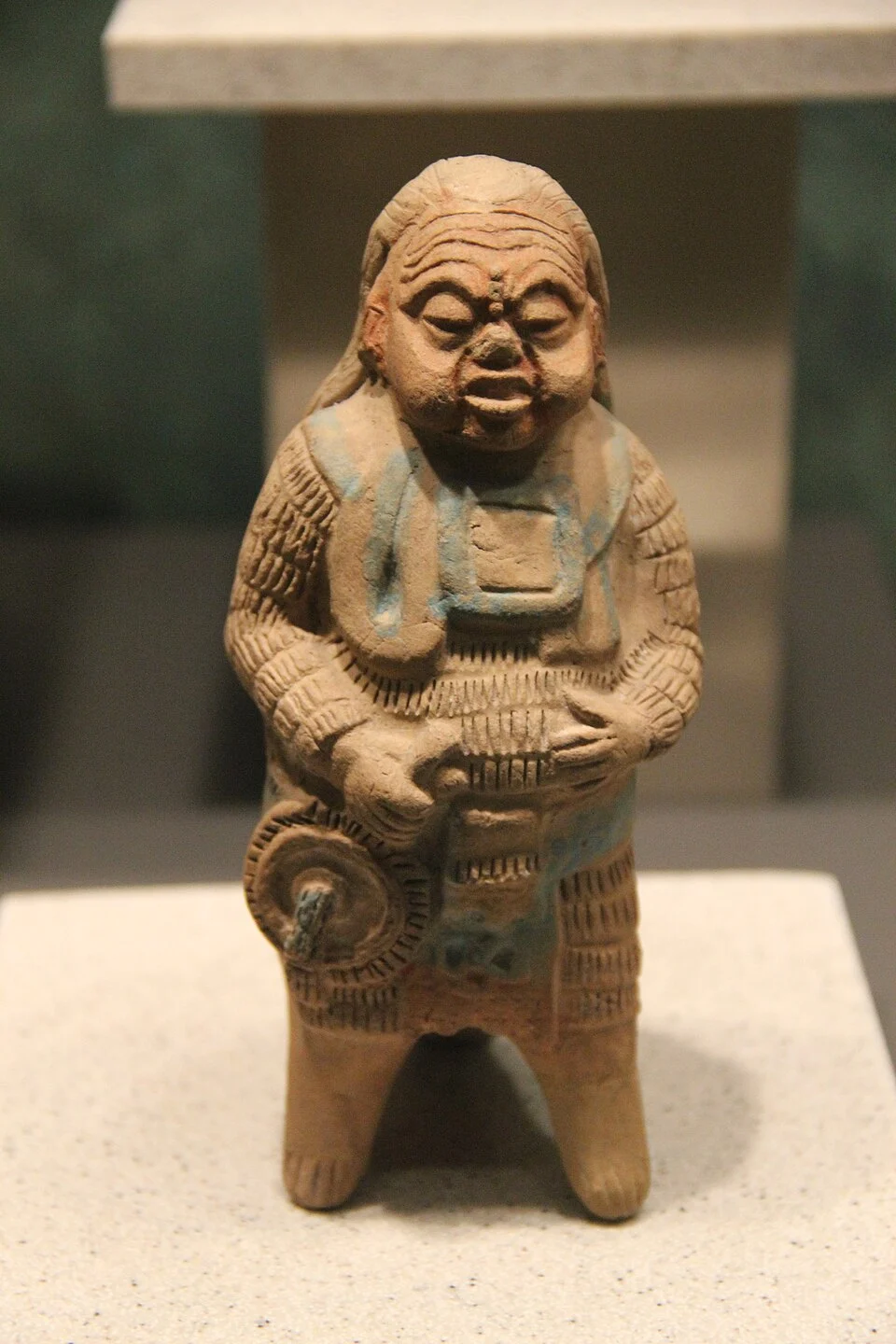
Image associated with the exact linked encyclopedia article; consult credited file description for its interpretation.
Overview
Aluxes are often described as small beings active in milpas and wooded places. Their conduct depends on relationships with people: an offering can invite protection of a cultivated field, while disturbance or neglect may bring trouble. Regional descriptions differ in age, clothing and bodily form. The Maya plural aluxob and Spanish plural aluxes also show how the term circulates across languages.
Roberto Campos Navarro's account places aluxes within ceremonial life and reports a field-observed offering in 1993. This provides a concrete setting in which agricultural work, healing and relationships with unseen guardians meet. Ruins and clay figures appear in some descriptions, but an archaeological figurine is not automatically an alux representation. The subject belongs to a living cosmology, with community knowledge extending beyond the details made public in one ethnographic essay.
A recent public community witness gives a specific household encounter. Pixan Chenes credits Ligia de los Ángeles Xoolchi of San Francisco Suc-Tuc in a recording dated 11 June 2025. She recalls leaving her son in a hammock while washing dishes, then finding the hammock as she had left it but the child missing. Her mother urged restraint during the search. After neighbours joined and searching failed, the child reappeared behind the house with scratches and torn clothes. Xoolchi interprets this as an alux encounter. Her testimony is distinguished from the webpage’s preceding generalized legend; it is not independent confirmation of supernatural agency.
Origins & earliest records
Twentieth-century dictionaries and ethnographic accounts document alux traditions, including the 1993 ceremony discussed in the selected essay. These records establish particular attestations, not the first existence of the tradition. Claims that ancient clay objects are aluxes must distinguish present interpretations from what archaeology can independently establish about their original use.
Records & interpretation
The university-hosted essay draws on dictionaries, earlier ethnography and an observed ceremony, making its evidence broader than an isolated popular legend. Descriptions vary between places, which limits any standard anatomy. Reports document cultural relationships and practices; they do not verify a hidden species or authorise publication of knowledge that communities keep restricted. Xoolchi’s complete written testimony was inspected; the linked audio was not played. An internally inconsistent sentence in its transcription is not used to claim the child died or returned unharmed.
Selected bibliography
Documented works and useful reading. This is not a list of every appearance.
- 01
Los aluxes en la vida ceremonial maya
Selected ethnographic essay hosted by Universidad Autónoma de Yucatán.
- 02
Diccionario Maya Cordemex
Dictionary definition referenced in Campos Navarro's essay; selected linguistic reading.
- 03
Los Aluxes
Public written testimony; recording dated 11 June 2025; audio unplayed.
Family & connections
A source-supported family tree or inspiration record has not yet been compiled for this profile. Related reading below indicates a connection in subject matter, not a proven lineage or creative influence.
Encyclopedia background
An additional attributed reference, separate from the editorial profile above.
Read the open encyclopedia overview
An alux (Mayan: [aˈluʃ], plural: aluxo'ob [aluʃoˀːb]) is a type of sprite or spirit in the mythological tradition of certain Maya peoples from the Yucatán Peninsula, Belize and Guatemala, also called Chanekeh or Chaneque by the Nahuatl people. Aluxo'ob are conceived of as being small, only about knee-high, and in appearance resembling miniature traditionally dressed Maya people. Tradition holds that aluxob are generally invisible but are able to assume physical form for purposes of communicating with and frightening humans as well as to congregate. They are generally associated with natural features such as forests, caves, stones, and fields but can also be enticed to move somewhere through offerings. These associations are because aluxo’ob were created with mud, leaves, and divine breath by the ancient Mayan gods. Their description and mythological role are somewhat reminiscent of other sprite-like mythical entities in a number of other cultural traditions (such as the leprechaun or Brownie ), as the tricks they play are similar.
Some Maya believe that the Aluxo'ob are called into being when a farmer builds a little house on his property, most often in a maize field (milpa). For seven years, the alux will help the corn grow, summon rain and patrol the fields at night, whistling to scare off predators or crop thieves. At the end of seven years, the farmer must close the windows and doors of the little house, sealing the alux inside. If this is not done, the alux will run wild and start playing tricks on people.
Some contemporary Maya even consider the single- and double-story shrines that dot the countryside to be kahtal alux, the "houses of the alux" (although their true origins and purpose are unknown).
Stories say that they will occasionally stop and ask farmers or travellers for an offering. If they refuse, the aluxo'ob will often wreak havoc and spread illness. However, if their conditions are met, it is thought the alux will protect a person from thieves or even bring them good luck. If they are treated with respect, they can be very helpful. Because they are known for playing mischievous pranks such as putting out fires to throwing pots and pans into the yard, many construction companies in the Yucatán Peninsula perform ceremonies at worksites to avoid offending them and to prevent such incidents from occurring.
It is believed that it is not good to name them aloud, as it will summon a disgruntled alux from its home.
The word "duende" is sometimes used interchangeably with "alux". Duende is a Spanish word for a supernatural creature (commonly a goblin) or force. In fact, because of such striking similarities, some suspect that the Maya's belief of aluxob developed through interactions with the Spanish or pirates during the 16th century. Pirates of that era were often from the British Isles, where belief in faeries was quite common, especially amongst those of lower socio-economic class (as pirates generally would have been). However, the Maya themselves would claim that the alux are the spirits of their ancestors, or the spirits of the land itself, preceding contact with Western civilization.
The supposition that aluxob featured in the mythical traditions of the pre-Columbian Maya is possibly supported by similar conceptions postulated from depictions in pre-Columbian artworks, but there is no direct evidence.
In 2023, the sitting president of Mexico, Andrés Manuel López Obrador, posted a picture of an alleged alux on Twitter, claiming that it had been spotted by an engineer working on a rail project.
Text from Wikipedia contributors, “Alux”. CC BY-SA 4.0. Extracted introduction; formatting changed. Retrieved 5 October 2026. The source article may have changed since retrieval.
References
Sources supporting this profile. Linked pages have their own scope and editorial standards.
- ResearchLos aluxes en la vida ceremonial mayaResearch access: 2026-10-05
- ResearchVoces mayas y mayismos en el español de YucatánResearch access: 2026-10-05
- Primary textPixan Chenes: Ligia de los Ángeles Xoolchi testimonyResearch access: 2026-10-05
Image credits
Reference illustrationAlux
Image associated with the exact linked encyclopedia article; consult credited file description for its interpretation.