
horned rockskipper
Antennablennius bifilum (Günther, 1861)
Accepted species in Catalogue of Life’s 11 September 2026 base release. This preserves the source classification and available supporting data; it is not a completed species monograph.
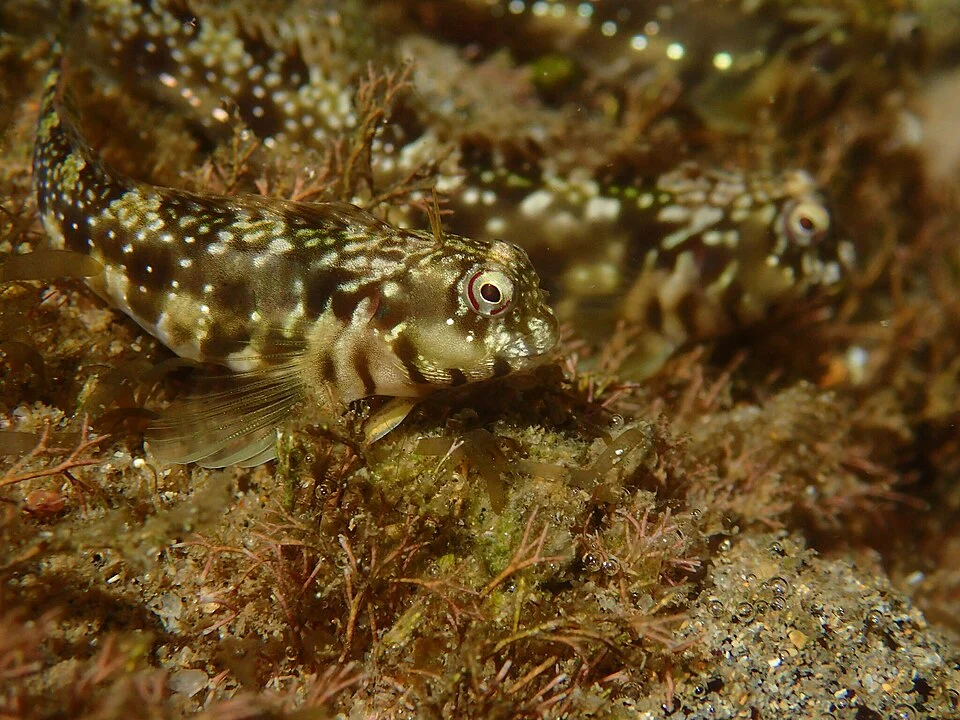
Photographer: Mahomed Desai Photograph of a fish, supposedly the Horned Rockskipper (Antennablennius bifilum) by the original photographer, taken near Park Rynie, KwaZulu-Natal, South Africa. Mahomed Desai, the original photographer, is said to be an "Ecologist with an interest in ecosystem processes and species interactions". The photograph is said to be "Research Grade"; the community consensus agreed that this photo is a Horned Rockskipper by the original photographer, Roberto Pillon (an "Italian underwater nature photographer, specializing in the identification of Mediterranean fish and echidnoderms"), and Clinton Duffy (a "Curator of Marine Biology at Auckland Museum, Auckland, New Zealand"). Original photo links: https://www.inaturalist.org/observations/202148606 https://www.inaturalist.org/photos/356963255
Mahomed Desai · CC BY 4.0 · Image sourceProvider-generated thumbnail requested at 800 pixels; no local editing Local WebP display rendition; resized without cropping.
Open encyclopedia reference
Antennablennius bifilum, the horned rockskipper, is a species of combtooth blenny found in the western Indian Ocean.
Like other similar species, its eggs are oviparous (eggs develop outside the female), and its range is from the Persian Gulf to South Africa.
Wikipedia contributors, Antennablennius bifilum; see linked history · CC BY-SA 4.0 . Plain-text lead excerpt, at most 180 words; no infobox or later sections Retrieved 2026-10-05T07:27:42.330162+00:00. This reference remains separate from the taxonomic record.
Identity & source status
- Scientific name
- Antennablennius bifilum (Günther, 1861)
- Name authority
- (Günther, 1861)
- Common name
- horned rockskipper
- Rank
- species
- Accepted status
- accepted
- Kingdom
- Animalia
- Phylum
- Chordata
- Class
- Teleostei
- Order
- Blenniiformes
- Family
- Blenniidae
- Genus
- Antennablennius
- Extinction status
- Not supplied by this source
Source habitat flags: Marine: yes · Freshwater: no · Terrestrial: no. These do not form a complete habitat description.
Classification family tree
Nested taxonomic groups from the source. This is not a direct-ancestor chain, a dated evolutionary tree or a phylogenetic reconstruction.
- domainEukaryota (Chatton, 1925) Whittaker & Margulis, 1978
- kingdomAnimalia
- phylumChordata
- subphylumVertebrata
- infraphylumGnathostomata
- parvphylumOsteichthyes
- gigaclassActinopterygii
- superclassActinopteri
- classTeleostei
- orderBlenniiformes
- familyBlenniidae Rafinesque, 1810
- subfamilySalariinae Gill, 1859
- genusAntennablennius Fowler, 1931
- speciesAntennablennius bifilum (Günther, 1861)
Close classified relatives
These entries share the source’s genus, Antennablennius. They are not necessarily the closest relatives established by molecular evidence.
| Species | Classification | Source status |
|---|---|---|
| moustached rockskipperAntennablennius australis Fraser-Brunner, 1951 | BlenniidaeChordata | Accepted speciesExtinction status not supplied |
| Antennablennius variopunctatus (Jatzow & Lenz, 1898) | BlenniidaeChordata | Accepted speciesExtinction status not supplied |
| Antennablennius velifer Smith, 1959 | BlenniidaeChordata | Accepted speciesExtinction status not supplied |
| Antennablennius hypenetes (Klunzinger, 1871) | BlenniidaeChordata | Accepted speciesExtinction status not supplied |
| Antennablennius adenensis Fraser-Brunner, 1951 | BlenniidaeChordata | Accepted speciesExtinction status not supplied |
| Antennablennius ceylonensis Bath, 1983 | BlenniidaeChordata | Accepted speciesExtinction status not supplied |
| Antennablennius sexfasciatus (von Bonde, 1923) | BlenniidaeChordata | Accepted speciesExtinction status not supplied |
| Antennablennius simonyi (Steindachner, 1902) | BlenniidaeChordata | Accepted speciesExtinction status not supplied |
Names & synonyms
Names explicitly linked to this accepted taxon in the source. Synonymy can change with revision.
| Recorded name | Source status |
|---|---|
| Blennius persicus Regan, 1905 Regan, 1905 | synonym |
| Croaltus bifilum (Günther, 1861) (Günther, 1861) | synonym |
| Blennius bifilum Günther, 1861 Günther, 1861 | synonym |
Source literature & publication evidence
References attached to this source record, including nomenclatural citations where supplied. This is a selected bibliography; abbreviated citations remain in the source’s form.
- https://www.marinespecies.org/aphia.php?p=taxdetails&id=219239 Source fields: Taxon.tsv dwc:namePublishedIn, Taxon.tsv dcterms:references
Origins, evidence & remaining research
Name authority and publication references document nomenclature where the source supplies it. They do not establish evolutionary origins or the earliest fossil occurrence.
Specimen-level evidence, morphology, ecological research, phylogenetic studies, a comprehensive bibliography and a located literary passage have not yet been compiled for this record.
Dataset citation & attribution
This exact taxon in ChecklistBank · Catalogue of Life 2026-09-11
Catalogue of Life 2026-09-11; dataset 316321; doi:10.48580/dgz5n. https://creativecommons.org/licenses/by/4.0/ . Retrieved 5 October 2026.
Stable key: col:66XSD. Classification follows source parent identifiers. English common names may vary by region.