
northern stargazer
Astroscopus guttatus Abbott, 1860
Accepted species in Catalogue of Life’s 11 September 2026 base release. This preserves the source classification and available supporting data; it is not a completed species monograph.
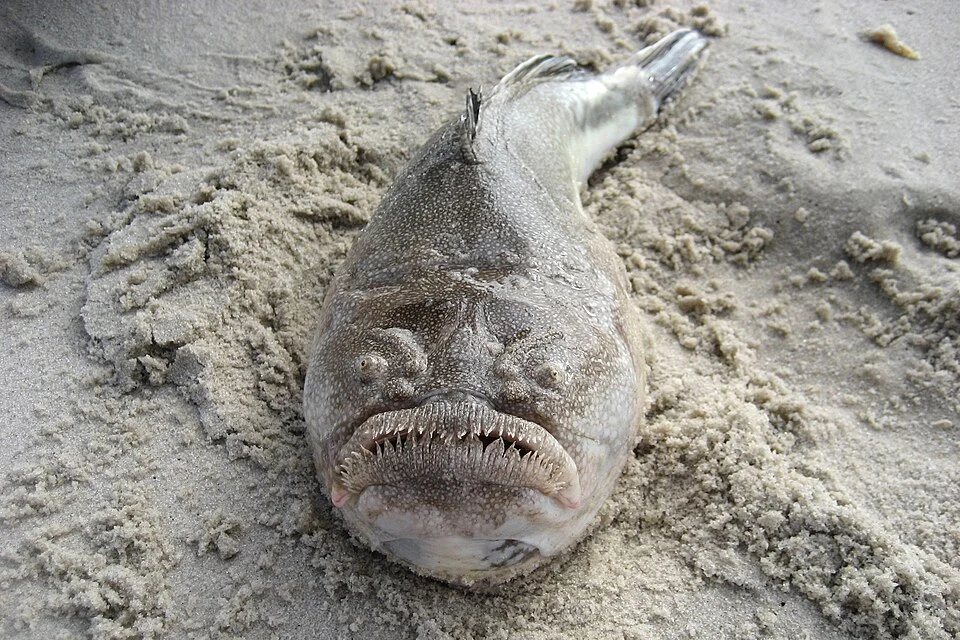
Astroscopus guttatus
Canvasman21 at English Wikipedia · CC BY-SA 3.0 · Image sourceProvider-generated thumbnail requested at 800 pixels; no local editing Local WebP display rendition; resized without cropping.
Open encyclopedia reference
Astroscopus guttatus or the northern stargazer is a species of fish belonging to the Uranoscopidae family and was first described by Charles Conrad Abbott in 1860. Members of the Uranoscopidae family are characterized by dorsally or dorsolaterally directed eyes placed on or near the top of a large, flattened cuboid head, an oblique to vertical mouth often lined with cutaneous cirri, and an elongated, sub-compressed body. Typically found on the Atlantic shores between the states of North Carolina and New York in the United States, the northern stargazer can sometimes be confused with its sister species the southern stargazer, Astroscopus y-graecum. Both A. guttatus and A. y-graecum overlap in their distributions in Cape Hatteras One way to distinguish the northern stargazer from the southern stargazer is by the presence of numerous small white spots closely spaced along its head and back, whereas the southern stargazer has fewer, larger spots on its back. The northern stargazer is a moderately sized fish that can reach lengths of 22 inches (56 cm).
Wikipedia contributors, Astroscopus guttatus; see linked history · CC BY-SA 4.0 . Plain-text lead excerpt, at most 180 words; no infobox or later sections Retrieved 2026-10-05T07:29:34.815020+00:00. This reference remains separate from the taxonomic record.
Identity & source status
- Scientific name
- Astroscopus guttatus Abbott, 1860
- Name authority
- Abbott, 1860
- Common name
- northern stargazer
- Rank
- species
- Accepted status
- accepted
- Kingdom
- Animalia
- Phylum
- Chordata
- Class
- Teleostei
- Order
- Perciformes
- Family
- Uranoscopidae
- Genus
- Astroscopus
- Extinction status
- Not supplied by this source
Source habitat flags: Marine: yes · Freshwater: no · Terrestrial: no. These do not form a complete habitat description.
Classification family tree
Nested taxonomic groups from the source. This is not a direct-ancestor chain, a dated evolutionary tree or a phylogenetic reconstruction.
- domainEukaryota (Chatton, 1925) Whittaker & Margulis, 1978
- kingdomAnimalia
- phylumChordata
- subphylumVertebrata
- infraphylumGnathostomata
- parvphylumOsteichthyes
- gigaclassActinopterygii
- superclassActinopteri
- classTeleostei
- orderPerciformes
- suborderUranoscopoidei
- familyUranoscopidae Bonaparte, 1831
- genusAstroscopus Brevoort, 1860
- speciesAstroscopus guttatus Abbott, 1860
Close classified relatives
No other member of this genus is present in the selected snapshot.
Source literature & publication evidence
References attached to this source record, including nomenclatural citations where supplied. This is a selected bibliography; abbreviated citations remain in the source’s form.
- Abbot, C. C. (1860). Description of a new species of Astroscopus Brev., in the museum of the Academy of Natural Sciences of Philadelphia. Proceedings of the Academy of Natural Sciences of Philadelphia, v. 12: 365, Pl. 7. Source fields: Taxon.tsv dwc:namePublishedIn, Taxon.tsv dcterms:references
Origins, evidence & remaining research
Name authority and publication references document nomenclature where the source supplies it. They do not establish evolutionary origins or the earliest fossil occurrence.
Specimen-level evidence, morphology, ecological research, phylogenetic studies, a comprehensive bibliography and a located literary passage have not yet been compiled for this record.
Dataset citation & attribution
This exact taxon in ChecklistBank · Catalogue of Life 2026-09-11
Catalogue of Life 2026-09-11; dataset 316321; doi:10.48580/dgz5n. https://creativecommons.org/licenses/by/4.0/ . Retrieved 5 October 2026.
Stable key: col:5VW5X. Classification follows source parent identifiers. English common names may vary by region.