
Delicate Swordtail
Xiphophorus cortezi Rosen, 1960
Accepted species in Catalogue of Life’s 11 September 2026 base release. This preserves the source classification and available supporting data; it is not a completed species monograph.
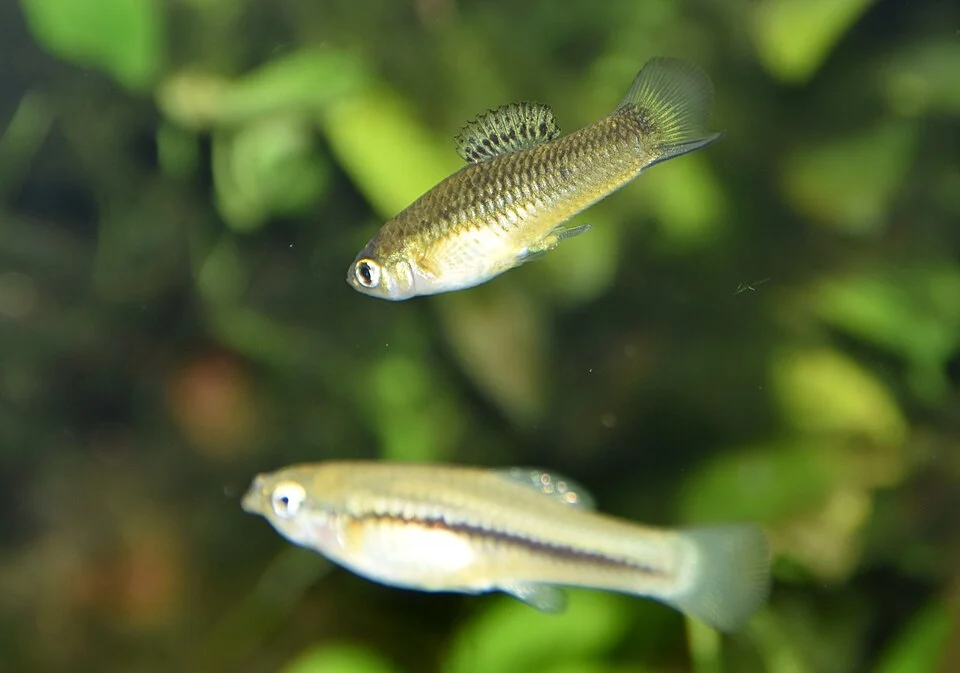
Xiphophorus cortezi DELICATE SWORDTAIL. Zoo Frankfurt.
NasserHalaweh · CC BY-SA 4.0 · Image sourceProvider-generated thumbnail requested at 800 pixels; no local editing Local WebP display rendition; resized without cropping.
Open encyclopedia reference
Xiphophorus cortezi, the delicate swordtail, is a species of poeciliid fish from Mexico.
Named after the Spanish conquistador Hernán Cortés, Xiphophorus cortezi was originally described in 1960 by Donn Eric Rosen as a subspecies of X. montezumae. It was well known in literature prior to the formal scientific description. The smaller males of X. cortezi are similar to the larger males of X. nigrensis, pointing to a close evolutionary relationship with this species too.
Adult size is variable and averages about 30 mm in standard length. The color of the male, especially the midlateral stripe, depends on the excitement of the fish and background shade of its environment. Some specimens kept in the laboratory for years have shown such silvery coloring that black markings became absent. Different patterns of black spots on the tail exist.
Xiphophorus cortezi is found in the upper Rio Panuco system in northeastern Mexico. Two congeners, X. pygmaeus and X. variatus, are found in the same section of Rio Axtla, a tributary of Rio Panuco, but the species are nearly always separated into different ecological niches.
Wikipedia contributors, Xiphophorus cortezi; see linked history · CC BY-SA 4.0 . Plain-text lead excerpt, at most 180 words; no infobox or later sections Retrieved 2026-10-05T07:24:54.450366+00:00. This reference remains separate from the taxonomic record.
Identity & source status
- Scientific name
- Xiphophorus cortezi Rosen, 1960
- Name authority
- Rosen, 1960
- Common name
- Delicate Swordtail
- Rank
- species
- Accepted status
- accepted
- Kingdom
- Animalia
- Phylum
- Chordata
- Class
- Teleostei
- Order
- Cyprinodontiformes
- Family
- Poeciliidae
- Genus
- Xiphophorus
- Extinction status
- Not supplied by this source
Source habitat flags: Marine: no · Freshwater: yes · Terrestrial: no. These do not form a complete habitat description.
Classification family tree
Nested taxonomic groups from the source. This is not a direct-ancestor chain, a dated evolutionary tree or a phylogenetic reconstruction.
- domainEukaryota (Chatton, 1925) Whittaker & Margulis, 1978
- kingdomAnimalia
- phylumChordata
- subphylumVertebrata
- infraphylumGnathostomata
- parvphylumOsteichthyes
- gigaclassActinopterygii
- superclassActinopteri
- classTeleostei
- orderCyprinodontiformes
- familyPoeciliidae Bonaparte, 1831
- subfamilyPoeciliinae Bonaparte, 1831
- genusXiphophorus Heckel, 1848
- speciesXiphophorus cortezi Rosen, 1960
Close classified relatives
These entries share the source’s genus, Xiphophorus. They are not necessarily the closest relatives established by molecular evidence.
| Species | Classification | Source status |
|---|---|---|
| Spiketail PlatyfishXiphophorus andersi Meyer & Schartl, 1980 | PoeciliidaeChordata | Accepted speciesExtinction status not supplied |
| Xiphophorus clemenciae Álvarez, 1959 | PoeciliidaeChordata | Accepted speciesExtinction status not supplied |
| Monterrey PlatyfishXiphophorus couchianus (Girard, 1859) | PoeciliidaeChordata | Accepted speciesExtinction status not supplied |
| Reticulate PlatyfishXiphophorus evelynae Rosen, 1960 | PoeciliidaeChordata | Accepted speciesExtinction status not supplied |
| Xiphophorus gordoni Miller & Minckley, 1963 | PoeciliidaeChordata | Accepted speciesExtinction status not supplied |
| green swordtailXiphophorus hellerii Heckel, 1848 | PoeciliidaeChordata | Accepted speciesExtinction status not supplied |
| Xiphophorus kosszanderi Meyer & Wischnath, 1981 | PoeciliidaeChordata | Accepted speciesExtinction status not supplied |
| Southern PlatyfishXiphophorus maculatus (Günther, 1866) | PoeciliidaeChordata | Accepted speciesExtinction status not supplied |
| Highland SwordtailXiphophorus malinche Rauchenberger, Kallman & Morizot, 1990 | PoeciliidaeChordata | Accepted speciesExtinction status not supplied |
| Marbled SwordtailXiphophorus meyeri Schartl & Schröder, 1988 | PoeciliidaeChordata | Accepted speciesExtinction status not supplied |
| Catemaco platyfishXiphophorus milleri Rosen, 1960 | PoeciliidaeChordata | Accepted speciesExtinction status not supplied |
| Xiphophorus monticolus Kallman, Walter, Morizot & Kazianis, 2004 | PoeciliidaeChordata | Accepted speciesExtinction status not supplied |
Names & synonyms
Names explicitly linked to this accepted taxon in the source. Synonymy can change with revision.
| Recorded name | Source status |
|---|---|
| Xiphophorus montezumae cortezi Rosen, 1960 Rosen, 1960 | synonym |
Source literature & publication evidence
References attached to this source record, including nomenclatural citations where supplied. This is a selected bibliography; abbreviated citations remain in the source’s form.
- Rosen, D. E. (1960). Middle-American poeciliid fishes of the genus Xiphophorus. Bulletin of the Florida State Museum, Biological Sciences, 5 (4): 57–242. https://doi.org/10.58782/flmnh.bnrr6484 Source fields: Taxon.tsv dwc:namePublishedIn, Taxon.tsv dcterms:references
Origins, evidence & remaining research
Name authority and publication references document nomenclature where the source supplies it. They do not establish evolutionary origins or the earliest fossil occurrence.
Specimen-level evidence, morphology, ecological research, phylogenetic studies, a comprehensive bibliography and a located literary passage have not yet been compiled for this record.
Dataset citation & attribution
This exact taxon in ChecklistBank · Catalogue of Life 2026-09-11
Catalogue of Life 2026-09-11; dataset 316321; doi:10.48580/dgz5n. https://creativecommons.org/licenses/by/4.0/ . Retrieved 5 October 2026.
Stable key: col:5CFP4. Classification follows source parent identifiers. English common names may vary by region.