
Melanobatrachus indicus Beddome, 1878
Accepted species in Catalogue of Life’s 11 September 2026 base release. This preserves the source classification and available supporting data; it is not a completed species monograph.
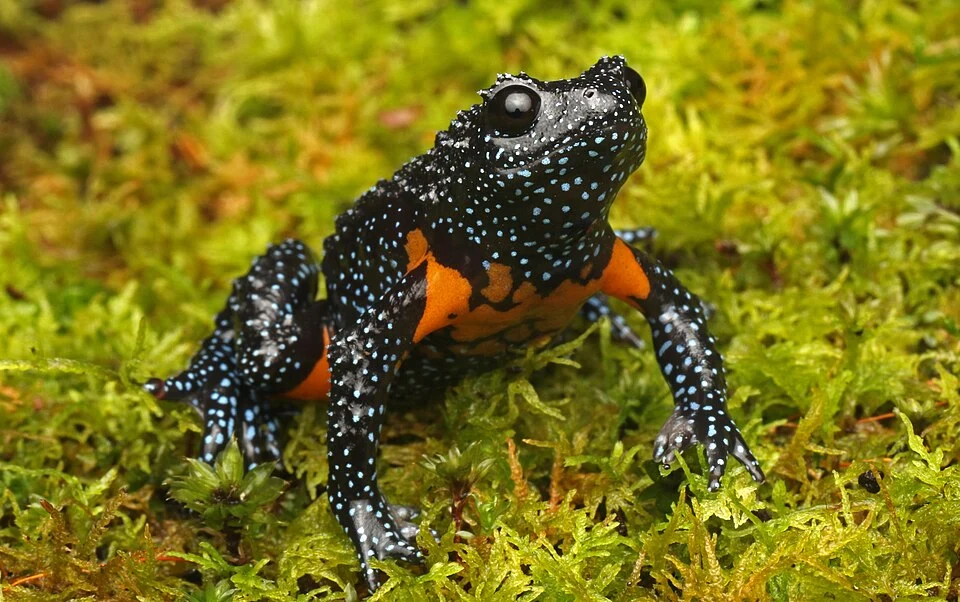
melanobatrachus indicus
Davidvraju · CC BY-SA 4.0 · Image sourceProvider-generated thumbnail requested at 800 pixels; no local editing Local WebP display rendition; resized without cropping.
Open encyclopedia reference
Melanobatrachus is a genus of narrow-mouthed frogs in the family Microhylidae. It is the only remaining genus in the monotypic subfamily Melanobatrachinae. It contains a single species, Melanobatrachus indicus, also known as the Indian black microhylid frog and Malabar black narrow-mouthed frog. It is endemic to wet evergreen forests of southern Western Ghats in Kerala and Tamil Nadu states of India. It has been recorded from Anaimalai, Munnar, Palni hills, Periyar Tiger Reserve and Kalakkad Mundanthurai Tiger Reserve
Melanobatrachus indicus is a rare species that was only rediscovered in 1997. It lives amongst leaf-litter, rocks and other ground cover of moist evergreen tropical forests.
The subfamily Melanobatrachinae included two African genera, Hoplophryne Barbour & Loveridge, 1928 and Parhoplophryne Barbour & Loveridge, 1928, in the past but they are now placed in the subfamily Hoplophryninae.
Melanobatrachus indicus is an Evolutionarily Distinct and Globally Endangered (EDGE) species. It is classified as Vulnerable by the International Union for Conservation of Nature. The species faces danger by photography trips.
Wikipedia contributors, Melanobatrachus; see linked history · CC BY-SA 4.0 . Plain-text lead excerpt, at most 180 words; no infobox or later sections Retrieved 2026-10-05T17:08:47.046743+00:00. This reference remains separate from the taxonomic record.
Identity & source status
- Scientific name
- Melanobatrachus indicus Beddome, 1878
- Name authority
- Beddome, 1878
- Rank
- species
- Accepted status
- accepted
- Kingdom
- Animalia
- Phylum
- Chordata
- Class
- Amphibia
- Order
- Anura
- Family
- Microhylidae
- Genus
- Melanobatrachus
- Extinction status
- Recorded extant
Classification family tree
Nested taxonomic groups from the source. This is not a direct-ancestor chain, a dated evolutionary tree or a phylogenetic reconstruction.
- domainEukaryota (Chatton, 1925) Whittaker & Margulis, 1978
- kingdomAnimalia
- phylumChordata
- subphylumVertebrata
- infraphylumGnathostomata
- parvphylumOsteichthyes
- megaclassTetrapoda
- classAmphibia
- orderAnura
- familyMicrohylidae Günther, 1858
- subfamilyMelanobatrachinae Noble, 1931
- genusMelanobatrachus Beddome, 1878
- speciesMelanobatrachus indicus Beddome, 1878
Close classified relatives
No other member of this genus is present in the selected snapshot.
Source literature & publication evidence
References attached to this source record, including nomenclatural citations where supplied. This is a selected bibliography; abbreviated citations remain in the source’s form.
- https://www.itis.gov/servlet/SingleRpt/SingleRpt?search_topic=TSN&search_value=664522 Source fields: Taxon.tsv dwc:namePublishedIn, Taxon.tsv dcterms:references
Origins, evidence & remaining research
Name authority and publication references document nomenclature where the source supplies it. They do not establish evolutionary origins or the earliest fossil occurrence.
Specimen-level evidence, morphology, ecological research, phylogenetic studies, a comprehensive bibliography and a located literary passage have not yet been compiled for this record.
Dataset citation & attribution
This exact taxon in ChecklistBank · Catalogue of Life 2026-09-11
Catalogue of Life 2026-09-11; dataset 316321; doi:10.48580/dgz5n. https://creativecommons.org/licenses/by/4.0/ . Retrieved 5 October 2026.
Stable key: col:3Z84J. Classification follows source parent identifiers. English common names may vary by region.