
Atlantic mako shark
Isurus oxyrinchus Rafinesque, 1810
Accepted species in Catalogue of Life’s 11 September 2026 base release. This preserves the source classification and available supporting data; it is not a completed species monograph.
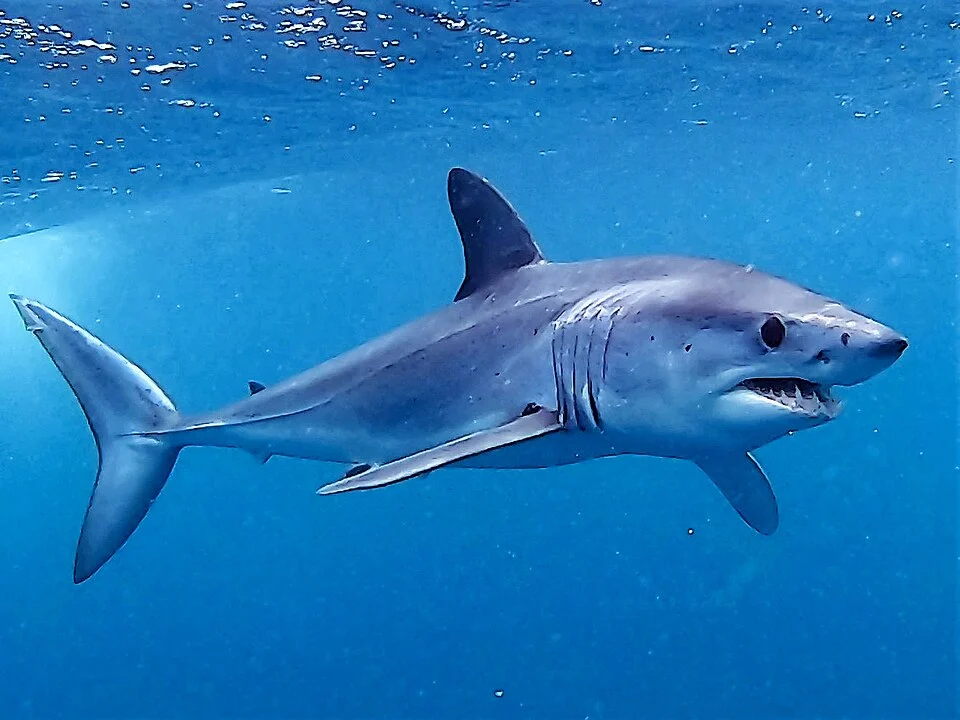
Photograph of a shortfin mako shark taken off the coast of Cabo San Lucas in March 2020.
Fábio Olmos · CC BY 4.0 · Image sourceProvider-generated thumbnail requested at 800 pixels; no local editing Local WebP display rendition; resized without cropping.
Open encyclopedia reference
The shortfin mako shark (; Māori: [ˈmakɔ]; Isurus oxyrinchus), also known as the shortfin mako, blue pointer, or bonito shark, is a species of large mackerel shark. It is commonly referred to as the mako shark, as is the longfin mako shark (Isurus paucus). The fastest known shark species, able to reach speeds of 74 km/h (46 mph) in bursts, the shortfin mako can attain sizes of more than 4 m (13 ft) in length and weigh over 570 kg (1,260 lb). The species is classified as Endangered by the IUCN.
Wikipedia contributors, Shortfin mako shark; see linked history · CC BY-SA 4.0 . Plain-text lead excerpt, at most 180 words; no infobox or later sections Retrieved 2026-10-05T08:30:33.260279+00:00. This reference remains separate from the taxonomic record.
Identity & source status
- Scientific name
- Isurus oxyrinchus Rafinesque, 1810
- Name authority
- Rafinesque, 1810
- Common name
- Atlantic mako shark
- Rank
- species
- Accepted status
- accepted
- Kingdom
- Animalia
- Phylum
- Chordata
- Class
- Elasmobranchii
- Order
- Lamniformes
- Family
- Lamnidae
- Genus
- Isurus
- Extinction status
- Not supplied by this source
Source habitat flags: Marine: yes · Freshwater: no · Terrestrial: no. These do not form a complete habitat description.
Classification family tree
Nested taxonomic groups from the source. This is not a direct-ancestor chain, a dated evolutionary tree or a phylogenetic reconstruction.
- domainEukaryota (Chatton, 1925) Whittaker & Margulis, 1978
- kingdomAnimalia
- phylumChordata
- subphylumVertebrata
- infraphylumGnathostomata
- parvphylumChondrichthyes
- classElasmobranchii
- subclassNeoselachii
- infraclassSelachii
- superorderGaleomorphi
- orderLamniformes Garman, 1885
- familyLamnidae Bonaparte, 1835
- genusIsurus Rafinesque, 1810
- speciesIsurus oxyrinchus Rafinesque, 1810
Close classified relatives
These entries share the source’s genus, Isurus. They are not necessarily the closest relatives established by molecular evidence.
| Species | Classification | Source status |
|---|---|---|
| longfin makoIsurus paucus Guitart, 1966 | LamnidaeChordata | Accepted speciesExtinction status not supplied |
Names & synonyms
Names explicitly linked to this accepted taxon in the source. Synonymy can change with revision.
Source literature & publication evidence
References attached to this source record, including nomenclatural citations where supplied. This is a selected bibliography; abbreviated citations remain in the source’s form.
- Rafinesque, C. S. (1810). Caratteri di alcuni nuovi generi e nuove specie di animali e piante della sicilia, con varie osservazioni sopra i medisimi. Per Le Stampe Di Sanfilippo: Palermo, Italy, Part 1 involves fishes, pp. [i–iv] 3–69 [70 blank], Part 2 with slightly different title, pp. ia–iva + 71–105 [106 blank]). Pls. 1–20. https://doi.org/10.5962/bhl.title.104418 Source fields: Taxon.tsv dwc:namePublishedIn, Taxon.tsv dcterms:references
Origins, evidence & remaining research
Name authority and publication references document nomenclature where the source supplies it. They do not establish evolutionary origins or the earliest fossil occurrence.
Specimen-level evidence, morphology, ecological research, phylogenetic studies, a comprehensive bibliography and a located literary passage have not yet been compiled for this record.
Dataset citation & attribution
This exact taxon in ChecklistBank · Catalogue of Life 2026-09-11
Catalogue of Life 2026-09-11; dataset 316321; doi:10.48580/dgz5n. https://creativecommons.org/licenses/by/4.0/ . Retrieved 5 October 2026.
Stable key: col:3QDF9. Classification follows source parent identifiers. English common names may vary by region.