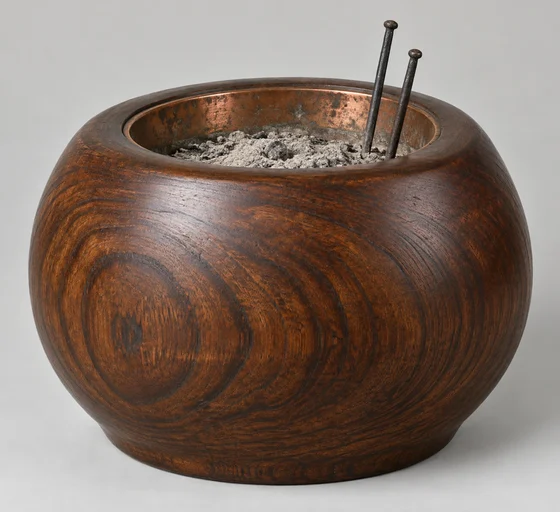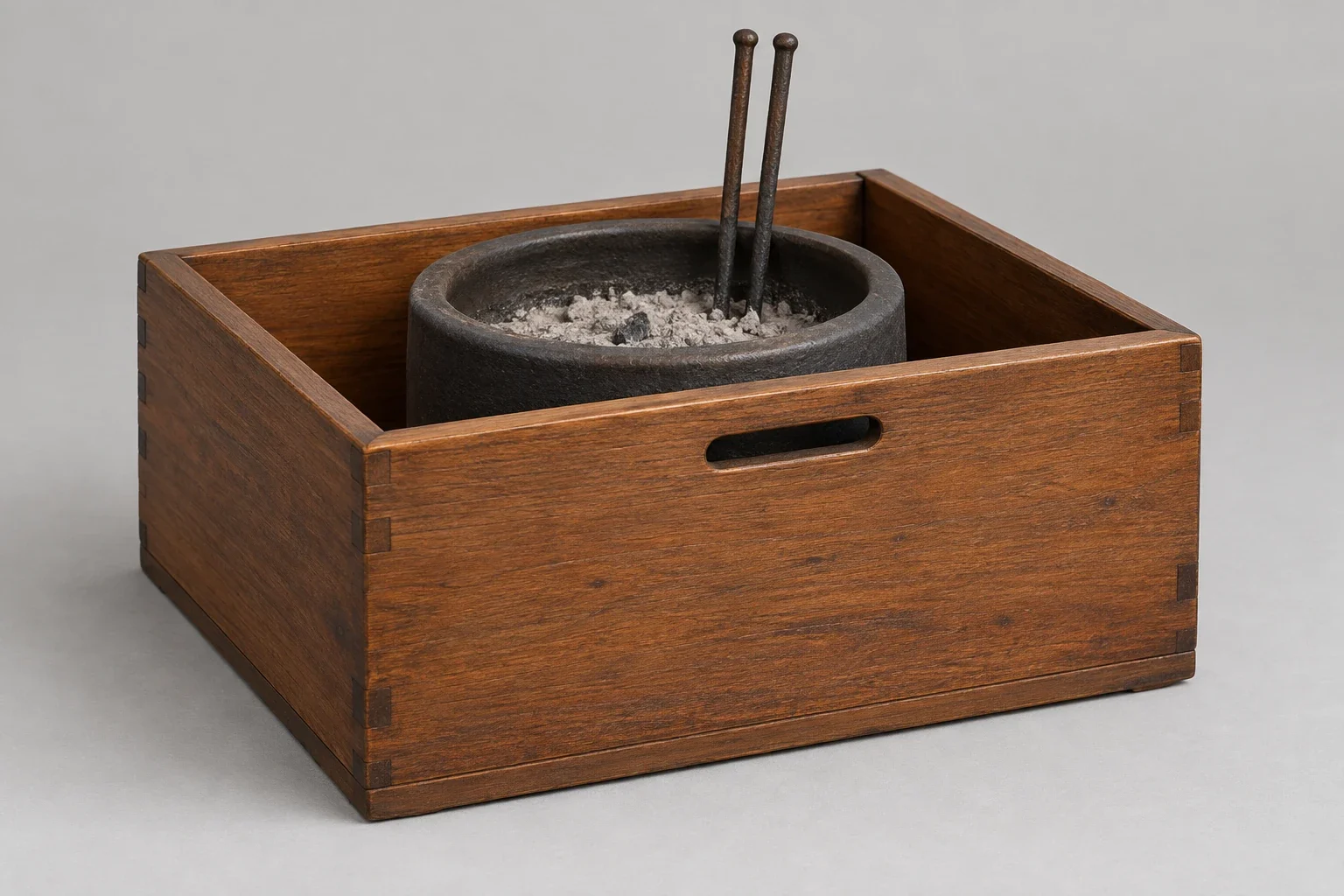
AI-generated material interpretation of a historical published form; not a photographed or authenticated specimen.
Overview
Morse’s figure 197 shows a low rectangular wooden box with an open top. A dark, round vessel sits within the box, and a pair of slender rods rises from its interior. One broad side has a narrow rounded opening near its top edge, providing a handhold without an applied handle. The drawing records visible wood grain, joined corners and a plain lower outline. The corresponding text identifies the insert as a cylindrical jar of black unglazed earthenware. It should therefore be distinguished from the other square-box form Morse describes, which has a copper lining with clay or plaster between the metal and wood.
The account explains the hibachi as a vessel partly filled with fine ash that holds a few pieces of charcoal. It describes iron rods used like chopsticks to move the fuel, sometimes stored in a bamboo tube attached at a corner when the fire vessel is separate. In this drawing, the upright rods and dark interior make that relationship legible, but the small monochrome view cannot establish the complete internal assembly. It gives neither a maker’s identity nor measurements, and its wood grain does not identify a tree species.
Morse calls this box-and-jar construction a cheap, common form and places hibachi within his observations of hospitality, hand warming and household gatherings. Those are the author’s historical descriptions, rather than evidence that every household used this form in the same way. His preface credits Japanese hosts, translators and colleagues who enabled his investigations, while the introduction explains that most drawings derive from his own sketches. The profile concerns that specific documented arrangement of case and removable vessel; it does not reproduce the book’s universal claims about Japanese homes or identify the box as a surviving museum specimen.
History & identity
Morse’s illustrated account, assembled from journals and sketches made during three residences in Japan with assistance from Japanese hosts and colleagues.
Sources & representation
Complete selected heating discussion, preface and introduction read; original figure and imprint context inspected.
Selected bibliography
Documented works and useful reading. This is not a list of every appearance.
- 01
Japanese Homes and Their Surroundings
New York: Harper & Brothers,1889 printing; chapter IV, pp.214–219, figures197–198.
Language & cultural connections
Source-supported language and cultural connections have not yet been compiled for this profile.
References
Sources supporting this profile. Linked pages have their own scope and editorial standards.
- Historical illustrated first-hand accountMorse’s hibachi account and original drawingsResearch access: 2026-10-21
Image credits
AI-generatedAI-generated material interpretation of a historical published form; not a photographed or authenticated specimen.