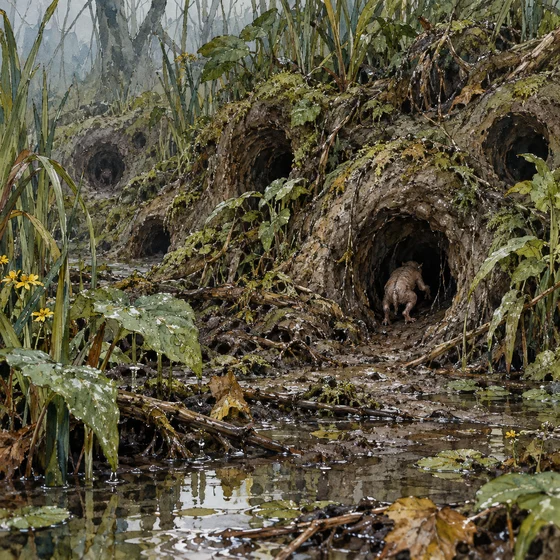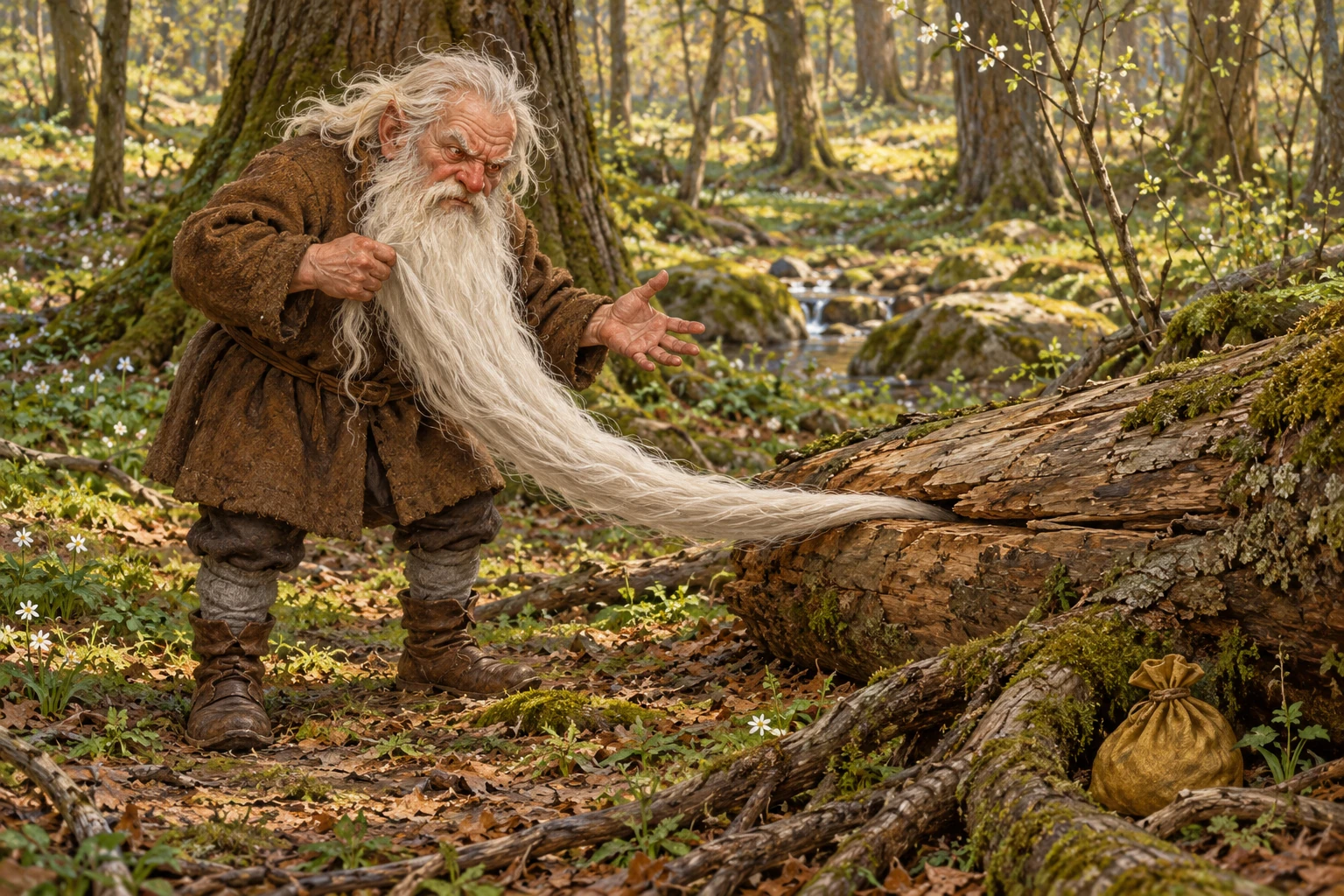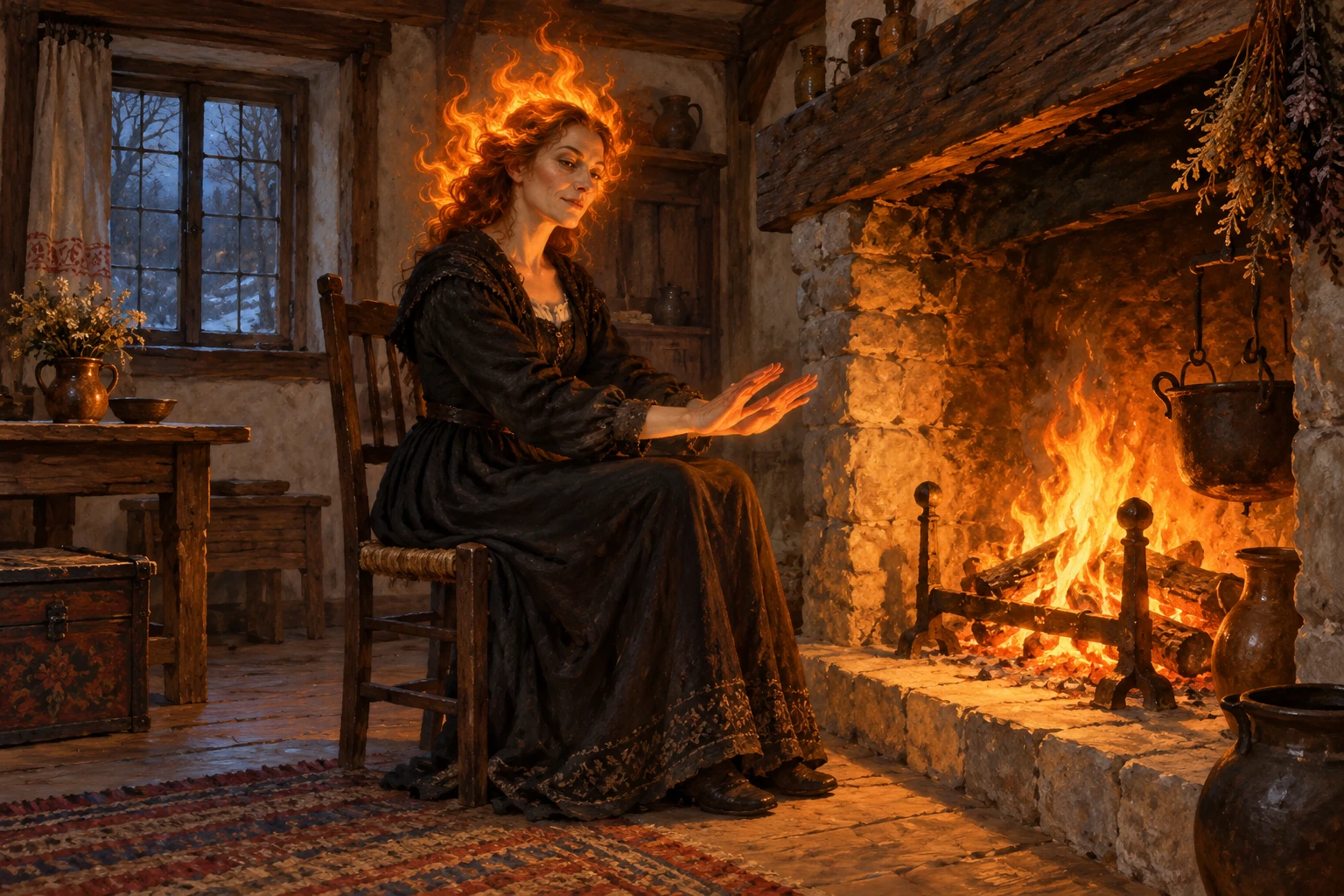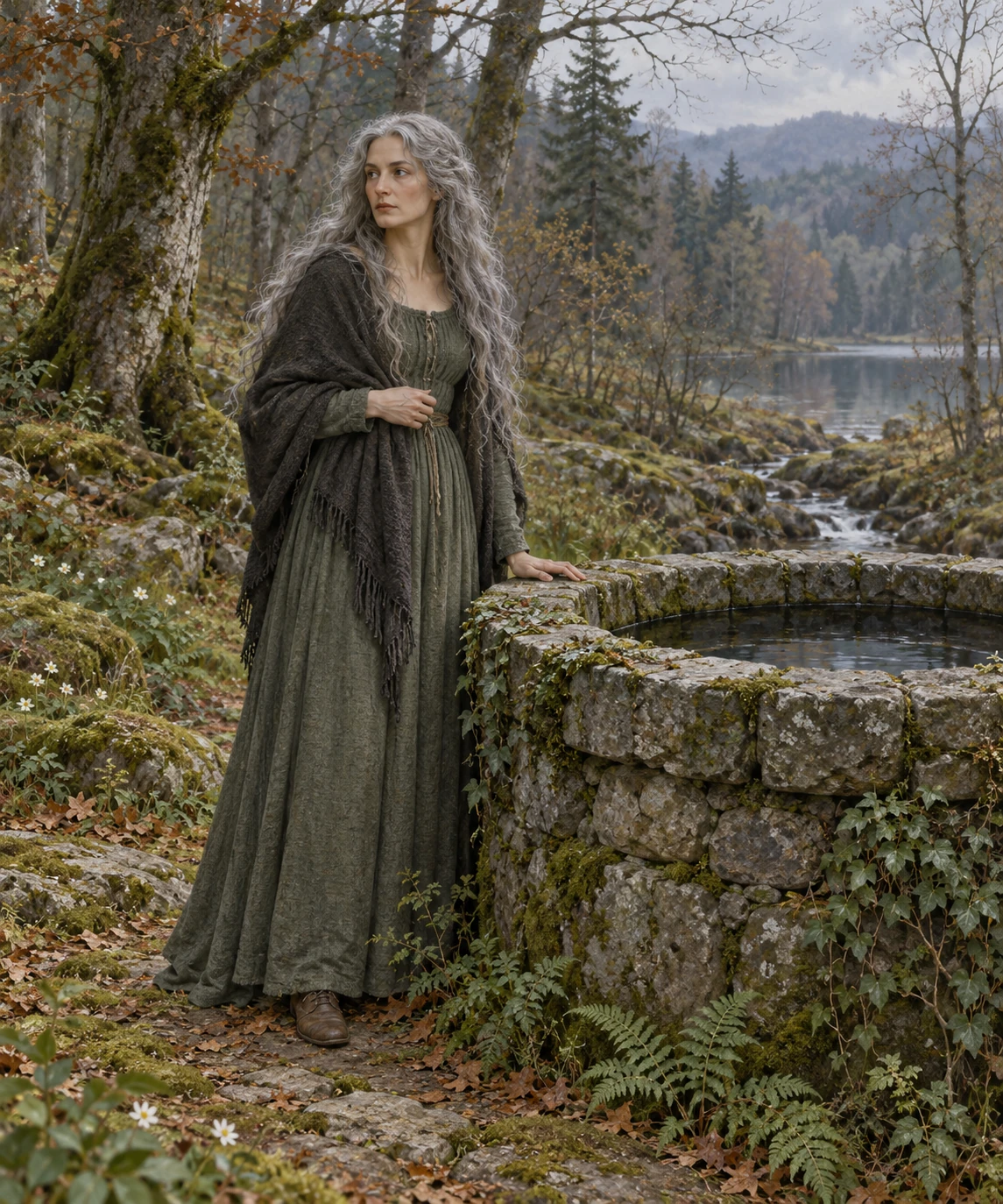
AI-generated interpretation of the Water-Nix in Grimm and Hunt’s well-escape tale. The text gives no physical description: face, hair, body, clothing, well design and woodland scenery are imagined. This does not depict the Witcher Nekker or a documented cultural practice.
The illustration supplies a quiet imagined setting, not a scene of the children’s captivity or a claim that every water-nix has this appearance.
Overview
In the Grimms’ Water-Nix, as translated by Margaret Hunt, a brother and sister fall into a well while playing beside it. A female water-nix lives below and takes possession of them as workers. The story locates her dwelling in this particular well; it does not describe a sea kingdom or identify her with every traditional water spirit. Her appearance is not specified. The English narrator’s name for her and repeated feminine pronouns establish the figure represented in this account.
The tasks make captivity an ordeal. The girl receives dirty, tangled flax to spin and must fetch water with a leaking bucket. The boy has to fell a tree using a blunt axe. Their only food consists of dumplings as hard as stones. These demands define the relationship between captor and children without requiring a feeding-monster explanation: the tale does not say that she plans to eat them. The siblings eventually wait for a Sunday when she is at church and then run away.
Their pursuer follows with long strides, but their ordinary objects produce extraordinary obstacles. The girl first throws a brush, which becomes a hill of sharp bristles. The nix crosses it with difficulty. The boy’s comb then makes another hill, covered in teeth, and she gets over that as well. Finally the girl throws a looking-glass, creating a slippery hill of mirrors that the pursuer cannot cross. The story thus gives the siblings successive parts in the escape rather than attributing every obstacle to one child.
The water-nix decides to fetch her own axe and cut through the glass hill. She does eventually hew through it, but the delay lets the children get far away. She must return to her well. The ending neither kills the pursuer nor turns the children into water beings. This is a complete, separate account from tale 181, The Nix of the Mill-Pond, and from Keightley’s Swedish Neck accounts. Its well, labour tasks and obstacle flight belong to this particular Grimm narrative, not to a universal anatomy or life history for nix-like spirits.
Origins & earliest records
Jacob and Wilhelm Grimm, Household Tales, Margaret Hunt translation, tale 79, The Water-Nix. The consulted electronic witness identifies Hunt; a physical print title page and the German-language witness were not independently collated.
Records & interpretation
Complete selected English tale read from the siblings’ fall into the well through the water-nix’s final return. Tale181 and Keightley’s Swedish Neck accounts are retained as separate witnesses, not merged into this figure.
Selected bibliography
Documented works and useful reading. This is not a list of every appearance.
- 01
Household Tales: 79 The Water-Nix
Complete tale 79; not tale 181 The Nix of the Mill-Pond. No complete-collection or German-original collation claim.
Family, evolution & connections
Nekker (The Witcher)
Grimm and Hunt’s tale 79 places a water-nix in a well: she captures two children, pursues them through magical obstacles and finally returns after they escape. This supplies a separate traditional water-being context alongside the Swedish Neck account. It does not establish that the Witcher creators used Grimm, that the regional figures are identical, or that the game creature shares this tale’s actions or appearance.
References
Sources supporting this profile. Linked pages have their own scope and editorial standards.
- Historical English folktale translationGrimm, Household Tales, Margaret Hunt translation: 79 The Water-Nix, complete taleResearch access: 2026-10-25
Image credits
Modern interpretation of a historical narrativeAI-generated interpretation of the Water-Nix in Grimm and Hunt’s well-escape tale. The text gives no physical description: face, hair, body, clothing, well design and woodland scenery are imagined. This does not depict the Witcher Nekker or a documented cultural practice.
The illustration supplies a quiet imagined setting, not a scene of the children’s captivity or a claim that every water-nix has this appearance.