
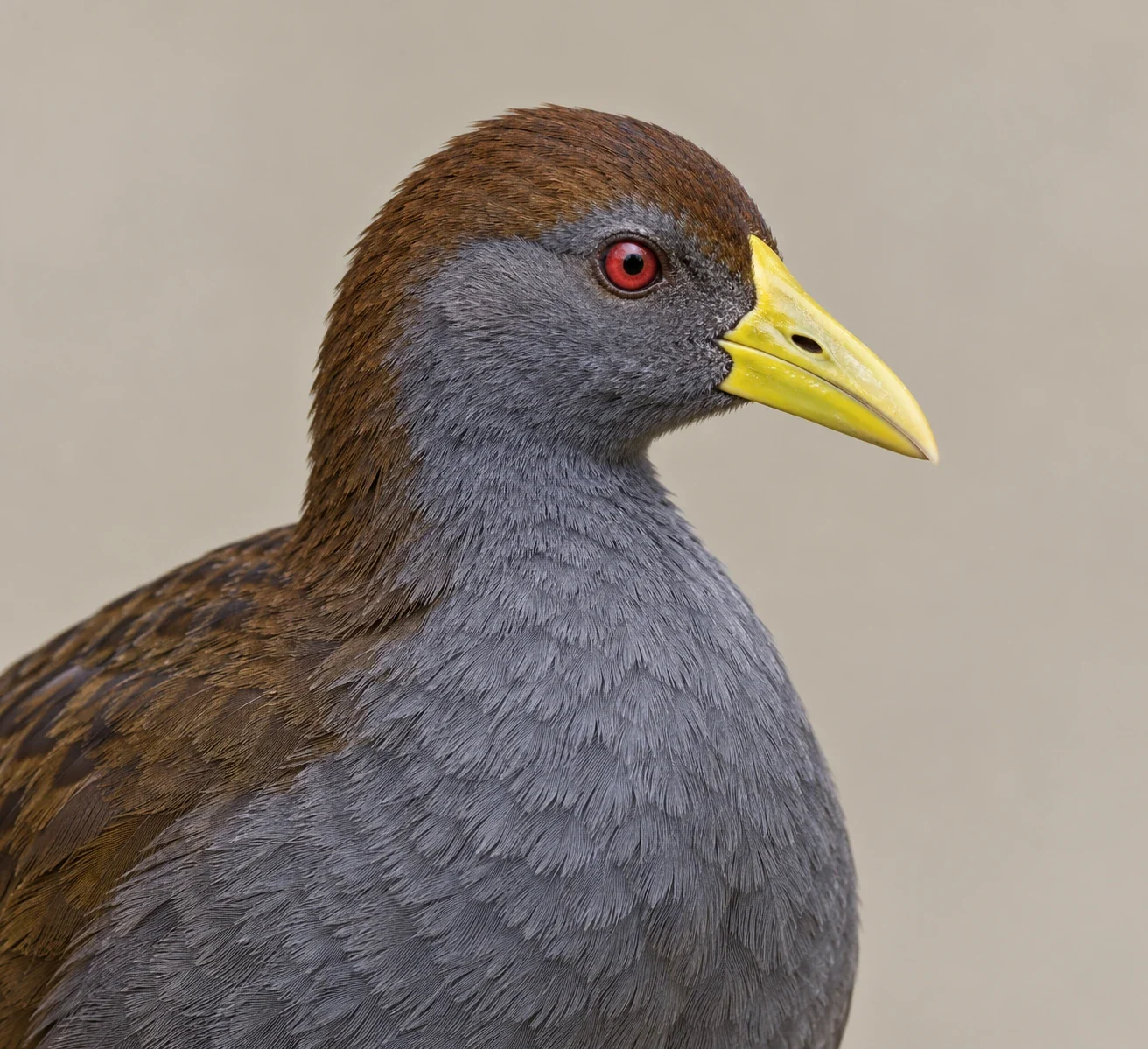
AI-generated zoological head study.
Overview
This heavy-bodied, flightless rail has brown upperparts, slate-grey underparts, a yellow bill and red eyes. Its grey legs are strong, and its black tail is narrow.
It forages by day for vegetation, seeds and some insects near freshwater. Permanent territorial groups can include several breeding adults; both sexes build nests, incubate and tend chicks. The museum describes its present distribution in northern and eastern Tasmania.
Origins & earliest records
Wetland
Evidence & interpretation
Institutional synthesis.
Selected bibliography
Documented works and useful reading. This is not a list of every appearance.
- 01
Family & connections
A source-supported family tree or inspiration record has not yet been compiled for this profile. Related reading below indicates a connection in subject matter, not a proven lineage or creative influence.
Look for a taxonomic record and classified relativesReferences
Sources supporting this profile. Linked pages have their own scope and editorial standards.
- Institutional accountTasmanian Native-henResearch access: 2026-10-21
Image credits
AI-generated illustrationAI-generated zoological head study.