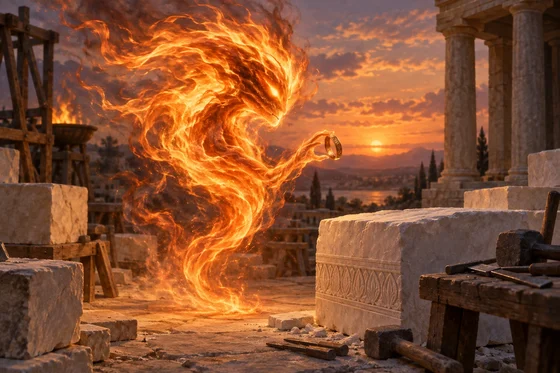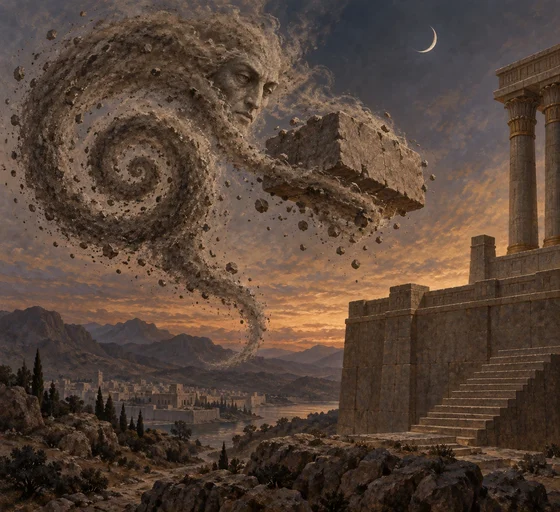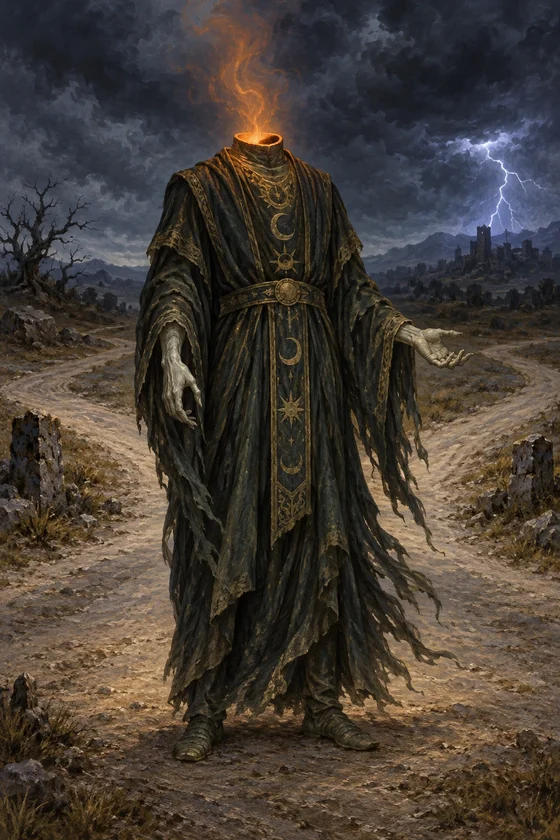
Tribolaios - AI-generated imagined folklore illustration.
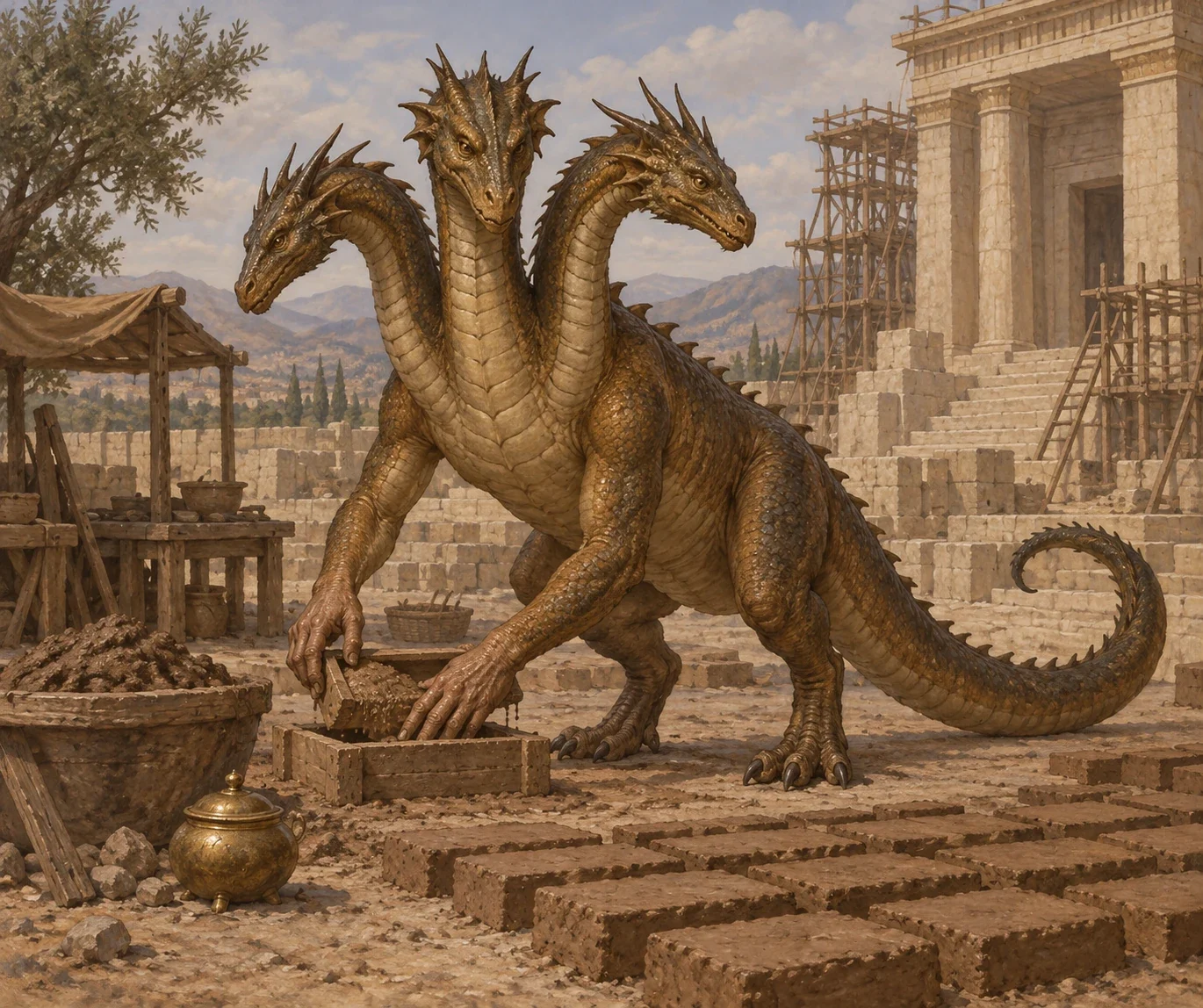
AI-generated imagined Tribolaios making temple bricks with human-shaped hands. Three heads, hands and assigned work follow the selected text; feet, scales, claws and color are invented. The display name transliterates a descriptive Greek term.
Overview
The demon in §§54–56 appears as a fearful three-headed dragon. It calls itself a caltrop-like spirit operating in three ways, and attributes childhood sensory harm and convulsive affliction to itself. The Greek adjective recorded by Conybeare is tribolaios; it is used here as an editorial transliteration of the descriptive self-designation, not evidence of a separately attested traditional personal name.
The spirit points to the place of the head at Jerusalem and the future crucified figure as its defeat. Conybeare identifies the place with Golgotha and notes that parts of the passage are obscure. Its prophecy also mentions the purple column and Ephippas’s future confinement in a leather bottle. The profile preserves the episode’s connections without treating its difficult language as a precise geographical or architectural description.
The dragon tells Solomon that gold lies at the temple entrance, and a servant’s search confirms that statement within the story. When asked its name again, it calls itself the crest of dragons. Solomon seals it and assigns brick-making, for which it is expressly said to have human hands. This combination of multiple heads and hands supports a particular imagined working form; scale color, feet and tail arrangement are unspecified.
Origins & earliest records
The selected documented witness is F. C. Conybeare’s1898 English translation of the Greek Testament of Solomon, following Fleck’s edition of a Paris manuscript. Its narrated temple-era setting is not a verified date of composition or folklore invention. Jewish and Christian elements and difficult readings are retained with source attribution.
Records & interpretation
§§54–56 and notes82–88; Greek descriptive term and later crest designation distinguished.
Selected bibliography
Documented works and useful reading. This is not a list of every appearance.
- 01
The Testament of Solomon, selected episode and editorial notes
§§54–56 and notes82–88; Greek descriptive term and later crest designation distinguished.
Family & connections
A source-supported family tree or inspiration record has not yet been compiled for this profile. Related reading below indicates a connection in subject matter, not a proven lineage or creative influence.
References
Sources supporting this profile. Linked pages have their own scope and editorial standards.
- Primary text in a historical scholarly editionThe Testament of Solomon: Conybeare translation and notesResearch access: 2026-10-10
Image credits
AI-generated imagined folklore illustrationTribolaios - AI-generated imagined folklore illustration.
AI-generated imagined Tribolaios making temple bricks with human-shaped hands. Three heads, hands and assigned work follow the selected text; feet, scales, claws and color are invented. The display name transliterates a descriptive Greek term.