
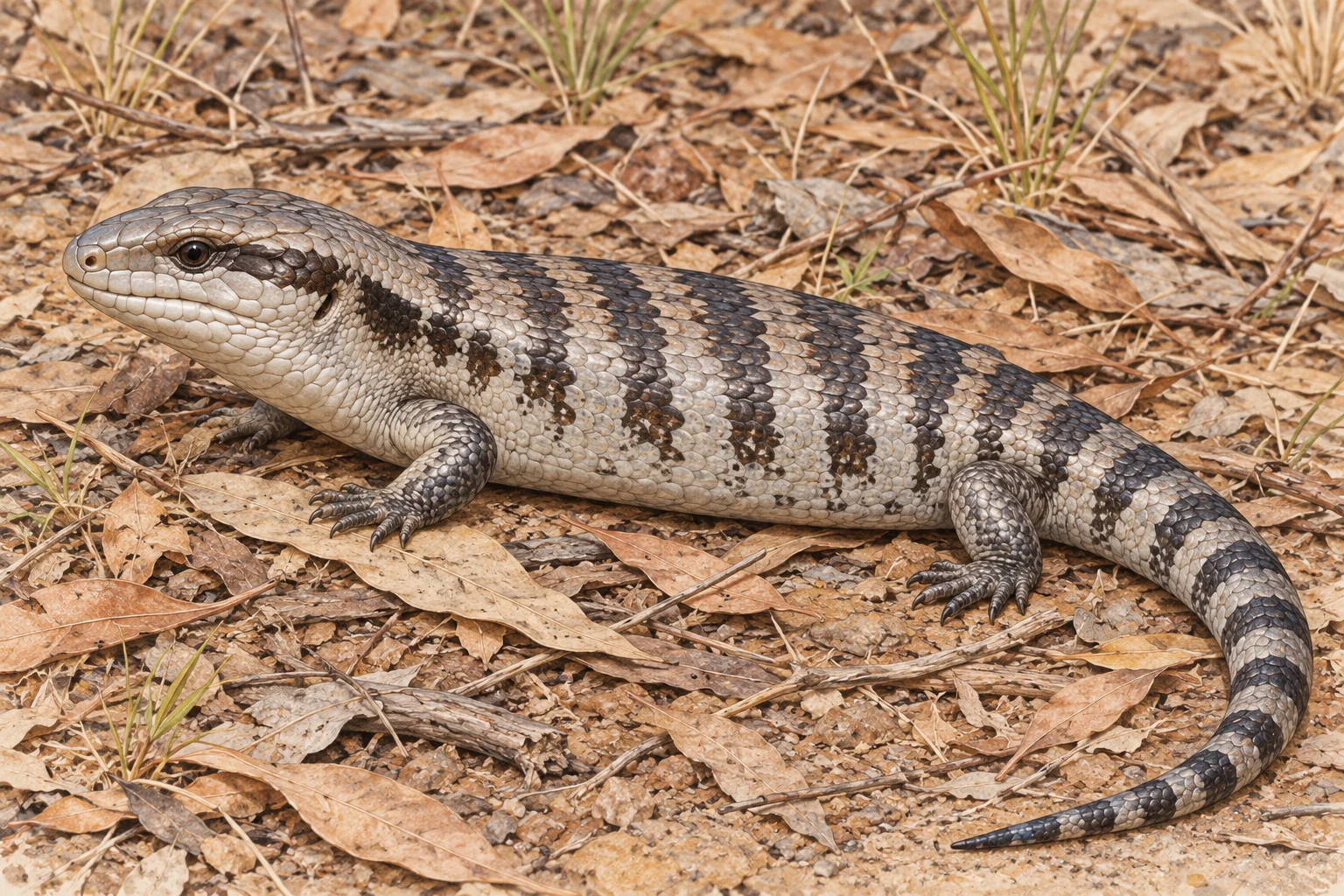
AI-generated species study.
Interpretation; eastern appearance, no subspecies diagnosis.
Overview
Eastern blue-tongue lizards have smooth, overlapping scales and broad dark bands across a silvery-grey back and tail. Coastal individuals commonly carry a dark stripe between eye and ear. They shelter under ground cover, rocks or logs, emerging to bask before searching for food as the day warms.
Animal Diversity Web describes a robust, cylindrical body carried on short legs. The skink feeds on both animal and plant material. When disturbed, it may inflate its body, hiss and expose its blue tongue as a defensive display. Its offspring develop within the female and are born alive.
Origins & earliest records
Ground-cover habitats
Evidence & interpretation
Institutional accounts.
Selected bibliography
Documented works and useful reading. This is not a list of every appearance.
- 01
- 02
Family & connections
A source-supported family tree or inspiration record has not yet been compiled for this profile. Related reading below indicates a connection in subject matter, not a proven lineage or creative influence.
Look for a taxonomic record and classified relativesReferences
Sources supporting this profile. Linked pages have their own scope and editorial standards.
- Museum species accountEastern Blue-tongue LizardResearch access: 2026-10-18
- University species accountTiliqua scincoidesResearch access: 2026-10-18
Image credits
AI-generated illustrationAI-generated species study.
Interpretation; eastern appearance, no subspecies diagnosis.