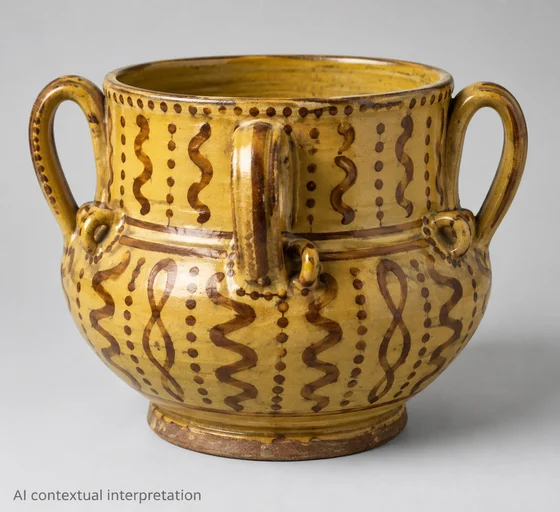
AI-generated interpretation after Hayden’s 1909 documentation; not a photograph or authenticated replica.
Overview
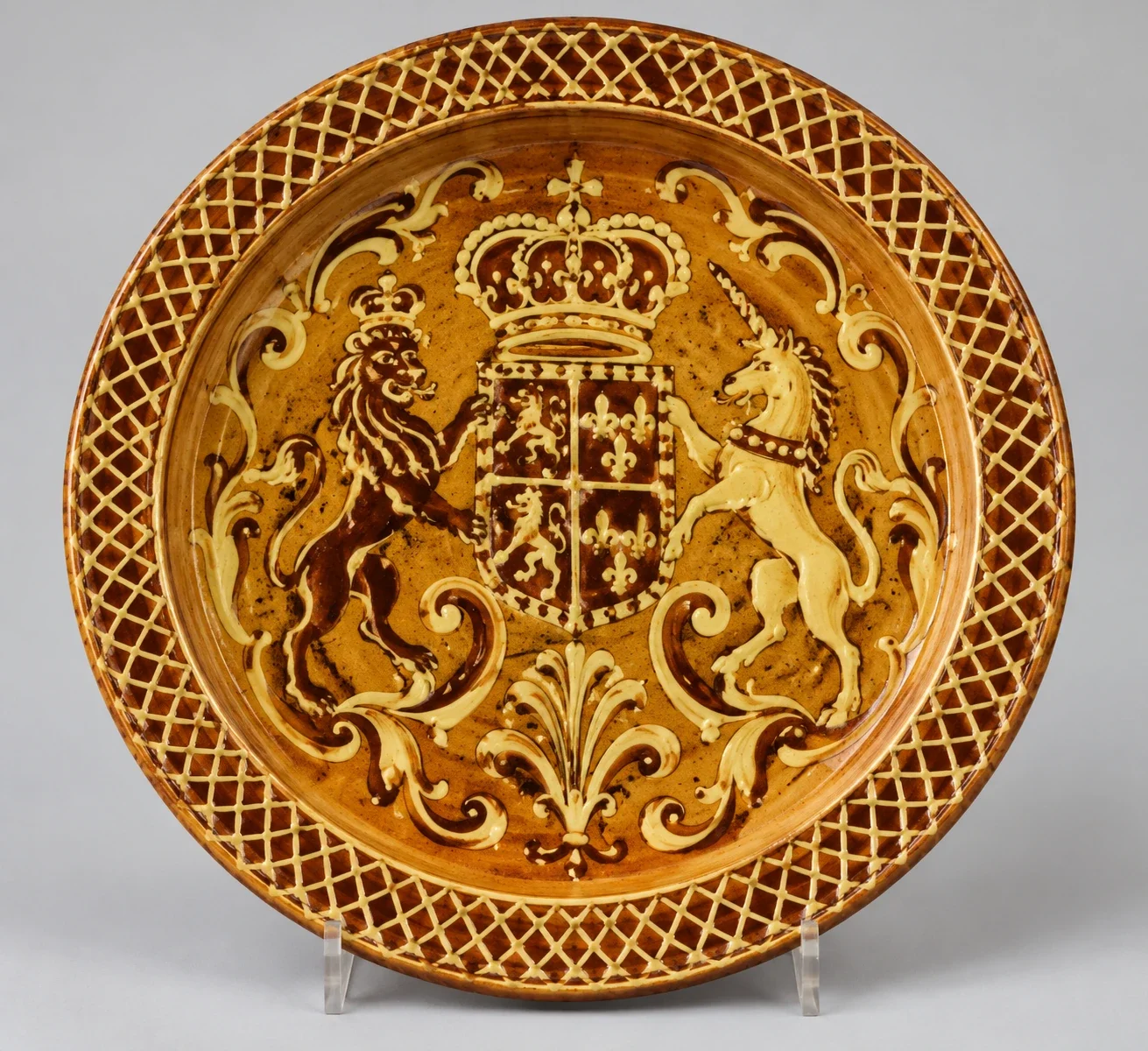
Hayden’s illustrated 1671 dish has a broad circular rim filled with a close crisscross pattern. Its centre carries a crowned shield with a lion and unicorn as supporters, surrounded by scrolls and lettering. The photograph shows the complete outer contour and the contrast between the patterned rim and the more densely figured central field. Hayden identifies the piece as signed by Thomas Toft and reads the names as Filep Heues and Elesabeth Heues, which he expands as Philip and Elizabeth Hughes. Those period spellings are part of the documented inscription, rather than evidence for a standardized modern spelling.
The chapter places the Toft potters’ works near Shelton in Staffordshire and treats their large slip-decorated dishes as an ornamental class. Hayden interprets this particular example as a marriage plate because it combines the two names and a date. That is his reading of the object; the chapter supplies no independent record of a ceremony or commission. He also proposes that the heraldry on such dishes drew upon decorated Rhenish stoneware jugs. This proposed design relationship should remain an attributed interpretation, rather than a proven path followed by this potter.
The published photograph and caption locate the dish in the Grosvenor Museum at Chester in 1909. It is a historical collection witness, not verification of its present display or condition. The general chapter describes slip as a water-and-clay mixture used to trail decoration, but this monochrome image does not independently establish the dish’s exact original colours. Hayden repeatedly evaluates the potters through the taste and national comparisons of an early twentieth-century collector. The useful evidence here is the dated, signed decorated vessel and the limits of its documentation, not a generalized account of English households or a claim that every Toft dish served the same purpose.
History & identity
An individual early English earthenware object documented in Arthur Hayden’s illustrated collector study of 1909.
Sources & representation
Complete chapter II, including illustration captions and auction table, and selected front matter read; native p.89 photographs inspected.
Selected bibliography
Documented works and useful reading. This is not a list of every appearance.
- 01
Chats on Old Earthenware
New York: Frederick A. Stokes Company; chapter II, Early Ware, pp.83–98; objects illustrated p.89.
Language & cultural connections
Source-supported language and cultural connections have not yet been compiled for this profile.
References
Sources supporting this profile. Linked pages have their own scope and editorial standards.
- Historical illustrated collection studyHayden’s original illustrated account, chapter IIResearch access: 2026-10-21
Image credits
AI-generatedAI-generated interpretation after Hayden’s 1909 documentation; not a photograph or authenticated replica.