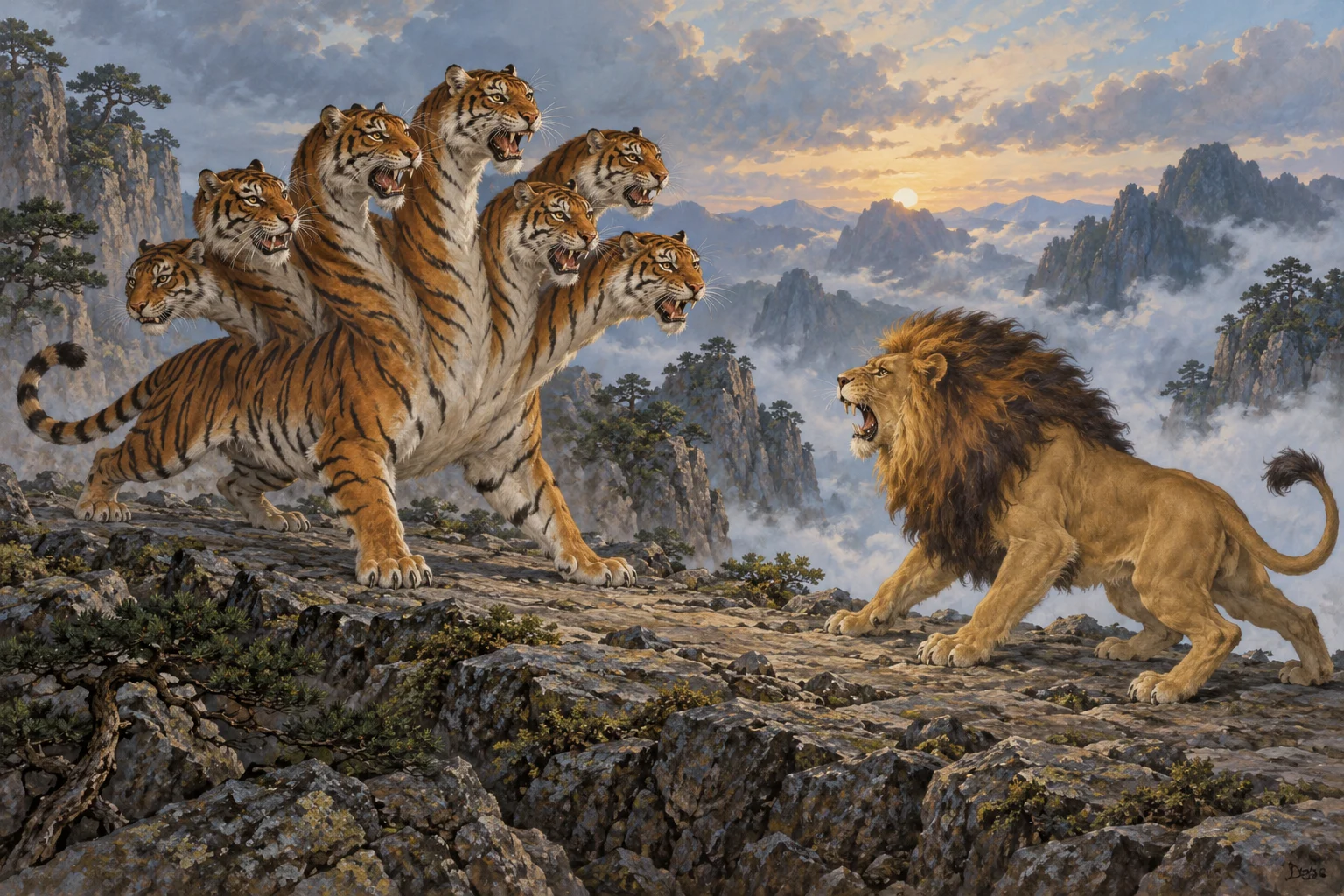
AI-generated interpretation of the seven-headed tigress facing the hero’s lion form at the start of the multi-day fight in Crane’s 1885 English translation of The Cloud. Seven heads are textual; arrangement, fur and terrain are artistic choices.
AI-generated interpretation of the seven-headed tigress facing the hero’s lion form at the start of the multi-day fight in Crane’s 1885 English translation of The Cloud. Seven heads are textual; arrangement, fur and terrain are artistic choices. Original composition based on public-domain translated prose; not a historical image. No original illustration copied. Compressed for display.
Overview
The fairy explains that a tigress with seven heads inhabits a distant mountain. The relationship is functional rather than genealogical: her own death depends on defeating that beast and obtaining the egg inside it. She says that possession of the egg would let the tigress regain its life and heads, preserving her own survival. No wings, fiery breath, children or specific tiger colour appear in the selected passage.
The rescued-maidens’ helper takes lion form and fights across successive days, severing six heads before resting two days ahead of the final struggle. As the heads are lost, the fairy grows weaker. When the last head falls, the dead beast disappears and its egg rolls into the sea. A dog-fish that the youth earlier helped retrieves it. The account then turns to the fairy’s defeat; it does not show the tigress restored or independently identify it with a named traditional tiger deity.
Origins & earliest records
Crane, Italian Popular Tales (1885), VI: The Cloud, printed pp. 30–35. The story list identifies Domenico Comparetti, No.32, La Nuvolaccia, from Pisa. The full selected English tale has been used; no individual oral narrator is named in that presentation.
Records & interpretation
The selected tale provides this figure’s stated form, speech or supernatural action and its narrative outcome. Crane’s preface acknowledges changes of tense and omitted repetitions; this English presentation is distinguished from independently inspecting its underlying regional collection.
3D model
An original procedural model made for the Mythscribe World Builder. It is an interpretation based on this entry, not a historical source or a depiction from the records cited here.
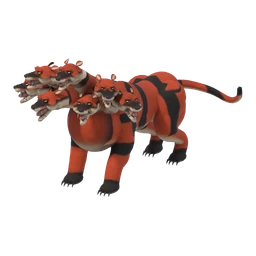
Procedural folklore creature kit · 37,787 triangles · 2 MB
Opens mythscribe.cloud in a new tab. Sign-in is required.
Selected bibliography
Documented works and useful reading. This is not a list of every appearance.
- 01
Italian Popular Tales, VI: The Cloud, pp. 30–35
Complete selected tale, including its final resolution; nearby editorial comparisons remain separate.
Family & connections
A source-supported family tree or inspiration record has not yet been compiled for this profile. Related reading below indicates a connection in subject matter, not a proven lineage or creative influence.
References
Sources supporting this profile. Linked pages have their own scope and editorial standards.
- Primary textCrane1885: VI: The Cloud, story list and prefaceResearch access: 2026-10-05
Image credits
AI-generated interpretationAI-generated interpretation of the seven-headed tigress facing the hero’s lion form at the start of the multi-day fight in Crane’s 1885 English translation of The Cloud. Seven heads are textual; arrangement, fur and terrain are artistic choices.
AI-generated interpretation of the seven-headed tigress facing the hero’s lion form at the start of the multi-day fight in Crane’s 1885 English translation of The Cloud. Seven heads are textual; arrangement, fur and terrain are artistic choices. Original composition based on public-domain translated prose; not a historical image. No original illustration copied. Compressed for display.