
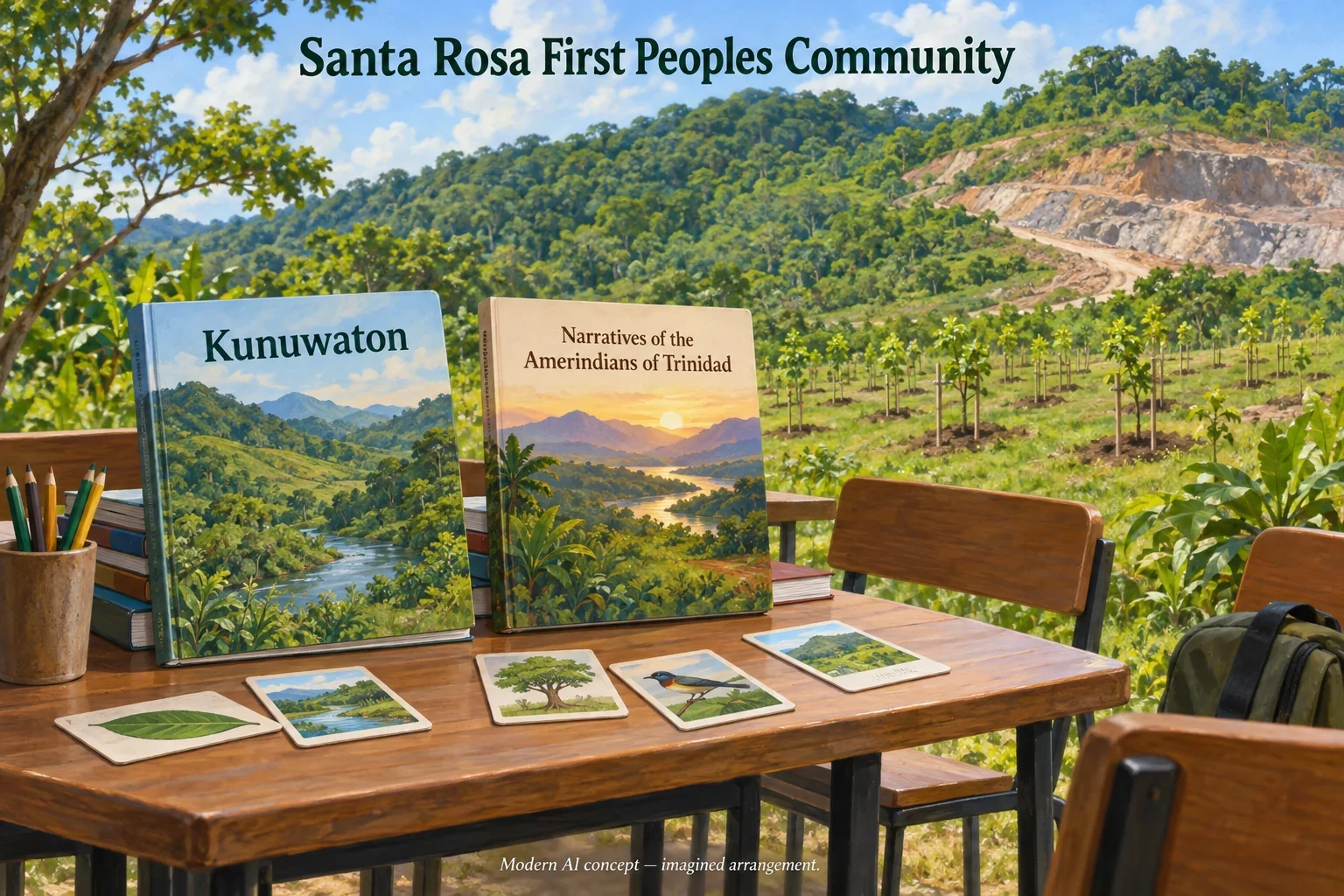
AI concept: Santa Rosa educational books and reforestation.
Covers and landscape imagined; not ethnographic evidence.
Overview
The CPDC’s verified listing locates the Community in Arima and describes defending descendants’ rights and preserving heritage. It records youth camps, educational publications and reforestation in areas affected by quarrying. Books include Kunuwaton and Narratives of the Amerindians of Trinidad. These activities document community work without reducing identity to costume or treating membership estimates as population censuses.
Parliament’s 2022 inquiry describes the renamed organization, its Arima cultural resource centre and a proposed heritage village. The committee found that the village remained at the planning stage in 2022 despite earlier recommendations. It also discussed Warao and Moruga groups separately. Santa Rosa’s institutional role therefore does not make every Indigenous person in Trinidad a member or erase other communities.
History & identity
The parliamentary record dates the organization’s founding to 1976; this does not date the First Peoples’ ancestry.
Sources & representation
CPDC public listing and selected parliamentary sections read; no sacred practices or private knowledge used.
Selected bibliography
Documented works and useful reading. This is not a list of every appearance.
- 01
The Santa Rosa First Peoples Community
Verified NGO listing.
- 02
Fourth Report: First Peoples cultural heritage
Selected community and village sections.
Language & cultural connections
Source-supported language and cultural connections have not yet been compiled for this profile.
References
Sources supporting this profile. Linked pages have their own scope and editorial standards.
- Regional NGO institutional directoryCPDC verified community listingResearch access: 2026-10-11
- Public institutional evidenceParliamentary inquiryResearch access: 2026-10-11
Image credits
AI-generated interpretationAI concept: Santa Rosa educational books and reforestation.
Covers and landscape imagined; not ethnographic evidence.